Chicken Manure Composting System: 2026 Guide
A Chicken Manure Composting System can turn poultry waste into a valuable soil amendment while reducing odors, waste volume, and environmental risks. For backyard chicken keepers, small farms, and commercial poultry operations, proper composting offers a practical way to manage manure in 2026.
However, chicken manure contains high levels of nitrogen. Therefore, it should not go directly onto many plants in large amounts. A well-managed composting process helps stabilize the material before garden or farm use. According to the U.S. EPA, effective composting depends on oxygen, moisture, temperature, and a balanced mix of carbon- and nitrogen-rich materials.
Why a Chicken Manure Composting System Matters
A properly designed Chicken Manure Composting System provides several benefits:
- Reduces the volume of poultry waste.
- Creates nutrient-rich poultry manure compost.
- Helps control unpleasant odors.
- Supports healthier soil structure.
- Recycles farm and household organic materials.
- Can reduce waste-management costs.
Additionally, composted chicken manure can provide useful nutrients. Utah State University data show chicken manure-based compost can contain significant nitrogen, phosphorus, and potassium, although nutrient levels vary by source and composting conditions.
Chicken Manure Composting System: Key Features
1. Carbon and Nitrogen Balance
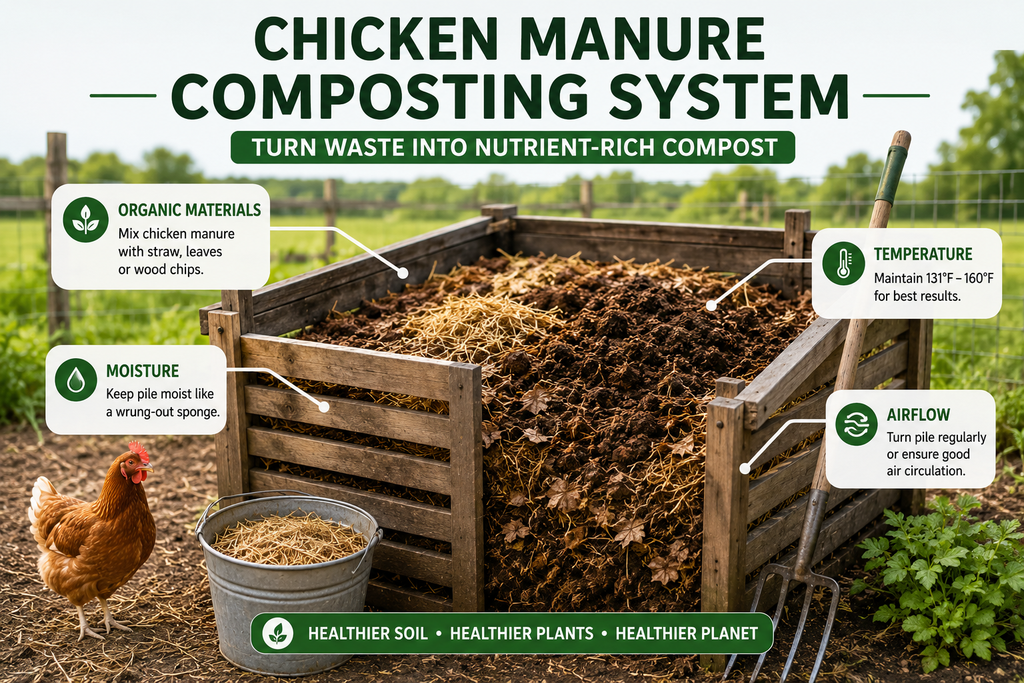
Chicken manure is nitrogen-rich. Therefore, mix it with carbon-rich materials such as:
- Dry leaves
- Straw
- Shredded cardboard
- Wood chips
- Untreated sawdust
A balanced carbon-to-nitrogen ratio helps microorganisms work efficiently. Too much manure can create ammonia odors, while excessive carbon can slow decomposition.
2. Moisture Control
A Chicken Manure Composting System should stay moist but not waterlogged. As a simple test, the mixture should feel similar to a wrung-out sponge.
Too much water reduces oxygen and can create anaerobic conditions. Conversely, very dry material slows microbial activity.
3. Temperature Monitoring
Temperature is one of the most important factors. A compost thermometer can help you monitor the center of the pile.
The EPA notes that well-managed compost can reach roughly 131°F to 160°F, supporting rapid decomposition and pathogen reduction.
Types of Chicken Manure Composting Systems
Static Compost Bin
A static bin works well for homeowners and small chicken flocks. You add manure and carbon materials in layers and turn the pile periodically.
Windrow Composting
Windrows suit larger farms. The manure is arranged in long rows and turned regularly to improve aeration. This approach can handle larger quantities but requires more space and equipment.
Aerated Static Pile
An aerated static pile uses pipes or blowers to move air through the compost. Therefore, it can reduce the need for frequent mechanical turning.
In-Vessel Composting
In-vessel systems use enclosed equipment with controlled aeration and mixing. They offer greater control but usually cost more. According to the EPA, in-vessel, aerated static pile, intensive windrow, and passive windrow systems are established composting approaches for livestock manure.
How to Choose a Chicken Manure Composting System
Before buying or building a system, consider:
- Flock size: Small flocks need less capacity.
- Available space: Choose a system that fits your property.
- Climate: Rain and extreme temperatures affect moisture and heat.
- Labor: Turning compost manually requires regular work.
- Budget: Simple bins cost less than automated systems.
- Drainage: Select a location that prevents contaminated runoff.
Furthermore, keep composting areas away from wells and water sources. Proper site selection reduces the risk of runoff reaching drinking water.
Common Mistakes to Avoid
Even a good Chicken Manure Composting System can fail if basic conditions are ignored.
Avoid these common mistakes:
- Adding too much fresh manure.
- Keeping the pile constantly wet.
- Letting the pile become completely dry.
- Failing to provide enough carbon material.
- Never turning or aerating the pile.
- Applying unfinished compost to crops.
- Ignoring local manure-management regulations.
Additionally, do not assume that compost is automatically pathogen-free simply because it has heated up. Proper temperature management and handling practices remain important.
Maintenance Tips for 2026
Check your Chicken Manure Composting System regularly. Monitor temperature, moisture, odor, and airflow.
If the pile smells strongly of ammonia, add more carbon material and improve aeration. If it becomes too dry, add a small amount of water while mixing. If the center remains cool, turn the pile and check the material balance.
Finished compost should look dark, crumbly, and relatively uniform. It should also have an earthy smell rather than a strong manure odor.
Conclusion
A Chicken Manure Composting System is a practical solution for turning poultry waste into useful organic material. In 2026, better temperature monitoring, improved aeration, and responsible poultry litter management can make composting safer and more efficient.
Start with the right carbon materials, control moisture, monitor temperature, and give the compost enough time to mature. Choose a Chicken Manure Composting System that matches your flock size, available space, labor, and budget, then turn your chicken waste into a valuable resource.
Leave a Reply