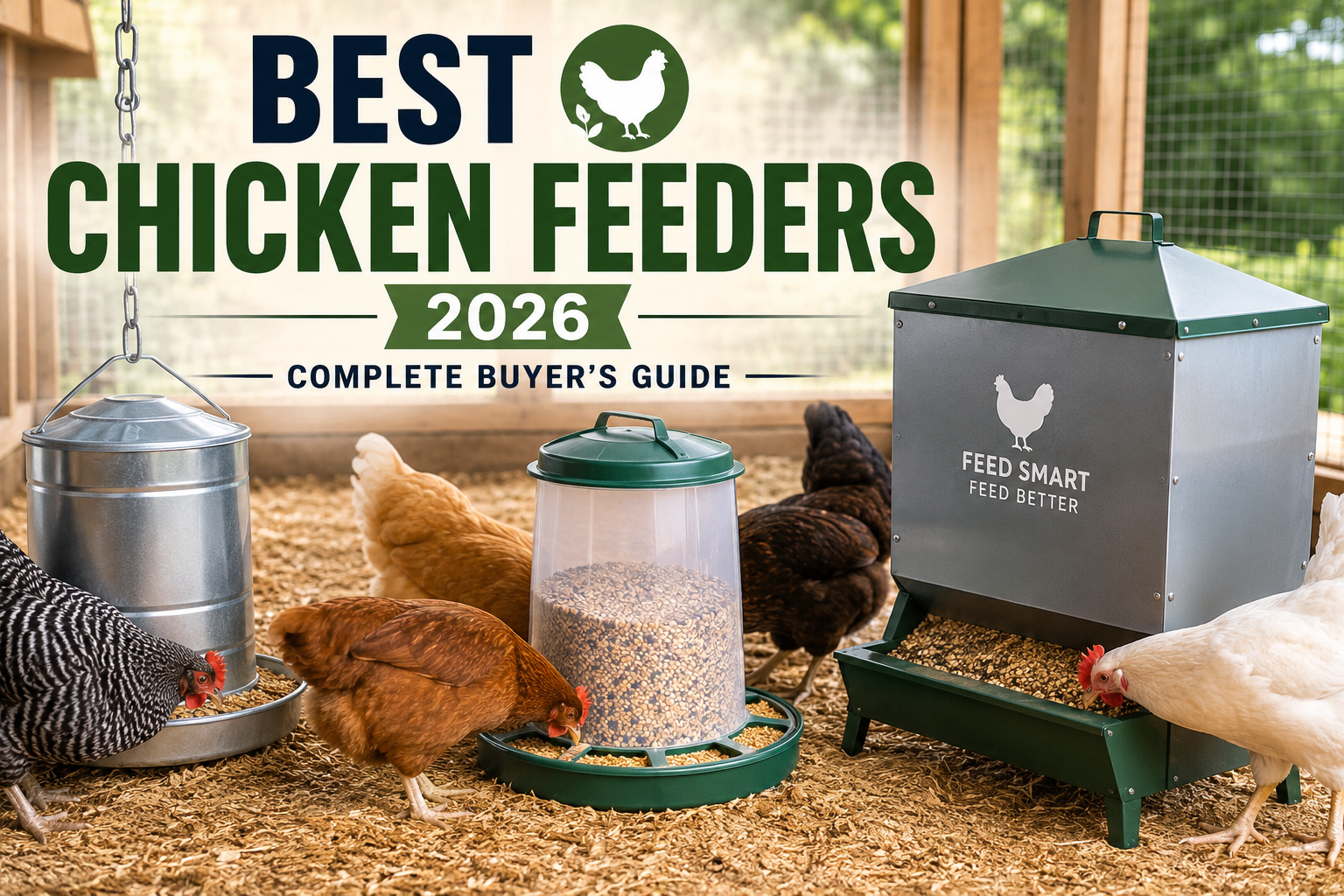
Best Chicken Feeders 2026: Complete Buyer’s Guide for Every Flock
Choosing the Best Chicken Feeders is one of the smartest ways to improve your flock’s health and reduce feed waste in 2026. Whether you own a few backyard hens or manage a larger poultry flock, the right feeder saves time, keeps feed clean, and protects it from pests. Additionally, modern feeder designs make daily feeding easier while helping birds stay healthy and productive.
As more poultry keepers look for durable and efficient feeding systems, manufacturers continue introducing smarter and more weather-resistant options. Therefore, understanding what makes a quality feeder is more important than ever.
Why the Best Chicken Feeders Matter
The Best Chicken Feeders do much more than simply hold feed. They help reduce waste, improve hygiene, and lower your overall feeding costs.
Benefits include:
- Less feed wasted on the ground
- Better protection from rain and moisture
- Reduced rodent and wild bird access
- Cleaner feeding environment
- Less daily maintenance
- Improved flock health
As a result, investing in a quality feeder often pays for itself through lower feed costs.
Key Features of the Best Chicken Feeders
Durable Construction
Choose feeders made from galvanized steel, heavy-duty plastic, or UV-resistant materials. These options last longer outdoors and resist rust and cracking.
Large Feed Capacity
A larger feeder means fewer refills. This feature is especially useful for larger flocks or busy owners.
Weather Protection
Rain can ruin expensive feed. Therefore, look for covered or weatherproof models that keep feed dry throughout the year.
Waste Reduction Design
Many Best Chicken Feeders now include anti-spill openings and treadle mechanisms. These features significantly reduce wasted feed and help keep the coop cleaner.
Easy Cleaning
Additionally, removable lids and smooth interiors make cleaning much easier. Clean feeders reduce bacteria and mold growth.
Types of the Best Chicken Feeders
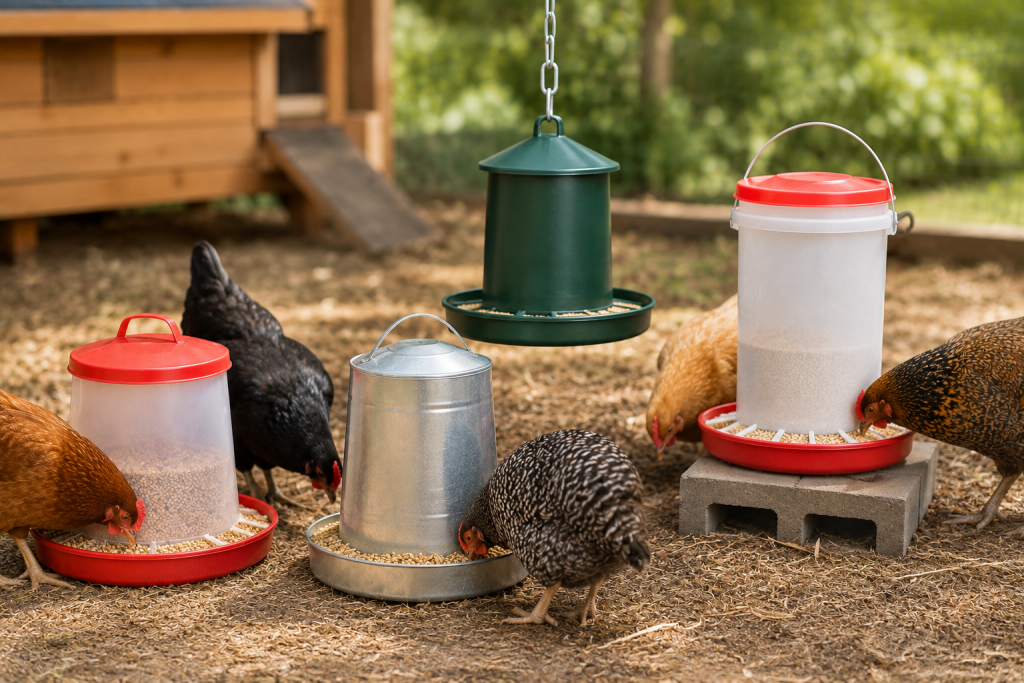
Gravity Chicken Feeders
Gravity feeders automatically refill the feeding tray as chickens eat.
Advantages:
- Affordable
- Easy to use
- Ideal for beginners
- Low maintenance
They are popular as a gravity chicken feeder solution for backyard flocks.
Automatic Chicken Feeders
An automatic chicken feeder uses treadle or gravity systems to reduce waste and prevent pests from accessing feed.
Best for:
- Busy owners
- Vacation feeding
- Feed savings
- Rodent control
Hanging Chicken Feeders
Hanging feeders stay above ground, keeping feed cleaner.
Benefits include:
- Less dirt contamination
- Reduced scratching
- Better hygiene
Trough Feeders
Trough feeders work well for multiple birds eating at the same time.
However, they usually require more cleaning and may allow greater feed waste.
How to Choose the Best Chicken Feeders
When shopping for the Best Chicken Feeders, consider these important factors.
1. Flock Size
Small backyard flocks need smaller feeders, while large farms benefit from higher-capacity models.
2. Feed Type
Different feeders work better with pellets, crumbles, or mash.
3. Predator Protection
If rodents are common in your area, choose a treadle-style feeder.
4. Ease of Cleaning
Simple maintenance helps improve poultry health.
5. Weather Conditions
Outdoor flocks need waterproof or weather-resistant feeders.
Additionally, selecting the right backyard chicken feeder improves feeding efficiency throughout the year.
Common Mistakes to Avoid
Even experienced poultry keepers sometimes make feeding mistakes.
Avoid these common problems:
- Buying a feeder that’s too small
- Leaving feed exposed to rain
- Ignoring regular cleaning
- Overfilling feeders
- Choosing low-quality plastic models
However, avoiding these mistakes helps extend feeder life while protecting your chickens.
Maintenance Tips for Chicken Feeders
The Best Chicken Feeders last longer with proper care.
Maintenance checklist:
- Clean feeders every week
- Remove wet feed immediately
- Inspect for cracks or damage
- Tighten loose parts
- Store extra feed in sealed containers
Additionally, regular maintenance helps prevent mold, bacteria, and insect infestations.
2026 Buying Trends
Chicken keepers in 2026 increasingly prefer:
- Automatic feeding systems
- Weatherproof construction
- Rodent-proof designs
- Larger feed capacity
- Easy-clean materials
These innovations make daily flock management simpler while reducing long-term feeding costs.
Conclusion
Choosing the Best Chicken Feeders is an investment in healthier chickens, lower feed waste, and easier daily management. Whether you prefer a gravity feeder, hanging feeder, or automatic system, selecting a durable model that fits your flock size will provide years of reliable service. Additionally, regular maintenance keeps your feeder working efficiently. If you’re upgrading your poultry setup in 2026, start by choosing one of the Best Chicken Feeders that matches your needs and enjoy healthier, happier chickens.
Frequently Asked Questions
1. What are the Best Chicken Feeders for backyard flocks?
The Best Chicken Feeders for backyard flocks are durable, weatherproof, and designed to reduce feed waste. Gravity and automatic feeders are popular choices because they require less maintenance.
2. Are automatic chicken feeders worth buying?
Yes. An automatic chicken feeder helps reduce feed waste, keeps rodents away, and saves time by providing a steady supply of feed for your chickens.
3. Which type of chicken feeder wastes the least feed?
Treadle and no-waste chicken feeders waste the least feed because they only open when chickens step on the platform, preventing spills and keeping pests away.
4. How often should I clean a chicken feeder?
You should clean your chicken feeder at least once a week. Regular cleaning helps prevent mold, bacteria, and contaminated feed that can affect your flock’s health.
5. What size chicken feeder do I need?
The right size depends on your flock. Small backyard flocks can use a 10–20 lb feeder, while larger flocks may need feeders that hold 30–50 lb or more.
6. Can chicken feeders be left outside?
Yes. Many of the Best Chicken Feeders are built with weather-resistant materials that protect feed from rain, moisture, and harsh outdoor conditions.
7. What is the difference between a gravity feeder and an automatic chicken feeder?
A gravity feeder uses gravity to refill the feeding tray, while an automatic chicken feeder often includes a treadle or other mechanism to reduce feed waste and keep rodents out.
8. How can I stop chickens from wasting feed?
Choose a no-waste or automatic feeder, avoid overfilling it, and place it at the correct height so chickens cannot scratch feed onto the ground.
9. Are metal chicken feeders better than plastic feeders?
Metal feeders are generally more durable and rodent-resistant, while high-quality plastic feeders are lightweight, rust-free, and easier to move.
10. How long do the Best Chicken Feeders last?
A high-quality chicken feeder can last 5–10 years or longer with proper cleaning and regular maintenance, making it a smart investment for any poultry keeper.
Leave a Reply