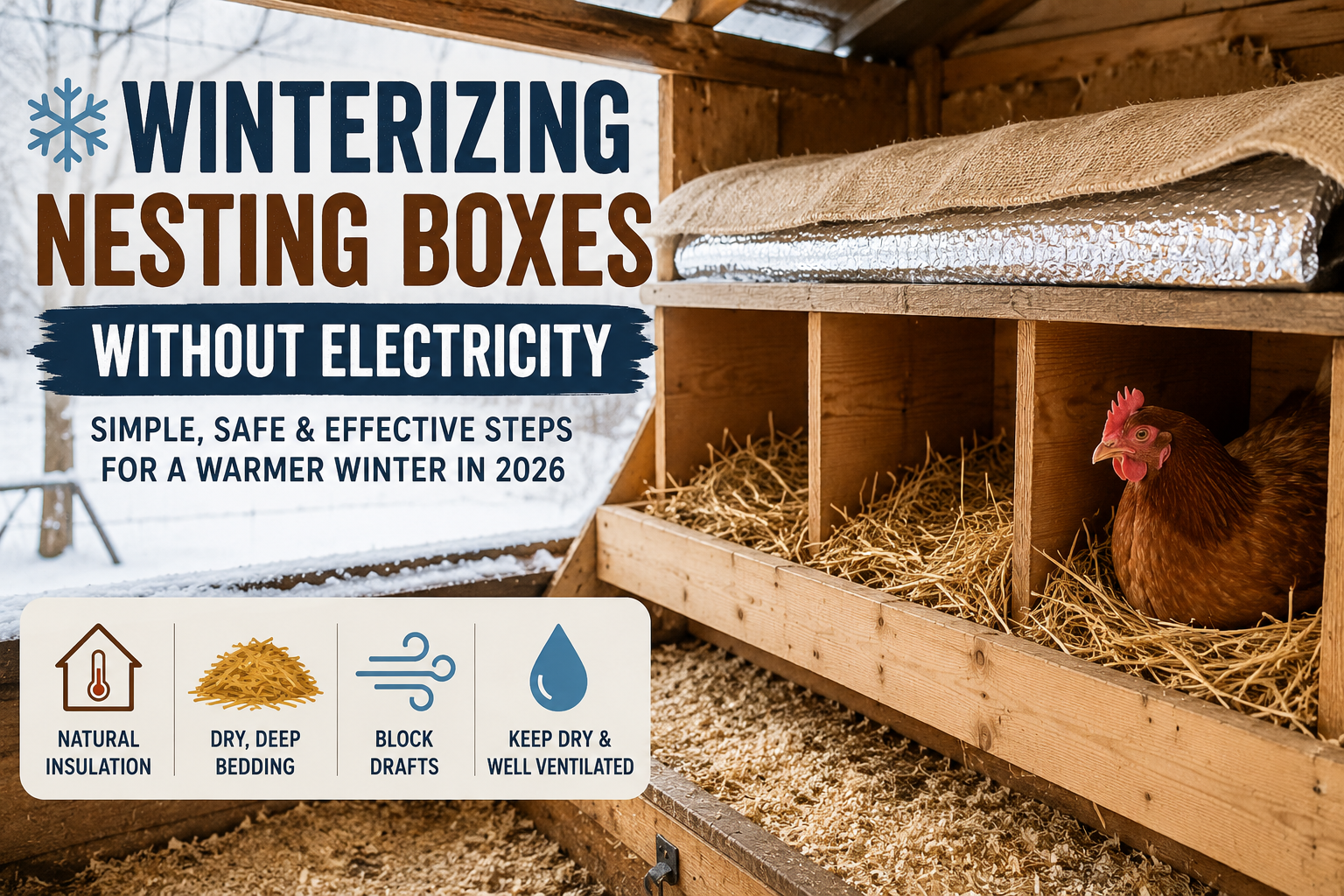
Winterizing Nesting Boxes Without Electricity
As winter approaches in 2026, backyard chicken keepers face a common challenge: keeping nesting areas dry, comfortable, and protected without adding electrical heaters. Winterizing Nesting Boxes Without Electricity offers a simple and affordable solution for cold climates.
Hens need a clean and sheltered place to lay eggs. However, excessive cold, moisture, and drafts can make nesting boxes uncomfortable. Fortunately, you can improve winter protection with insulation, proper bedding, smart placement, and good ventilation.
For US chicken keepers, these steps can be especially useful during freezing nights. Additionally, the same methods work in many cold regions around the world.
Why Winterizing Nesting Boxes Without Electricity Matters
Cold weather does not mean you need an electric heater inside every nesting box. In fact, extra heat can create safety risks and increase moisture when used incorrectly.
Instead, winterizing nesting boxes without electricity focuses on reducing heat loss while keeping moisture under control.
The main benefits include:
- Better comfort for laying hens
- Reduced exposure to cold drafts
- Drier nesting materials
- Lower energy costs
- Fewer electrical safety concerns
- Easier daily maintenance
Additionally, a well-protected nesting area can help maintain a more stable environment for hens during winter.
Key Factors for Winterizing Nesting Boxes Without Electricity
1. Improve Natural Insulation
One of the first steps in winterizing nesting boxes without electricity is improving insulation around the box. Use safe materials around the outside walls, roof, and nearby coop surfaces.
Foam board, wood panels, or other suitable building materials can help reduce heat transfer. However, never leave exposed insulation where chickens can peck or eat it.
2. Choose the Right Winter Bedding
Good winter nesting box bedding provides a soft and dry surface. Straw and pine shavings are common choices for chicken keepers.
Replace wet or dirty bedding quickly. Moreover, adding fresh dry material regularly can help prevent moisture buildup.
3. Block Direct Drafts
Drafts can make a cold nesting box much less comfortable. Therefore, inspect cracks and openings around the coop before winter arrives.
Do not seal the coop completely, though. Chickens still need fresh airflow to control humidity and ammonia.
4. Maintain Proper Ventilation
Ventilation is one of the most important parts of winterizing nesting boxes without electricity. Warm, moist air must escape from the coop.
Place ventilation openings above the chickens’ sleeping level when possible. This setup helps reduce direct drafts while allowing moisture to leave.
External link placeholder: [Visit a trusted poultry extension resource for winter chicken care]
Types of Winter Nesting Box Protection
Insulated Nesting Boxes
An insulated box can help reduce temperature changes. It works particularly well when the surrounding coop is also protected from extreme weather.
Deep-Bedding Nesting Areas
A deeper layer of dry bedding can provide additional protection from cold surfaces. However, inspect it regularly and remove contaminated material.
Covered or Sheltered Boxes
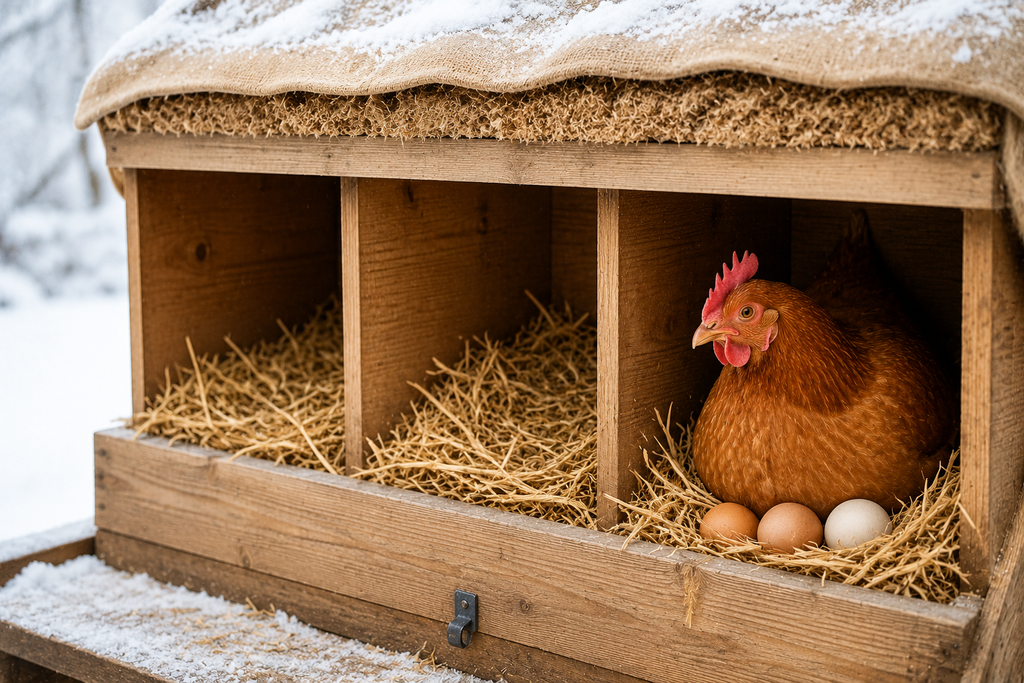
A roof or overhang can protect nesting boxes from rain, snow, and strong wind. As a result, bedding stays drier and requires fewer changes.
Buying and Decision Guide
If you are improving an existing coop, you may not need expensive equipment. Instead, focus on these features:
- Durable construction
- Easy-to-clean surfaces
- Weather-resistant materials
- Safe insulation
- Good ventilation
- Protection from rain and snow
When choosing materials, avoid anything that chickens can easily chew, swallow, or damage.
Common Mistakes to Avoid
Even experienced keepers can make mistakes when preparing for winter. Avoid these common problems:
- Sealing every opening: This can trap moisture and ammonia.
- Using wet bedding: Damp bedding makes the nesting area colder and less sanitary.
- Installing unsafe heaters: Electrical equipment can create fire and shock hazards.
- Ignoring roof leaks: Water can quickly ruin otherwise good winter preparation.
- Over-insulating without ventilation: Insulation should not replace fresh airflow.
Additionally, check the nesting area after storms or sudden temperature drops.
Maintenance Tips for Cold Weather
Successful winterizing nesting boxes without electricity requires regular checks. Inspect the boxes at least several times each week during severe weather.
Look for wet bedding, damaged insulation, drafts, leaks, and signs of pests. Replace soiled bedding immediately. Furthermore, keep entrances clear of snow and ice where necessary.
Good cold weather chicken care also includes checking the flock for normal eating, drinking, movement, and laying behavior.
Remember that chickens can tolerate cold better when they have a dry, draft-protected, well-ventilated environment.
Conclusion
Winterizing nesting boxes without electricity can be practical, affordable, and effective when you focus on insulation, dry bedding, ventilation, and weather protection. You do not need complicated equipment to prepare a nesting area for winter.
Start preparing before temperatures fall sharply. Check your boxes, improve insulation, replace wet bedding, and protect them from wind and precipitation. With these simple steps, you can create a safer and more comfortable winter nesting space for your flock in 2026.
Call to action: Ready for winter? Inspect your nesting boxes today and begin your cold-weather preparation before the first major freeze.
Leave a Reply