Signs of Egg-Bound Hens: Why Early Action Matters
Knowing the Signs of Egg-Bound Hens can help backyard chicken keepers respond before a serious reproductive emergency develops. Egg binding happens when a hen cannot pass an egg normally through her reproductive tract. In severe cases, the condition can become life-threatening, so early recognition matters.
For chicken owners in the US and around the world, watching daily behavior is one of the simplest ways to spot trouble. However, hens often hide illness, so small changes can be important warning signals.
Why Egg Binding Matters
Egg binding may occur when an egg is unusually large, improperly positioned, or when reproductive problems affect normal passage. Young hens brought into production too early and overweight hens may face higher risk. Additionally, calcium problems can interfere with normal eggshell formation and reproductive function.
The condition should not be confused with every reduction in egg production. Therefore, owners should look for several symptoms together rather than relying on one sign.
Key Signs of Egg-Bound Hens
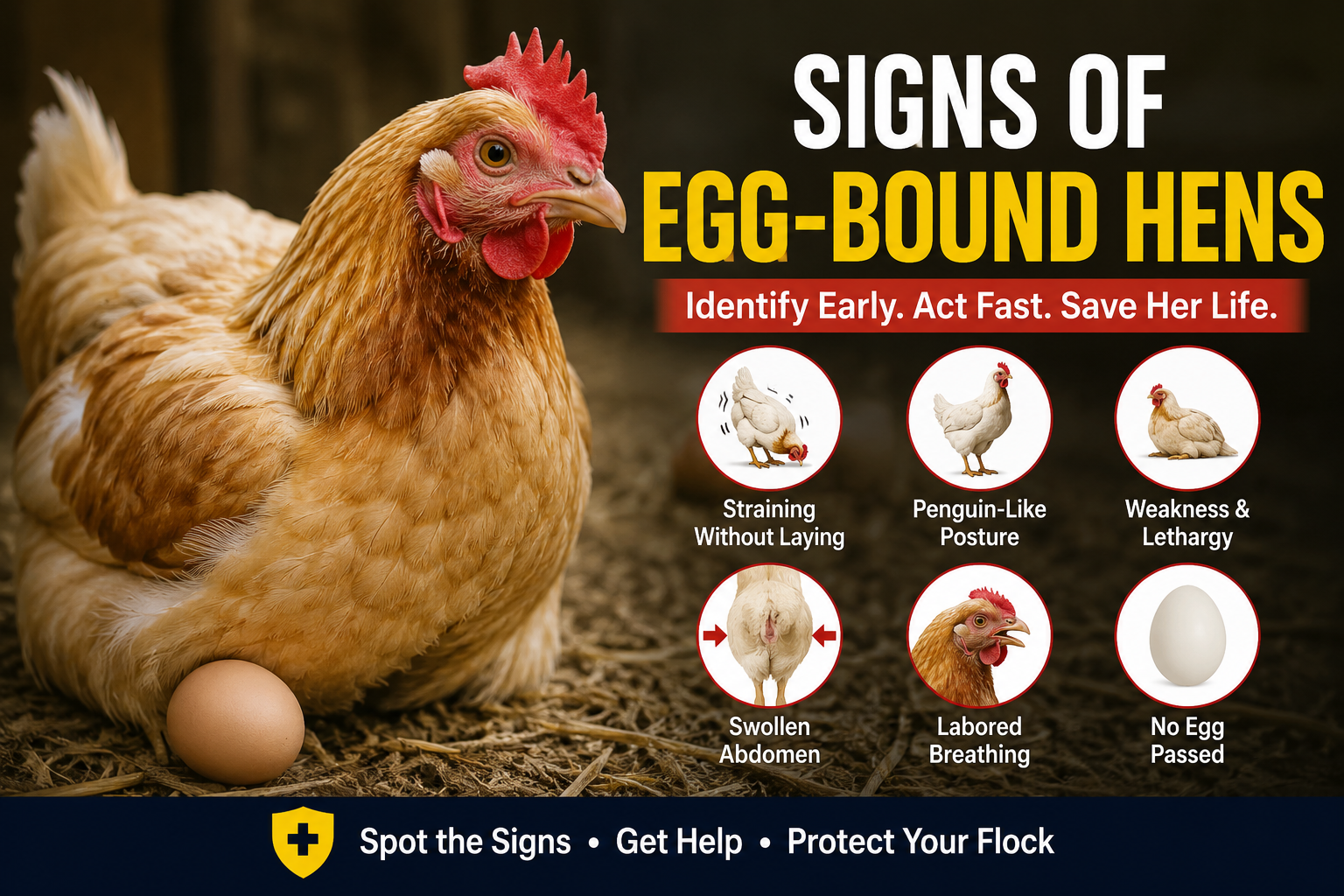
1. Straining Without Producing an Egg
One of the most noticeable Signs of Egg-Bound Hens is repeated straining. A hen may squat, push, or repeatedly visit the nesting area without laying an egg.
2. Swollen or Distended Abdomen
A hen with egg retention may develop a noticeably enlarged abdomen. However, an egg is not always easy to feel, and abdominal swelling can have other causes.
3. Penguin-Like Posture
Some affected hens stand or walk with their body held unusually upright. This penguin-like posture can occur with reproductive tract problems and internal laying.
4. Weakness and Reduced Activity
Another important warning is sudden weakness. The hen may sit quietly, isolate herself, spend more time on the ground, or show little interest in food and water.
5. Tail Bobbing or Breathing Difficulty
Tail movement linked with difficult breathing is an emergency warning sign. In birds with reproductive emergencies, abdominal pressure can contribute to respiratory distress.
Types of Egg-Laying Problems
Egg Binding
Egg binding occurs when a formed egg becomes lodged in the reproductive tract. Large eggs, double-yolked eggs, calcium problems, trauma, and other reproductive abnormalities may contribute.
Internal Laying
Internal laying is different from simple egg binding. Instead of passing through the normal route, an egg or egg material can move into the abdominal cavity. Therefore, a hen can show reproductive symptoms even when no egg is visible at the vent.
What to Do When You Notice the Signs
If you notice multiple Signs of Egg-Bound Hens, separate the affected hen from flock pressure and keep her in a quiet, comfortable environment.
Then:
- Contact an avian or poultry-experienced veterinarian promptly.
- Provide easy access to clean water.
- Keep the hen warm and reduce unnecessary handling.
- Avoid squeezing the abdomen or attempting forceful egg removal.
- Do not intentionally break an egg inside the hen.
A veterinarian may use physical examination, X-rays, or other diagnostic methods to determine whether an egg is lodged and where it is located.
Important: Egg bound hen treatment should be guided by a veterinarian, especially when the hen is weak, struggling to breathe, severely swollen, or unable to pass the egg. Veterinary treatment may involve supportive care or controlled extraction when necessary.
Care and Prevention Tips
Preventing reproductive problems starts with good flock management. Provide a complete layer diet appropriate for the hen’s age and production stage. Calcium is especially important for eggshell formation, while balanced nutrition supports normal reproductive health.
Additionally, maintain clean housing, suitable nesting areas, fresh water, good ventilation, and reasonable body condition. Avoid pushing young pullets into production too early because immature birds may have a greater risk of reproductive complications.
Common Mistakes to Avoid
Many owners make the same mistakes when they suspect egg binding. First, do not assume every swollen abdomen means an egg is stuck. Second, do not repeatedly press the abdomen to locate an egg.
Also, avoid delaying professional care when the hen becomes weak or develops breathing problems. Because poultry can deteriorate quickly, early veterinary assessment can make an important difference.
When Is It an Emergency?
Seek urgent veterinary help if the hen:
- Cannot stand or becomes extremely weak
- Strains repeatedly without passing an egg
- Has severe abdominal swelling
- Shows tail bobbing or breathing difficulty
- Develops a visible prolapse
- Stops eating or drinking and becomes depressed
These symptoms can indicate serious reproductive disease or another condition that resembles egg binding.
Frequently Asked Questions
1. What are the main Signs of Egg-Bound Hens?
The main Signs of Egg-Bound Hens include repeated straining, unusual upright or penguin-like posture, abdominal swelling, weakness, reduced activity, and difficulty breathing. If several signs appear together, contact a poultry-experienced veterinarian promptly.
2. How can I tell if my hen is egg-bound?
Look for behavioral and physical changes. A hen may repeatedly visit the nesting area, strain without laying, sit quietly, or develop a swollen abdomen. However, these symptoms can also occur with other reproductive problems.
3. Can egg binding be life-threatening?
Yes. Signs of Egg-Bound Hens should be taken seriously because severe egg retention can cause complications and may become life-threatening. Prompt veterinary assessment is especially important if the hen becomes weak or has breathing difficulty.
4. What should I do if I notice Signs of Egg-Bound Hens?
Keep the hen quiet and comfortable, provide access to clean water, and contact a veterinarian experienced with poultry. Avoid squeezing her abdomen or attempting forceful egg removal because this can cause injury.
5. Can nutrition help prevent egg binding?
Good nutrition supports normal egg production and reproductive health. A complete layer diet, appropriate calcium intake, clean water, suitable housing, and maintaining a healthy body condition can all support a hen’s overall health.
6. When should I seek emergency veterinary help?
Seek urgent help if you notice severe weakness, breathing difficulty, significant abdominal swelling, repeated straining, or a visible prolapse. These Signs of Egg-Bound Hens may indicate a serious condition requiring immediate veterinary care.
Conclusion
Understanding the Signs of Egg-Bound Hens gives chicken keepers a better chance to recognize trouble early. Straining, unusual posture, abdominal swelling, weakness, and breathing difficulty deserve immediate attention. However, these signs can overlap with other reproductive conditions, so professional diagnosis is important.
With balanced nutrition, proper flock management, close observation, and rapid veterinary care when needed, owners can improve the chances of protecting an affected hen. If you notice several Signs of Egg-Bound Hens in 2026, act promptly rather than waiting for the condition to resolve on its own.
Leave a Reply