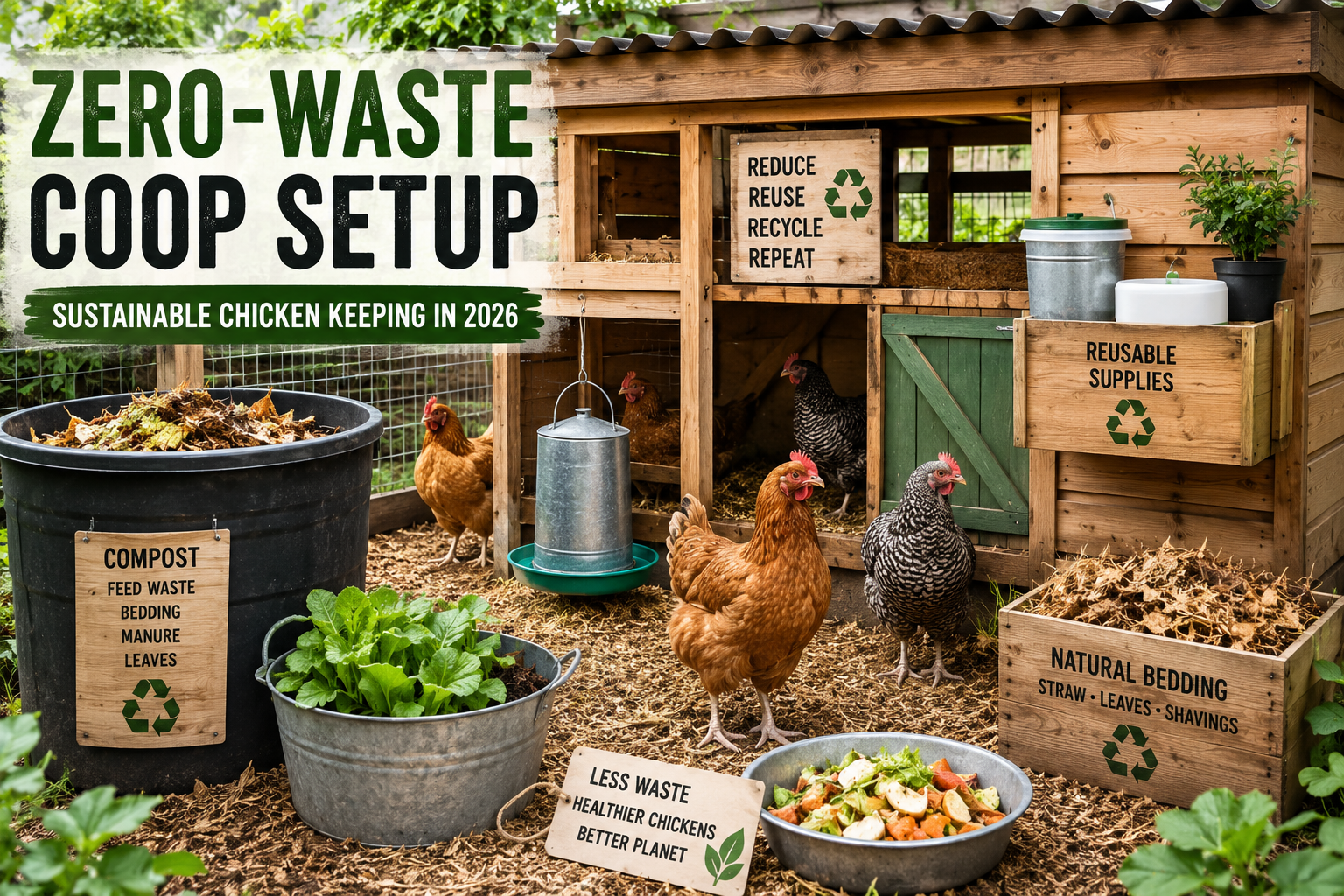
Zero-Waste Coop Setup: A Smarter Way to Keep Chickens in 2026
A Zero-Waste Coop Setup can help chicken keepers create a cleaner, cheaper, and more sustainable flock environment. In 2026, more backyard poultry owners are looking for practical ways to reduce waste without making chicken care complicated.
Instead of throwing away bedding, food scraps, feathers, and other materials, you can reuse or compost many of them. As a result, a well-planned coop can produce less trash while giving your chickens a healthy place to live. [Internal Link: Backyard Chicken Coop Guide]
Why a Zero-Waste Coop Setup Matters
A Zero-Waste Coop Setup focuses on using resources wisely. The goal is not to produce literally zero waste. Instead, it means reducing unnecessary waste and finding useful ways to reuse natural materials.
Additionally, this approach can save money over time. You may buy less bedding, reduce food waste, and create valuable compost for gardens.
Key benefits include:
- Less household and farm waste
- Lower bedding and feed costs
- Better use of food scraps
- Natural compost for gardens
- Cleaner and more organized coop management
- More sustainable chicken keeping
Key Features of a Zero-Waste Coop Setup
Choose Reusable Chicken Coop Materials
Start with durable materials that can serve you for years. Reusable feeders, washable waterers, strong nesting boxes, and long-lasting tools can reduce the need for frequent replacements.
Furthermore, repair damaged equipment whenever possible instead of immediately throwing it away.
Use Eco-Friendly Chicken Bedding
Choosing eco-friendly chicken bedding is another important step. Materials such as clean straw, shredded cardboard, dried leaves, and untreated wood shavings can work well when used safely and kept dry.
However, avoid materials treated with chemicals, moldy bedding, or anything that could harm your flock. Replace wet or heavily soiled bedding as needed to maintain good coop hygiene.
Reduce Feed Waste
A good feeder should make it difficult for chickens to scratch food onto the ground. Therefore, choose a feeder that limits spills and keep it at a suitable height.
You can also monitor daily feed amounts. This helps prevent leftovers from becoming unnecessary waste.
Types of Zero-Waste Coop Setup
Compost-Based Setup
A compost-focused Zero-Waste Coop Setup turns used bedding, manure, feathers, and suitable organic material into compost.
Chicken manure contains nutrients, but fresh manure should not be applied directly to many garden plants. Instead, compost it properly before garden use.
The deep-litter method uses layers of suitable bedding that gradually mix with manure. With proper management, the material can eventually become useful compost.
However, moisture control is essential. Good ventilation also helps reduce unpleasant odors and supports healthier coop conditions.
Garden-Integrated Setup
A garden-integrated approach connects chicken keeping with gardening. For example, suitable vegetable scraps can sometimes supplement a chicken’s normal diet, while composted coop material can support soil improvement.
Always check that scraps are safe for chickens before feeding them.
How to Build Your Zero-Waste Coop Setup
Follow these simple steps:
- Audit your waste: Identify bedding, feed, packaging, and food waste.
- Reduce first: Prevent spills and avoid unnecessary disposable products.
- Reuse materials: Repurpose safe cardboard, leaves, and suitable organic materials.
- Create a compost area: Keep compost materials in a managed location.
- Improve feeding: Use feeders that reduce scratching and spilling.
- Save water: Check drinkers regularly for leaks and unnecessary overflow.
- Track results: Review your waste every few weeks and improve the system.
Common Mistakes to Avoid
Even a Zero-Waste Coop Setup can cause problems if waste reduction becomes more important than flock health.
Avoid these mistakes:
- Using moldy or contaminated bedding
- Feeding chickens unsafe food scraps
- Allowing manure to build up excessively
- Using chemically treated materials
- Ignoring wet areas in the coop
- Blocking ventilation to control odors
- Reusing dirty water containers without cleaning them
Most importantly, never reuse a material simply because it is free. Chicken safety should always come first.
Maintenance Tips for 2026
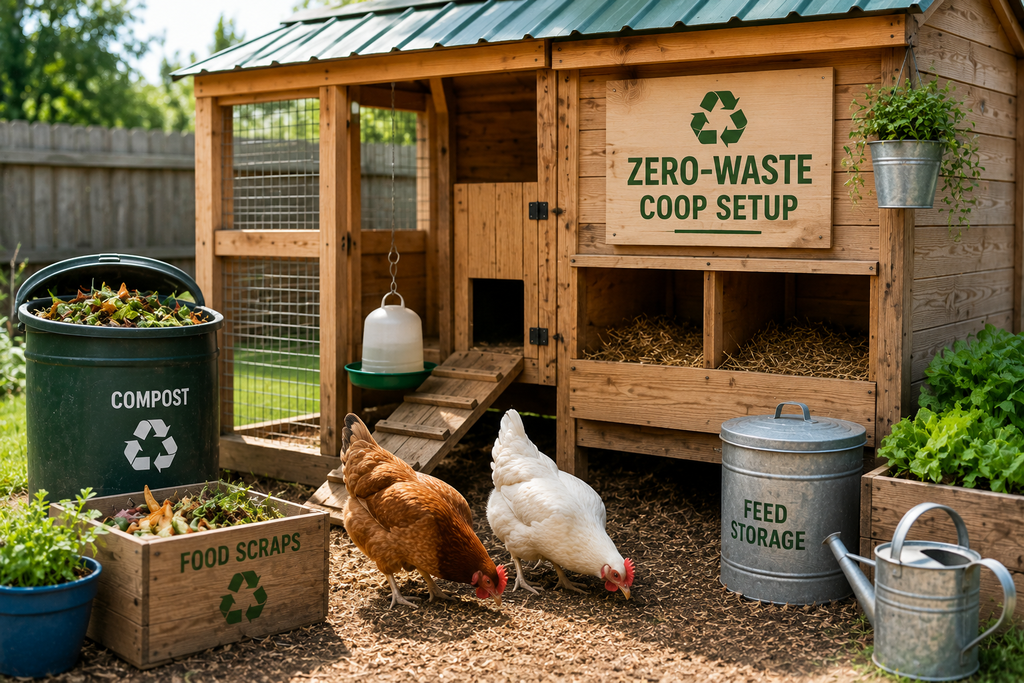
Regular maintenance keeps a Zero-Waste Coop Setup practical. Check feeders and waterers daily for spills, leaks, or contamination.
Additionally, inspect bedding regularly. Remove wet or unsafe material instead of trying to save everything. A sustainable coop should still provide clean water, dry bedding, fresh air, and comfortable nesting areas.
Keep compost separate from areas where chickens eat and drink. As a result, you can reduce waste while maintaining better hygiene.
Is a Zero-Waste Coop Setup Worth It?
For many backyard chicken keepers, a Zero-Waste Coop Setup is a practical long-term strategy. You do not need expensive equipment or a large farm. Small changes, such as reducing feed spills and composting suitable bedding, can make a meaningful difference.
The best approach is to start with one or two changes. Then, expand your system as you learn what works for your flock and property.
Conclusion
A Zero-Waste Coop Setup can make chicken keeping more efficient, affordable, and environmentally responsible in 2026. By reducing feed waste, choosing reusable equipment, managing bedding, and composting suitable organic material, you can create a cleaner routine with less unnecessary trash.
Start small, monitor your flock, and improve your setup over time. Build your Zero-Waste Coop Setup today and turn everyday chicken waste into a useful resource.
Leave a Reply