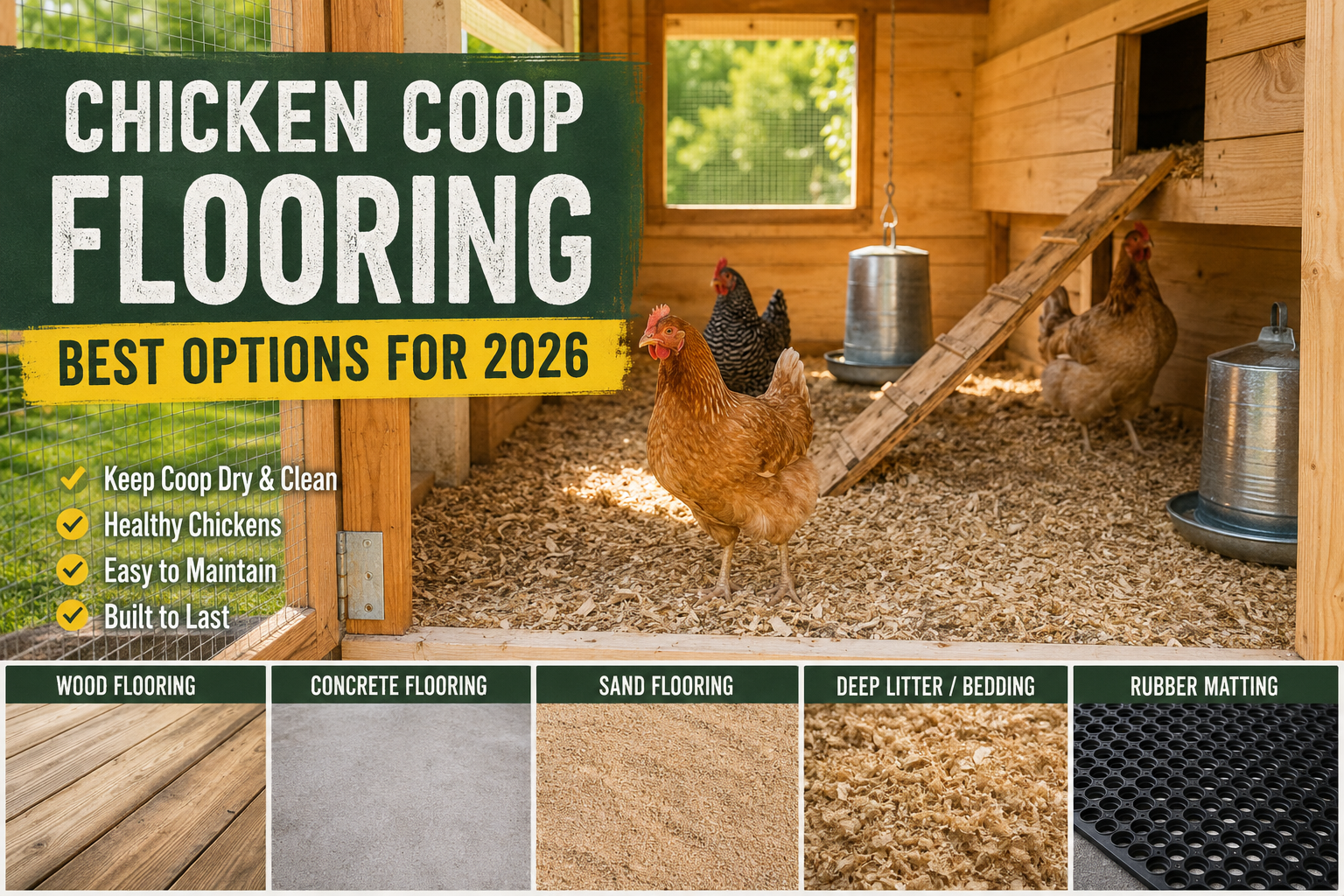
Chicken Coop Flooring: Best Options for 2026
Choosing the right Chicken Coop Flooring can make a major difference in flock health, cleaning time, and coop life. For backyard chicken keepers in the US and around the world, the best floor should stay dry, resist moisture, provide good footing, and remain easy to clean.
However, there is no single flooring material that works perfectly for every climate. Your weather, coop design, budget, and cleaning routine should guide your choice.
Why Chicken Coop Flooring Matters
Good Chicken Coop Flooring protects the structure while giving your birds a clean and comfortable surface. Additionally, a well-designed floor can help control moisture, odors, pests, and waste.
Penn State Extension recommends keeping poultry housing dry and well-drained because prolonged dampness can create poor conditions for birds.
A good floor should provide:
- Moisture resistance
- Easy cleaning
- Safe traction
- Predator and rodent protection
- Good durability
- Compatibility with suitable bedding
As a result, choosing the floor material before building the coop can save money and maintenance work later.
Key Chicken Coop Flooring Factors
Climate and Drainage
Climate should be one of your first considerations. In wet regions, choose a surface that prevents water from soaking into the structure. Furthermore, raising the coop above poorly drained ground can reduce moisture problems.
In hot and dry climates, coarse sand can work well because it dries quickly. However, cold climates may benefit more from an insulated floor combined with deep bedding.
Durability and Cleaning
Your Chicken Coop Flooring should handle scratching, moisture, manure, and regular cleaning. Sealed plywood, concrete, and durable sheet flooring can make cleaning easier.
Additionally, avoid leaving untreated wood exposed to repeated moisture. Water from drinkers can eventually cause swelling, rot, or structural damage.
Safety and Footing
Chickens need secure footing. Slippery surfaces can cause injuries, especially for young birds. Penn State Extension specifically warns against raising young fowl on slippery surfaces because poor traction can contribute to leg problems.
Types of Chicken Coop Flooring
Wood Flooring
Wood remains a popular choice because it is affordable and easy to install. Sealing the surface can improve moisture resistance.
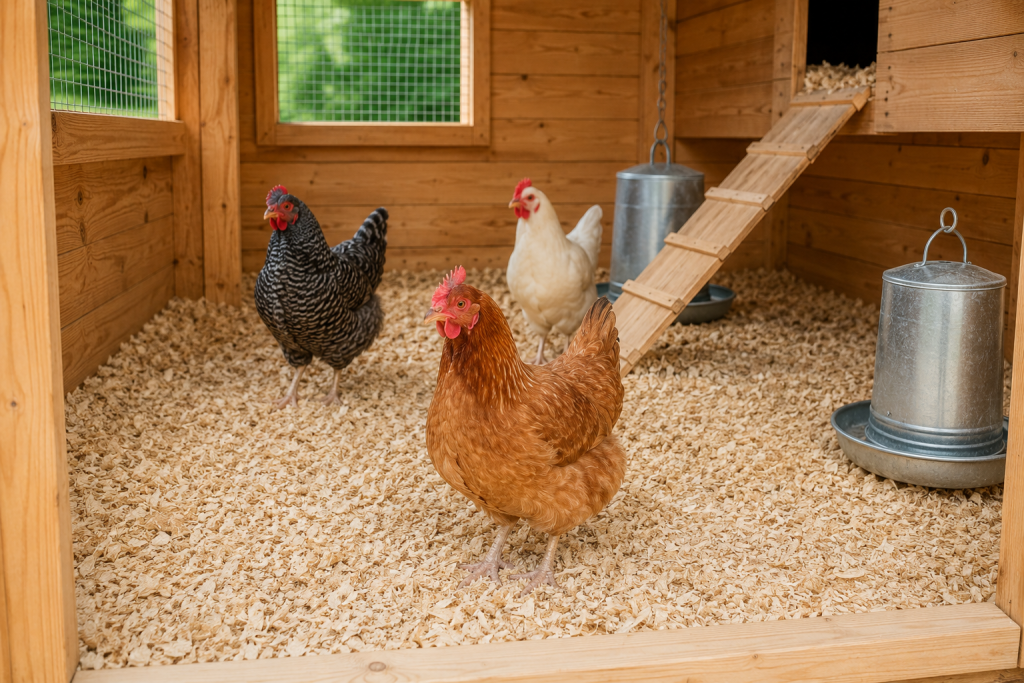
However, wood needs protection from water. Add suitable chicken coop bedding such as clean pine shavings to protect the surface and improve comfort.
Concrete Flooring
Concrete offers excellent durability and makes washing and disinfecting easier. Moreover, it can provide strong protection against rodents and digging predators when properly constructed.
The downside is that concrete can feel cold and hard. Therefore, add suitable bedding to provide insulation and comfort.
Sand Flooring
Coarse sand is another option, particularly for covered areas and warmer climates. It drains quickly and allows keepers to remove droppings with a scoop.
However, avoid fine, dusty sand. Coarse construction-grade sand is generally a better choice for this application.
Dirt or Ground Flooring
A dirt floor costs little and feels natural. Nevertheless, it can become muddy, difficult to sanitize, and vulnerable to digging predators.
For that reason, dirt flooring works best when the site has excellent drainage and strong predator protection.
Choosing Chicken Coop Flooring for Your Needs
Before selecting your floor, ask these questions:
- Is my climate wet, dry, hot, or cold?
- How often can I clean the coop?
- Does the floor resist moisture?
- Can rodents or predators dig underneath?
- Will my chickens have safe traction?
- What bedding will I use?
For many backyard keepers, sealed wood with absorbent bedding offers a practical balance. Meanwhile, concrete suits owners who prioritize durability and easy cleaning.
A newer 2026 trend is greater interest in hemp bedding because of its absorbency and low-dust characteristics. Pine shavings remain a widely used budget-friendly choice, while coarse sand continues to appeal to keepers in suitable climates.
Common Mistakes to Avoid
Even excellent Chicken Coop Flooring can fail when the surrounding setup is poor.
Avoid these common mistakes:
- Leaving untreated wood exposed to water
- Using slippery surfaces without bedding
- Choosing fine, dusty sand
- Allowing drinkers to leak continuously
- Ignoring poor ventilation
- Letting bedding remain wet
- Building on poorly drained ground
- Forgetting predator protection
Additionally, do not assume that deep bedding means you never need to clean. Wet or compacted litter should be managed promptly.
Chicken Coop Flooring Maintenance Tips
Regular maintenance keeps the floor healthier and extends its life. Check the coop frequently, especially around waterers and feeders.
With pine bedding, Penn State Extension advises cleaning a roughly 3-inch litter bed at least every six weeks, or sooner when it becomes wet or develops an odor.
For easier Chicken Coop Flooring maintenance:
- Remove wet bedding quickly.
- Keep waterers stable and leak-free.
- Improve ventilation without creating harmful drafts.
- Replace damaged or rotting flooring.
- Keep litter dry and loose.
- Check corners for rodents and pests.
The deep litter method can also reduce routine cleaning when managed correctly. However, it requires attention to moisture and ammonia rather than simply allowing waste to build up.
Final Verdict
The best Chicken Coop Flooring depends on your climate, flock, budget, and maintenance habits. Wood, concrete, sand, and dirt can all work when installed and managed correctly.
For most backyard setups, a durable moisture-resistant base combined with clean, dry bedding provides a practical solution. Choose a floor that keeps your chickens dry, comfortable, and safe, then maintain it regularly for a healthier flock in 2026.
Leave a Reply