If you keep backyard chickens or manage a small flock, why chickens stop laying eggs can become a frustrating question. In 2026, poultry owners worldwide continue to face seasonal changes, heat, stress, nutrition problems, and normal laying cycles that can reduce egg production.
The good news is that a sudden drop does not always mean your hens are sick. Often, you can identify the cause by checking their age, daylight, diet, water, environment, and overall behavior.
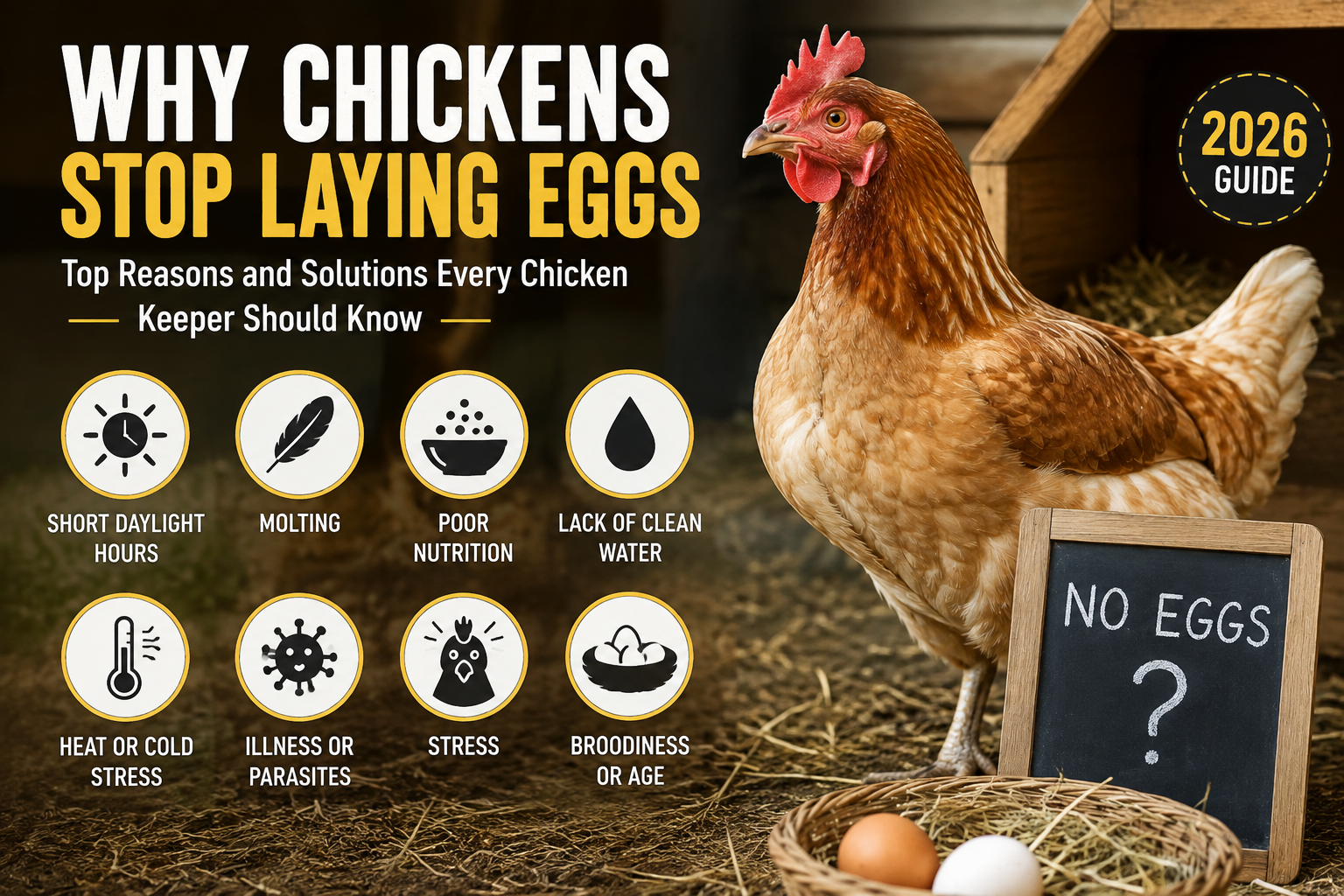
Why Chickens Stop Laying Eggs: The Main Causes
Egg production depends on several factors working together. Therefore, even a healthy hen may temporarily stop producing eggs.
Here are the most common reasons:
- Shorter daylight hours
- Molting
- Poor nutrition
- Lack of clean water
- Heat or cold stress
- Illness or parasites
- Stress from environmental changes
- Broodiness
- Increasing age
According to Penn State Extension, daylight plays a major role in reproductive activity. When daylight decreases, hens can reduce or stop laying and may begin molting.
Why Chickens Stop Laying Eggs in Fall and Winter
One of the biggest seasonal causes is reduced daylight. Hens need adequate light stimulation to maintain reproductive activity. As autumn and winter shorten the day, egg production commonly falls.
For year-round production, poultry experts commonly recommend around 14–16 hours of total light per day, while still giving hens a proper dark period.
However, do not suddenly change the lighting schedule. Gradual adjustments can reduce stress and help maintain a stable laying routine.
Molting Can Temporarily Stop Egg Production
Molting is another natural explanation for why chickens stop laying eggs. During a molt, hens lose old feathers and grow new ones. Their bodies redirect energy toward feather growth, so egg production may slow dramatically or stop.
Natural molting often occurs when daylight decreases. Most hens eventually return to laying after the molt finishes.
Nutrition and Water Problems
A balanced layer diet is essential for consistent egg production. Hens need adequate protein, energy, minerals, and calcium to support both egg formation and strong shells.
Therefore, avoid relying heavily on scratch grains, corn, or household leftovers. These foods can dilute a complete ration and leave hens short of important nutrients.
Clean water matters just as much. Additionally, check drinkers every day, especially during hot weather.
Stress, Heat, and Environmental Changes
Stress can also explain why chickens stop laying eggs. Moving birds, introducing new chickens, predators, excessive noise, overcrowding, or sudden changes in routine can affect production.
Extreme temperatures may also reduce laying performance. Therefore, provide shade and ventilation during hot weather and protect birds from severe cold, drafts, and wet conditions.
Good housing should provide:
- Fresh air without strong drafts
- Clean, dry bedding
- Reliable access to feed and water
- Safe nesting areas
- Enough space for normal movement
Age, Broodiness, and Natural Laying Cycles
Age is another important factor when investigating why chickens stop laying eggs. Hens usually reach peak production during their earlier laying years. Production normally declines as they get older.
Broodiness can also temporarily stop a hen from laying. A broody hen may spend long periods sitting in a nest and may continue this behavior even when no fertile eggs are present.
Furthermore, individual breeds differ. Some hens naturally produce more eggs than others, so comparing every bird to a high-producing commercial layer can create unrealistic expectations.
What to Check When Hens Stop Laying
If you notice hens not laying eggs, use this simple checklist:
- Check the flock’s age.
- Measure the available daylight.
- Look for signs of molting.
- Review the feed quality.
- Make sure clean water is always available.
- Check for parasites, injuries, or unusual behavior.
- Inspect the coop for predators or other stressors.
- Check whether eggs are being hidden or eaten.
If several birds stop laying suddenly or show signs such as weakness, breathing problems, diarrhea, weight loss, or unusual behavior, contact a qualified veterinarian or poultry health professional.
Common Mistakes to Avoid
When trying to improve why chickens stop laying eggs, avoid making several changes at once.
Do not overfeed treats. Do not use excessive artificial light. Also, never ignore a sick-looking bird simply because seasonal changes can reduce production.
Instead, change management gradually and keep simple records of feed, lighting, health, weather, and daily egg numbers. These records can help you identify patterns over time.
How to Support Healthy Egg Production
To improve egg production naturally, focus on the basics:
- Feed a complete layer ration.
- Provide fresh water every day.
- Keep nesting boxes clean and dry.
- Maintain suitable ventilation.
- Reduce unnecessary stress.
- Monitor body condition and behavior.
- Provide appropriate daylight or carefully managed supplemental lighting.
Penn State Extension recommends gradual lighting changes and warns against exceeding 16 hours of light per day for laying hens.
Conclusion
Understanding why chickens stop laying eggs helps poultry owners respond instead of worrying. In many cases, reduced daylight, molting, age, nutrition, stress, or normal reproductive cycles explain the change.
Start by checking the simple factors first: light, food, water, housing, and health. Then keep records and watch for unusual symptoms. With consistent care, you can support healthier hens and more predictable chicken egg production throughout 2026 and beyond.
Leave a Reply