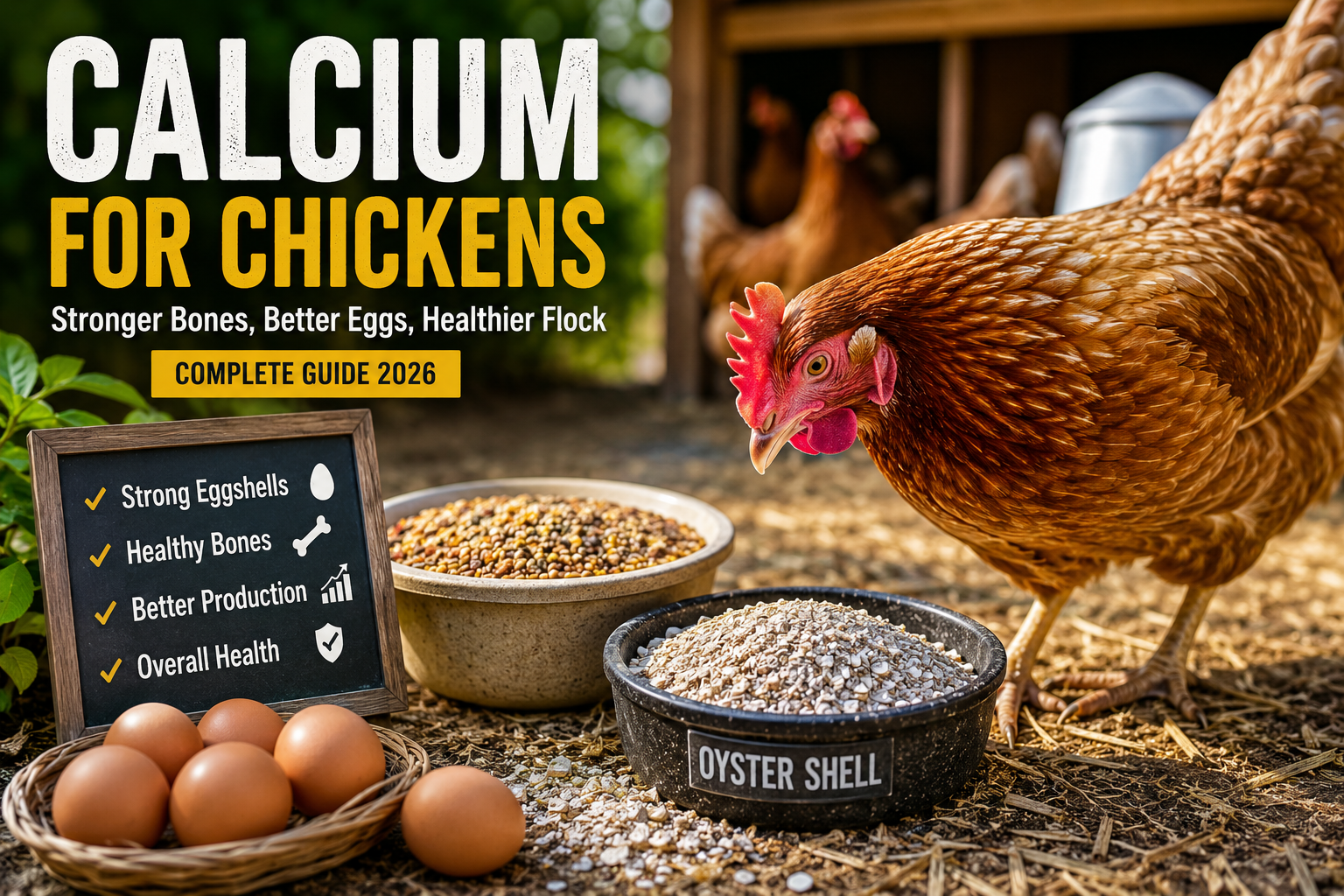
Calcium for Chickens: Essential Guide for 2026
Calcium for Chickens is an important part of a balanced poultry diet, especially for laying hens. Calcium helps support eggshell formation, healthy bones, and normal body functions. However, giving too much calcium to young birds can cause serious problems. Therefore, chicken owners should match calcium intake to the bird’s age and stage of production.
For backyard flocks in the US and around the world, the safest approach is to start with a complete, age-appropriate poultry feed. Additionally, laying hens can benefit from suitable calcium sources such as oyster shell.
Why Calcium for Chickens Matters
Calcium for Chickens becomes especially important when hens begin producing eggs. A typical eggshell requires a significant amount of calcium, and hens may draw calcium from their bones when their diet cannot meet the demand. As a result, inadequate calcium can contribute to thin shells and weakened bones.
Calcium also works alongside phosphorus and vitamin D3. Vitamin D3 helps chickens absorb and use calcium properly. Therefore, simply adding more calcium is not always the right solution.
Benefits of Proper Calcium
A balanced calcium supply can help support:
- Stronger eggshells
- Healthy skeletal development
- Normal muscle and nerve function
- Better bone strength in laying hens
- Consistent egg production
Calcium for Chickens: Best Sources
There are several practical sources of Calcium for Chickens, but they are not equally suitable for every bird.
Oyster Shell for Chickens
Oyster shell is one of the most common calcium supplements for laying hens. Its larger particles can remain in the gizzard longer, allowing calcium to become available over time. Therefore, free-choice oyster shell can be useful for laying flocks.
Limestone
Limestone is another common calcium source used in poultry diets. Commercial layer feeds may already contain carefully balanced calcium levels, so owners should check the feed label before adding extra supplements.
Complete Layer Feed
A quality layer feed is often the easiest starting point. It provides calcium alongside protein, phosphorus, vitamins, and other nutrients. Additionally, it reduces the risk of creating an unbalanced diet.
Chicken Calcium Requirements by Age
Chicken calcium requirements change as birds grow.
Chicks and Growing Pullets
Young chickens do not need the high calcium levels found in layer diets. In fact, feeding high-calcium layer feed to immature birds can cause kidney problems and other health issues.
Therefore, use chick starter or grower feed according to the bird’s age.
Laying Hens
Once hens reach production, their calcium needs increase substantially. Merck Veterinary Manual notes that laying birds generally require much more dietary calcium than growing birds because eggshell production creates a high demand.
For this reason, layer feed plus an appropriate calcium source can help support strong eggshells in laying hens.
How to Provide Calcium for Chickens Safely
Follow these simple steps:
- Feed an age-appropriate complete poultry diet.
- Provide clean drinking water at all times.
- Offer oyster shell separately to laying hens when appropriate.
- Avoid routinely giving high-calcium layer feed to chicks and growing pullets.
- Monitor eggshell quality and overall flock condition.
- Consult a poultry veterinarian if weakness, paralysis, fractures, or severe production problems appear.
Common Calcium Mistakes to Avoid
One common mistake is assuming that more calcium is always better. However, excessive calcium can be harmful, particularly in immature birds.
Another mistake is ignoring the balance between calcium, phosphorus, and vitamin D3. These nutrients work together, so a balanced poultry diet matters more than adding a single mineral.
Also, do not replace complete feed with treats, grains, or kitchen scraps. These foods can be offered in moderation, but they may not provide the complete nutrition chickens require.
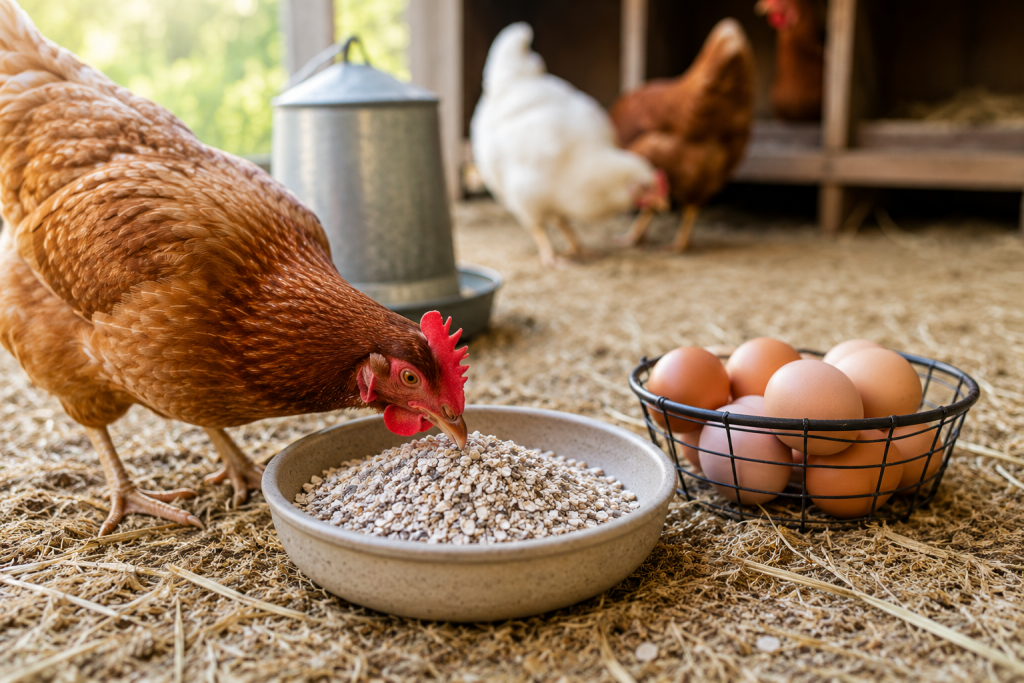
Calcium Deficiency in Chickens: Warning Signs
Calcium deficiency in chickens may contribute to poor eggshell quality and weakened bones. In serious cases, laying hens can develop osteoporosis or problems associated with low blood calcium.
Watch for:
- Thin or fragile eggshells
- Weak legs
- Difficulty standing
- Reduced production
- Bone fractures
- Unusual weakness or paralysis
These signs can have multiple causes. Therefore, do not diagnose a mineral deficiency based on one symptom alone.
2026 Care Tips for Better Chicken Nutrition
In 2026, the best approach remains simple: provide a nutritionally complete diet designed for the bird’s life stage. Additionally, keep fresh water available and avoid unnecessary supplements unless there is a nutritional reason for them.
For laying hens, Calcium for Chickens can be supplied through a suitable layer ration and, when appropriate, a separate source such as oyster shell. However, growing birds should receive feed formulated for growth rather than high-calcium layer diets.
Conclusion
Calcium for Chickens plays a major role in eggshell formation and bone health, but the correct amount depends on age, diet, and production stage. Therefore, give chicks and pullets age-appropriate feed, while laying hens should receive a properly balanced layer diet and suitable calcium access when needed.
If your flock has thin eggshells, weak legs, or other concerning symptoms, review its complete diet and seek professional poultry advice. Start with balanced nutrition today to support healthier chickens and stronger eggs in 2026.
Leave a Reply