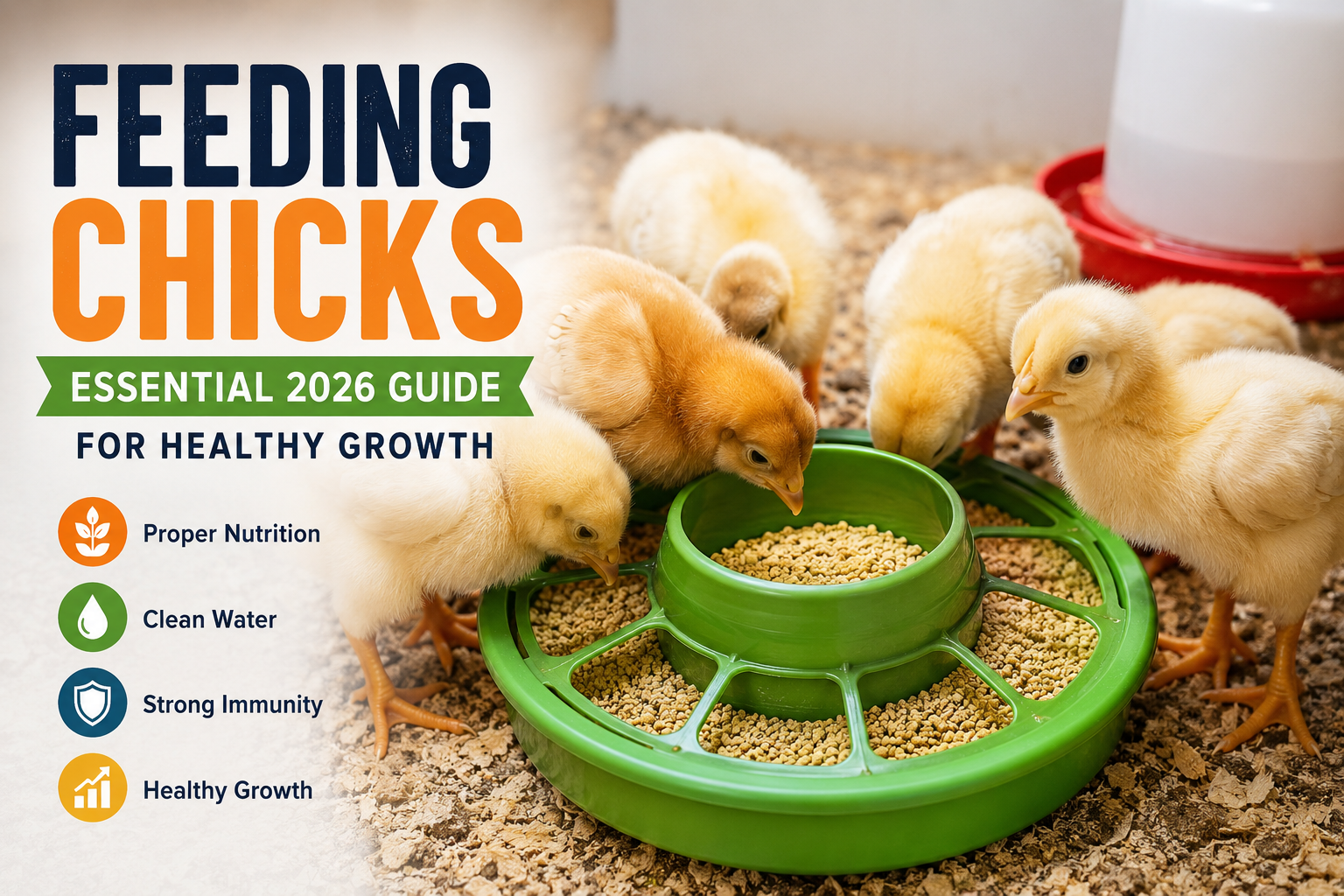
Feeding Chicks: Essential 2026 Guide for Healthy Growth
Raising healthy chicks starts with proper Feeding Chicks from their first day of life. Whether you keep a backyard flock, run a small farm, or are starting your first chicken project, good nutrition helps chicks grow strong and active.
In 2026, poultry keepers have access to better starter feeds, feeders, and flock-care information. However, choosing the right feed and feeding routine still matters. This guide explains what chicks need, how often to feed them, and which mistakes you should avoid.
Why Feeding Chicks Matters
Young chicks grow quickly during their first weeks. Therefore, they need a balanced diet that provides enough protein, energy, vitamins, and minerals.
Good nutrition can support:
- Strong bone and muscle development
- Healthy feather growth
- Normal weight gain
- Good activity levels
- A stronger immune system
- Healthy development into adult chickens
Additionally, clean water should always be available. Feed alone cannot meet a chick’s needs.
Feeding Chicks With the Right Starter Feed
Choose Quality Chick Starter Feed
The most important part of Feeding Chicks is choosing a complete chick starter feed. This feed contains nutrients designed for young chickens and usually provides more protein than adult-layer feed.
Look for a reputable poultry-feed brand with clear nutritional information. Additionally, choose medicated or non-medicated feed based on your flock’s needs and advice from a poultry professional.
Do not replace starter feed with kitchen scraps as the main diet. Scraps may lack important nutrients that growing chicks need.
Provide Fresh, Clean Water
Water is just as important as feed. Chicks can become dehydrated quickly, especially during hot weather.
Keep a clean chick waterer inside the brooder. Furthermore, check it several times each day and remove bedding, dirt, or droppings that enter the water.
Types of Feed for Different Growth Stages
Chick Starter Feed
Starter feed is generally designed for young chicks during their early growth stage. It supplies concentrated nutrition when chicks need it most.
However, feeding requirements can vary by breed, production type, and manufacturer instructions. Always check the feed label for the recommended age range.
Grower Feed
As chicks mature, they eventually transition from starter feed to grower feed. Grower diets usually contain a different nutrient balance for developing birds.
Therefore, do not switch feeds suddenly unless the product instructions recommend it. A gradual transition can help chicks adjust to a new diet.
Treats and Supplemental Foods
Small amounts of suitable treats may be offered after chicks are old enough and eating their complete feed well. However, treats should remain a small part of the overall diet.
Suitable options may include tiny amounts of appropriate greens or other chick-safe foods. Avoid foods that are salty, moldy, heavily seasoned, or spoiled.
How Often Should You Feed Chicks?
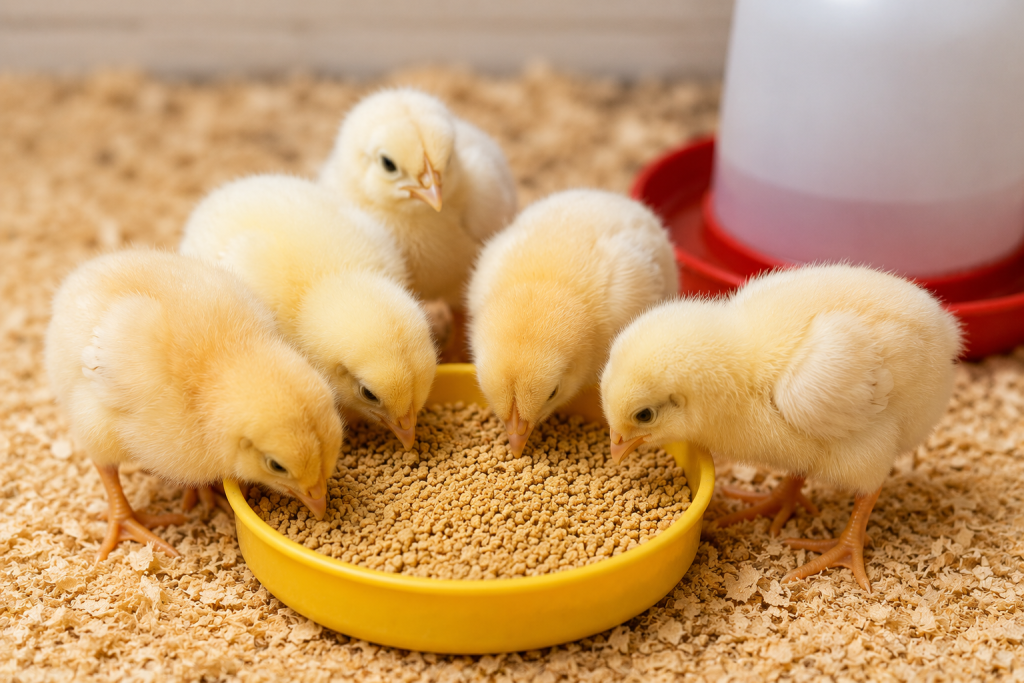
One advantage of Feeding Chicks with complete starter feed is that chicks can usually access feed throughout the day.
A practical routine includes:
- Check the feeder every morning.
- Make sure feed stays dry and clean.
- Refill when necessary.
- Remove heavily contaminated feed.
- Check water at the same time.
Additionally, use a feeder that limits scratching and spilling. This reduces waste and helps keep the brooder cleaner.
Buying Guide: What Should You Look For?
When buying feed and equipment, consider these factors:
- Age: Choose feed designed for the chicks’ current stage.
- Nutrition: Check the guaranteed analysis on the label.
- Freshness: Avoid old, damp, or damaged feed.
- Storage: Buy an amount you can store properly.
- Feeder design: Select a stable feeder that reduces waste.
- Waterer: Choose a chick-safe design that limits spills.
Common Feeding Mistakes to Avoid
Poor Feeding Chicks practices can cause unnecessary problems. Fortunately, most mistakes are easy to prevent.
Avoid these common errors:
- Feeding layer feed to young chicks
- Providing moldy or wet feed
- Allowing waterers to become dirty
- Giving too many treats
- Making sudden feed changes
- Storing feed in a hot or damp place
- Using an unstable feeder
Furthermore, do not assume that more food variety always means better nutrition. A complete starter diet should remain the foundation of a chick’s meals.
Care and Storage Tips
Proper storage protects feed quality. Keep bags in a cool, dry, well-ventilated location and protect them from rodents and insects.
Additionally, clean feeders regularly. If spilled feed becomes wet, remove it instead of allowing it to remain in the brooder.
During hot weather, monitor chicks closely. Fresh water becomes especially important when temperatures rise. As a result, checking food and water several times a day can help you spot problems early.
Conclusion
Successful Feeding Chicks does not need to be complicated. Start with a quality chick starter feed, provide constant access to clean water, keep feeders clean, and adjust the diet as chicks grow.
Most importantly, follow the manufacturer’s feeding guidance and watch your chicks every day. If you notice poor growth, unusual behavior, or other concerns, consult a qualified poultry veterinarian or animal-health professional.
With the right routine, Feeding Chicks can give your young flock a strong start in 2026. Save this guide, share it with another backyard chicken keeper, and keep learning as your flock grows.
Leave a Reply