Chicken Molting Guide: Everything Backyard Chicken Owners Need to Know in 2026
Keeping backyard chickens has become more popular across the United States and around the world. However, many first-time flock owners become worried when their hens suddenly lose feathers. This Chicken Molting Guide explains why molting happens, how to care for your flock, and what to expect during the process in 2026.
Whether you own a few backyard hens or manage a larger flock, understanding the molting cycle helps keep your birds healthy. Additionally, proper nutrition and stress-free care can shorten recovery time and encourage stronger feather growth.
Why the Chicken Molting Guide Matters
Molting is a natural process where chickens shed old feathers and grow new ones. Although it may look alarming, healthy birds usually recover without medical treatment.
Following a reliable Chicken Molting Guide offers several benefits:
- Reduces unnecessary worry.
- Helps identify normal versus unhealthy feather loss.
- Supports faster feather regrowth.
- Maintains egg-laying performance after recovery.
- Improves overall flock health.
Additionally, knowing the difference between molting and illness helps owners avoid unnecessary medications.
Key Features of a Chicken Molting Guide
Understanding the Molting Cycle
Most chickens begin their annual molt between late summer and fall. However, timing depends on breed, age, daylight hours, and environmental conditions.
Young chickens usually experience their first adult molt around 16 to 18 months of age.
Signs Your Chickens Are Molting
Common chicken molt symptoms include:
- Loose feathers throughout the coop
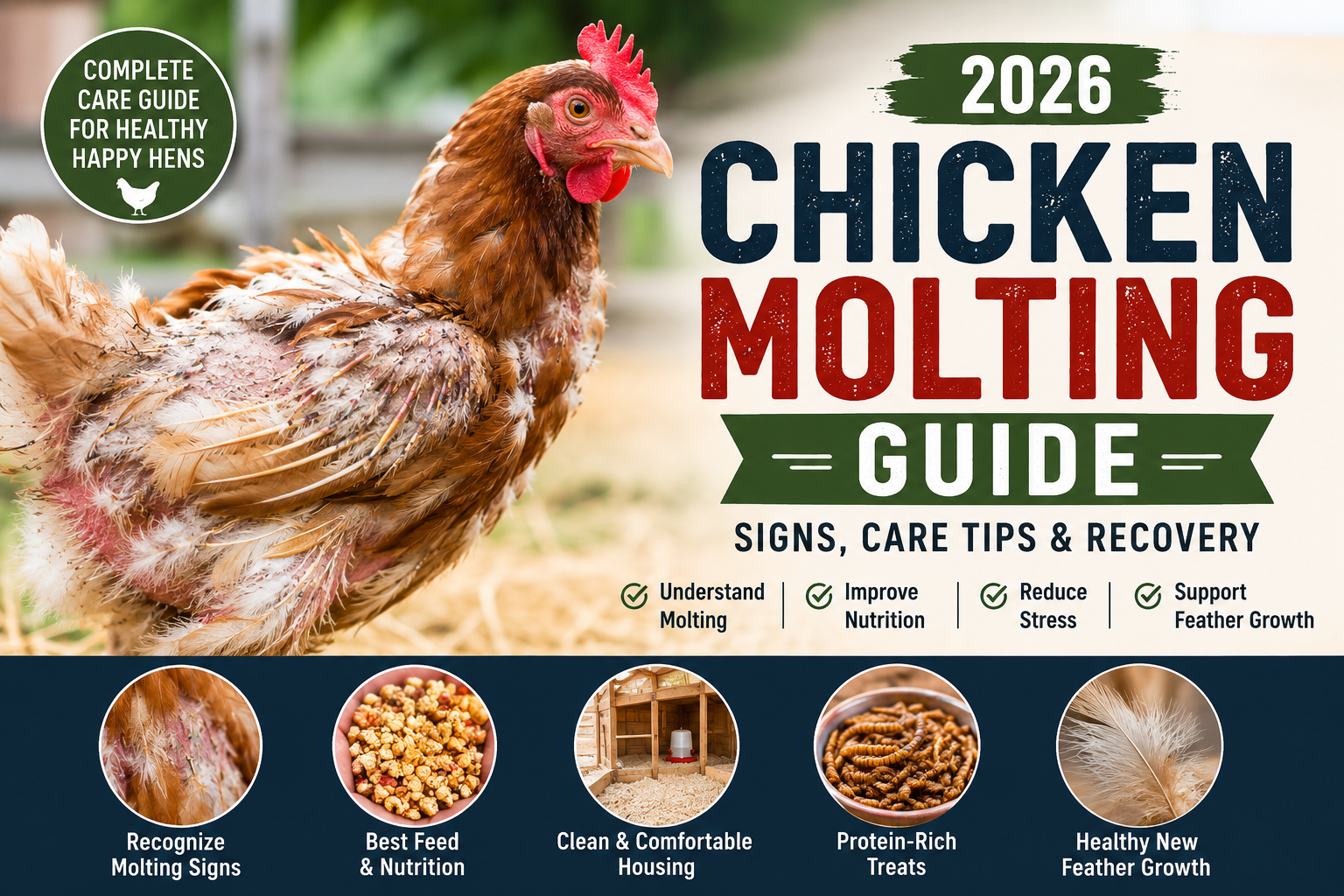
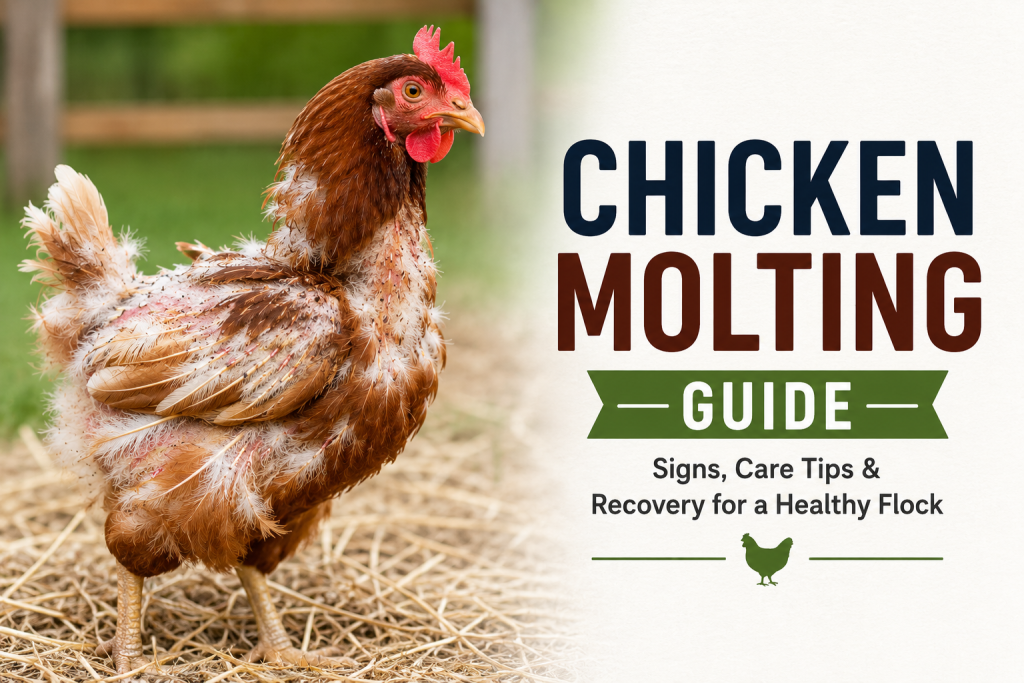
- Bald patches around the neck and back
- Reduced or stopped egg production
- Increased protein requirements
- Slight personality changes
Additionally, new pin feathers begin appearing within a few weeks.
Why Molting Happens
Molting allows chickens to replace worn feathers before winter. As daylight decreases, hormonal changes trigger feather shedding.
As a result, birds redirect energy from egg production to feather growth.
Types of Molting
Natural Annual Molt
This is the most common type. Healthy chickens naturally replace their feathers once every year.
Recovery generally takes 8 to 16 weeks depending on nutrition and breed.
Juvenile Molt
Young chicks lose their fluffy baby feathers before developing adult plumage.
Unlike adult molts, juvenile molts do not significantly affect egg production.
Stress-Induced Molt
Sudden stress from predators, poor nutrition, overcrowding, or illness may trigger unexpected feather loss.
If feather loss occurs outside normal seasons, consult a poultry veterinarian.
Chicken Molting Guide: Buying and Decision Tips
Many poultry keepers ask whether supplements are necessary during molt.
Before purchasing products, consider these factors:
High-Protein Feed
Choose feed containing 18% to 20% protein during molt.
The best feed for molting chickens often includes:
- Black soldier fly larvae
- Mealworms
- Fish meal
- Soybean meal
- High-quality layer pellets
Vitamins and Minerals
Additionally, Vitamin A, Vitamin D, calcium, and zinc support feather development.
Clean Housing
Fresh bedding reduces stress and lowers infection risks while new feathers grow.
Common Mistakes to Avoid
Even experienced chicken owners make mistakes during molt.
Avoid these common problems:
- Handling birds too often because pin feathers are sensitive.
- Forcing egg production with extra lighting.
- Feeding low-protein diets.
- Mistaking normal molting for parasites without checking carefully.
- Ignoring hydration during hot weather.
However, if feather loss appears uneven or birds show wounds, investigate mites or bullying.
Chicken Molting Guide Care Tips
Knowing how to help chickens during molt can significantly improve recovery.
Increase Protein
Protein fuels feather growth. Offer nutritious treats alongside balanced feed.
Reduce Stress
Keep routines consistent. Additionally, avoid introducing new birds during molt.
Provide Fresh Water
Hydration supports overall health and feather development.
Keep the Coop Clean
Regular cleaning prevents infections while sensitive skin remains exposed.
Watch for Health Issues
Although molting is normal, monitor birds for parasites, weight loss, or unusual behavior.
Frequently Asked Questions
Do chickens stop laying eggs during molt?
Yes. Most hens reduce or completely stop laying eggs because nutrients go toward feather growth.
How long does molting last?
Most birds recover within 8 to 16 weeks. However, healthy diets often speed up feather replacement.
Should I separate molting chickens?
Usually, no. Unless bullying occurs, molting birds can stay with the flock.
Final Thoughts
Every chicken owner should understand the annual molting process. This Chicken Molting Guide helps you recognize normal feather loss, improve nutrition, and support healthy recovery throughout 2026.
Additionally, careful observation and quality feeding can make molting much easier for both you and your flock. If your birds show unusual symptoms beyond normal feather loss, seek advice from a qualified poultry veterinarian. Bookmark this Chicken Molting Guide, share it with fellow chicken keepers, and explore our other poultry care resources for more expert tips.
Leave a Reply