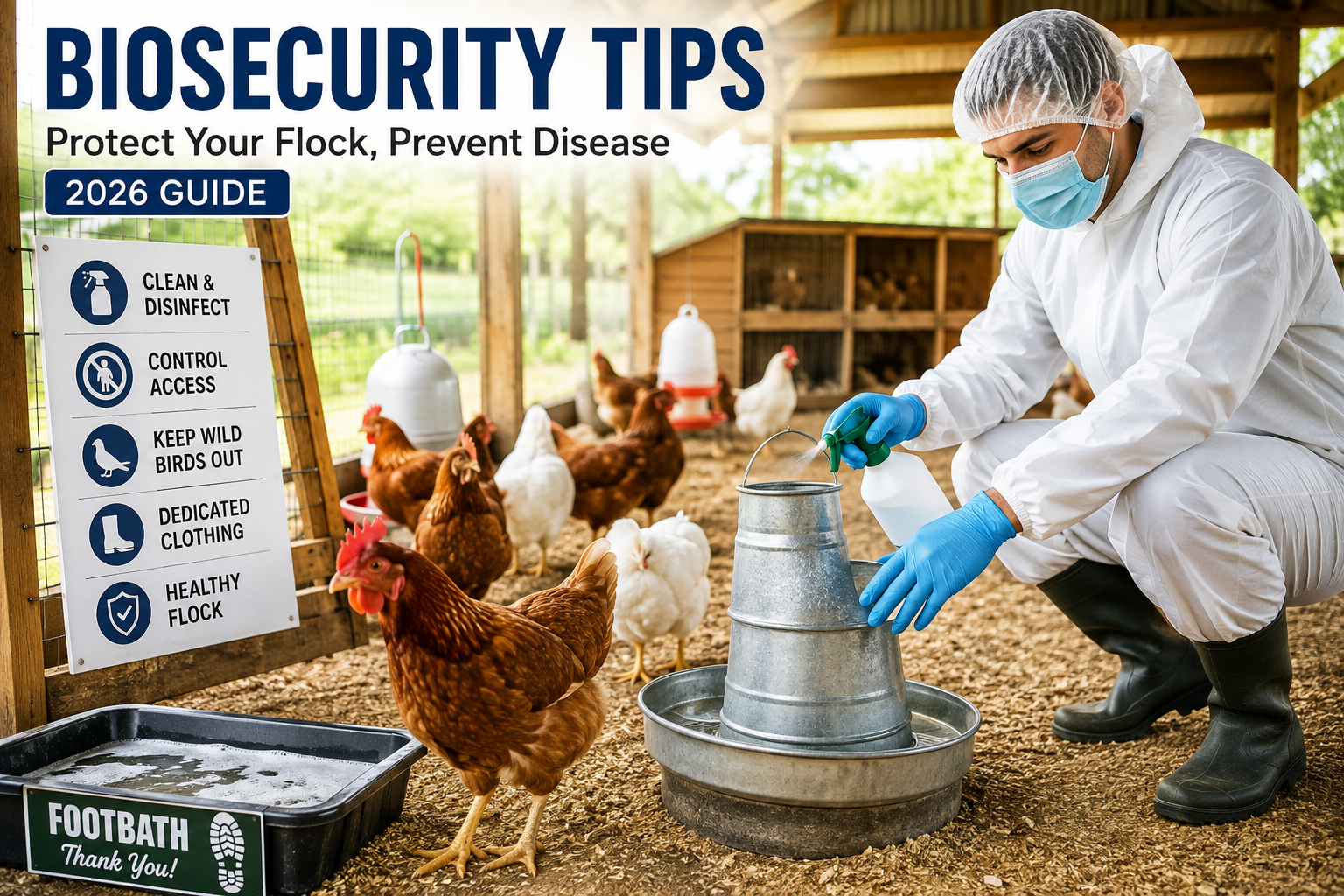
Biosecurity Tips: 2026 Guide to Protect Poultry
Keeping poultry healthy starts with prevention. Biosecurity Tips can help backyard keepers, small farmers, and commercial producers reduce the risk of dangerous diseases entering their flocks. In 2026, this matters even more as avian influenza and other infectious diseases remain important concerns worldwide.
Recent guidance continues to stress prevention, early detection, clean equipment, and limiting contact with potentially infected birds. In May 2026, WOAH also highlighted stronger biosecurity standards as part of global efforts to control avian influenza.
For US poultry owners, USDA APHIS continues to recommend practical measures that reduce disease transmission. However, the same basic principles can help poultry keepers around the world.
Why Biosecurity Tips Matter in 2026
Disease can spread quickly through birds, people, footwear, vehicles, equipment, feed, water, and contaminated surfaces. Wild birds can also introduce pathogens into areas used by domestic poultry.
As a result, good Biosecurity Tips are not only for large farms. Backyard chicken owners should follow them too.
Strong poultry biosecurity can help you:
- Reduce exposure to infectious diseases
- Protect healthy chickens and other poultry
- Lower the chance of flock-wide outbreaks
- Prevent contaminated equipment from spreading germs
- Improve overall farm hygiene
- Detect unusual illness sooner
USDA says wild birds can contaminate water and other areas, while people can unintentionally carry viruses on shoes, clothing, equipment, and vehicles.
Key Biosecurity Tips Every Poultry Owner Should Follow
1. Control Visitors and Farm Access
One of the simplest Biosecurity Tips is to limit unnecessary visitors. Keep poultry areas restricted to people who need to enter.
Additionally, maintain a visitor record when practical. Ask visitors to use clean footwear or disposable shoe covers before entering bird areas.
2. Clean and Disinfect Equipment
Dirty equipment can move germs between flocks. Therefore, clean tools, feeders, waterers, cages, crates, and other equipment regularly.
First remove dirt and organic material. Then use an appropriate disinfectant according to its label instructions.
Avoid sharing equipment with other poultry owners. USDA veterinary guidance specifically recommends cleaning and disinfecting equipment and vehicles and avoiding borrowed poultry equipment.
3. Keep Wild Birds Away
Wild birds can carry pathogens without showing obvious signs of illness. Therefore, keep poultry away from wild bird contact whenever possible.
Protect feed and water from wild birds. Also, remove spilled feed quickly and keep water sources clean.
This is one of the most important Biosecurity Tips for reducing avian influenza exposure.
4. Use Dedicated Clothing and Footwear
Wear footwear and clothing that you use only around your poultry. This simple step can reduce the chance of bringing contamination from other locations into the coop.
Furthermore, clean footwear regularly. A properly maintained footbath can support your poultry biosecurity plan, but it should not replace proper cleaning.
Types of Poultry Biosecurity to Consider
Daily Biosecurity
Daily routines include:
- Washing hands before and after handling birds
- Cleaning feeders and waterers
- Checking birds for unusual symptoms
- Removing waste and dirty bedding
- Keeping poultry areas clean
Movement Biosecurity
Movement control focuses on people, birds, vehicles, and equipment. Avoid unnecessary movement between different flocks.
For example, do not visit another poultry farm and then immediately handle your own birds without changing and cleaning contaminated clothing or footwear.
Wildlife Biosecurity
Wildlife protection means reducing contact between poultry and wild birds, rodents, and other animals. Secure feed containers and repair gaps that could allow pests into poultry housing.
WOAH’s 2026 guidance also emphasizes surveillance and early detection for smallholder poultry systems, particularly where resources are limited.
How to Build a Simple Biosecurity Plan
You do not need an expensive system to start. Instead, create a simple checklist based on your flock and property.
- Identify where birds, people, vehicles, and equipment enter.
- Find possible contamination points.
- Separate clean and dirty areas.
- Set rules for visitors.
- Establish cleaning and disinfection routines.
- Record unusual illness or deaths.
- Review the plan regularly.
For larger operations, consider a professional assessment. USDA currently offers biosecurity assessments for eligible poultry operations and can help identify high-risk areas.
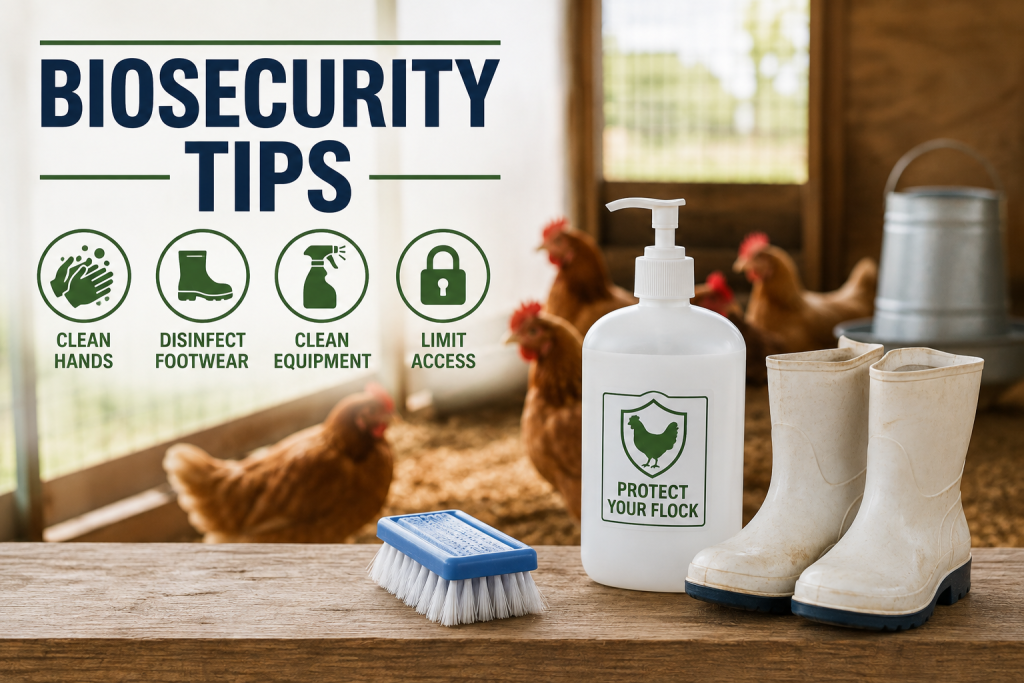
Common Biosecurity Mistakes to Avoid
Even good plans can fail when daily habits become inconsistent. Avoid these common mistakes:
- Allowing unnecessary visitors into poultry areas
- Sharing equipment between farms
- Leaving spilled feed outdoors
- Ignoring sick birds
- Wearing contaminated footwear between flocks
- Allowing wild birds near feed or water
- Skipping cleaning before disinfection
- Buying birds without considering their health status
Additionally, never assume that healthy-looking birds are automatically disease-free.
Maintenance Tips for Long-Term Protection
Review your Biosecurity Tips checklist regularly. Check fences, doors, feed storage, water systems, and cleaning stations for problems.
Watch your flock every day. Sudden deaths, breathing problems, reduced egg production, diarrhea, unusual behavior, or other concerning signs should receive prompt attention.
If you suspect a serious contagious disease, isolate affected birds where appropriate and contact your veterinarian or relevant animal-health authority. Follow local reporting and movement rules.
Frequently Asked Questions
What is poultry biosecurity?
Poultry biosecurity means using simple steps to reduce the spread of disease among chickens and other birds. It includes cleaning, disinfection, access control, and reducing contact with wild birds.
Why is biosecurity important for backyard chickens?
It helps protect backyard chickens from infectious diseases. Good hygiene also reduces the chance of spreading illness between different flocks.
How often should a chicken coop be cleaned?
Remove wet bedding, waste, and spilled feed regularly. A deeper cleaning should be done when the coop becomes dirty or whenever disease exposure is suspected.
Can wild birds spread diseases to chickens?
Yes. Wild birds can carry and spread certain poultry diseases. Keep feed and water protected and reduce direct contact between wild birds and domestic poultry.
Should I quarantine new chickens?
Yes. Separating new birds before introducing them to an existing flock can help reduce disease risks. Follow advice from a veterinarian or local animal-health authority.
How can I disinfect chicken equipment?
First remove dirt and organic material. Then clean the equipment and apply a suitable disinfectant according to its label directions.
What should I do if a chicken looks sick?
Separate the sick bird when appropriate and monitor the rest of the flock. If symptoms are severe, unusual, or spreading, contact a veterinarian or your local animal-health authority.
Can dirty footwear spread poultry disease?
Yes. Shoes and boots can pick up contaminated material and carry it into poultry areas. Use dedicated footwear and clean it regularly.
Is hand washing important when caring for chickens?
Yes. Wash your hands before and after handling birds, equipment, feed, or water. This simple habit can reduce the movement of germs.
Conclusion:
Effective Biosecurity Tips do not need to be complicated. Clean equipment, controlled access, dedicated footwear, protected feed and water, wildlife control, and early disease detection can make a major difference.
In 2026, poultry keepers should treat biosecurity as a daily habit rather than an emergency response. Start with the highest-risk areas on your property, improve them step by step, and keep your flock protected.
For additional guidance, follow recommendations from your local veterinary authority and trusted animal-health organizations.
Leave a Reply