Introduction
Egg-Laying Pattern Track is becoming a practical way to understand flock performance in 2026. For US backyard keepers, small farms, and commercial producers, a simple record can show when hens lay, when output falls, and when a change needs attention. Worldwide, better production data also matters as egg supply and prices continue to shift.
Why Egg-Laying Pattern Track Matters in 2026
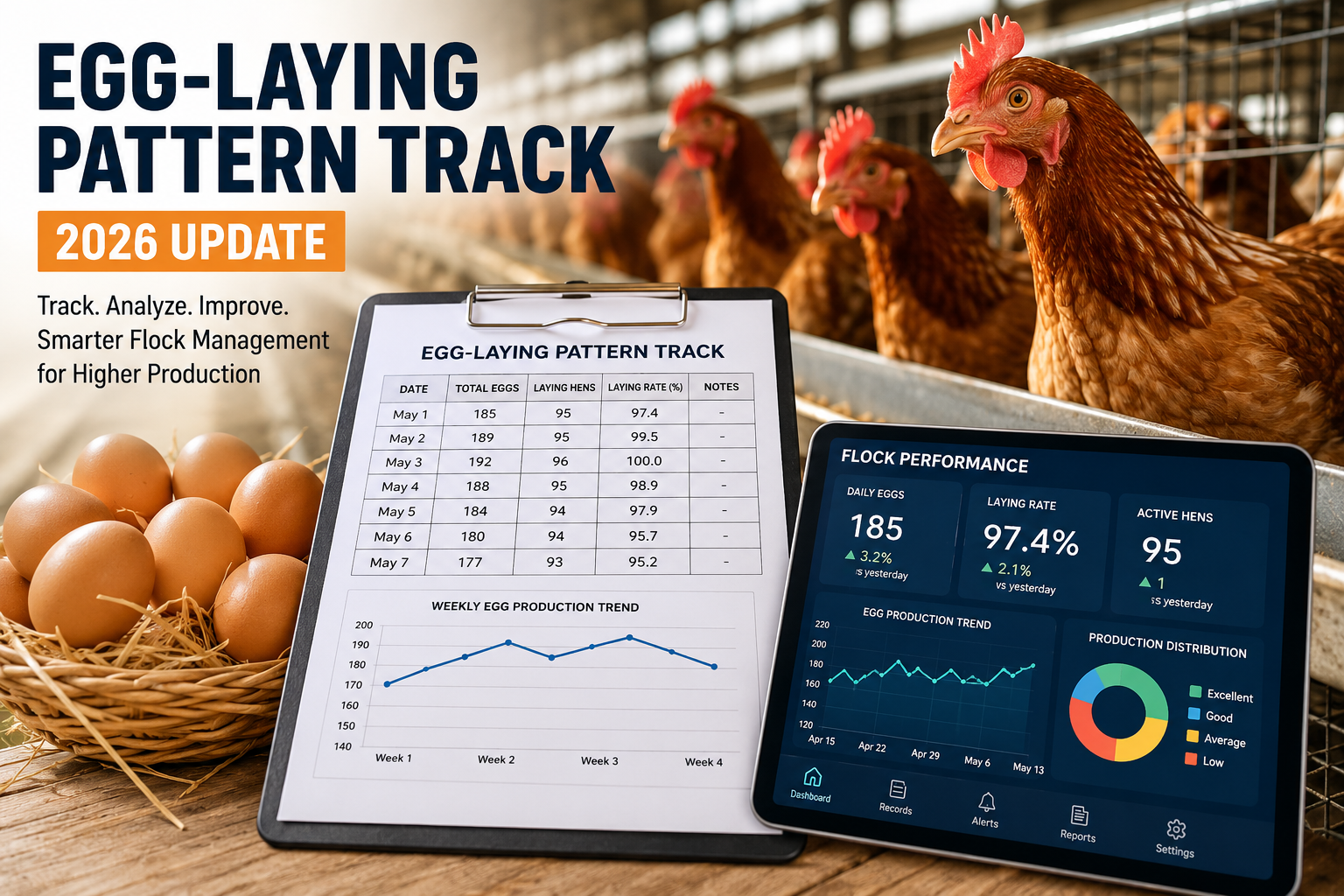
An Egg-Laying Pattern Track turns daily egg counts into useful trends. Instead of looking at one day’s total, farmers can compare output across weeks, seasons, flock ages, weather conditions, feed changes, and housing systems.
The latest research also points toward smarter monitoring. A 2026 study found that machine-learning models can forecast reduced egg-production days in free-range flocks, showing how historical farm data can support earlier decisions.
USDA’s August 2026 outlook says table-egg production in the second quarter was slightly below the previous projection, while egg-price forecasts were revised higher for 2026 and 2027.
Egg-Laying Pattern Track: Key Factors
1. Daily Egg Production
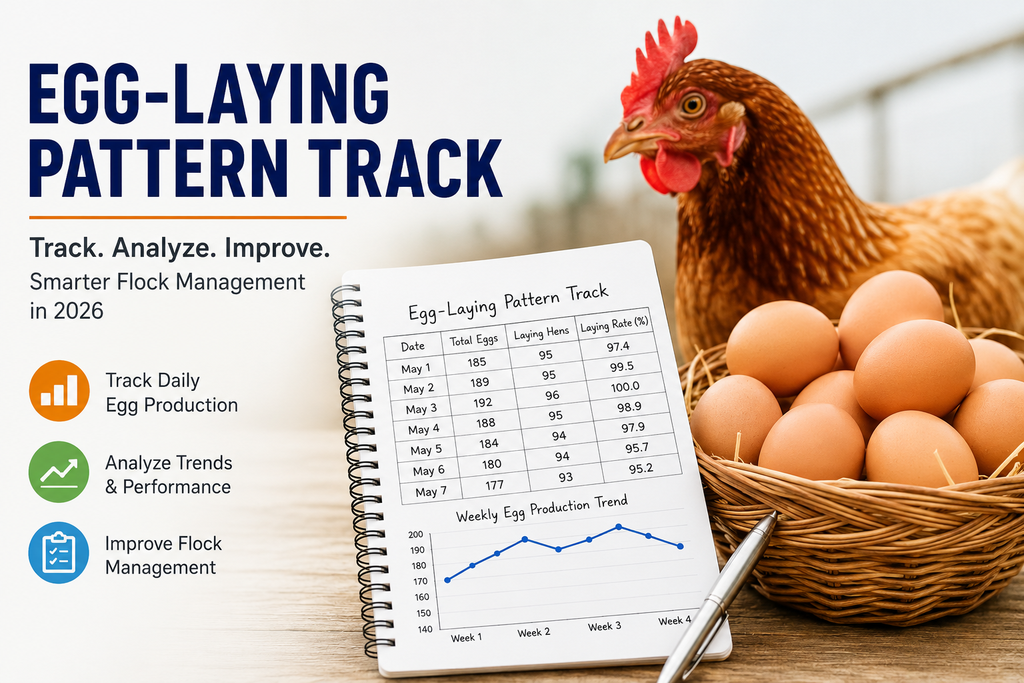
Use Egg-Laying Pattern Track records to record total eggs every day. Also note the number of active layers. This lets you calculate the laying rate and spot sudden changes.
2. Feed and Water Intake
Feed intake can affect output. Therefore, record major feed changes, water interruptions, and unusual consumption.
3. Age and Flock Stage
Hens do not maintain the same output forever. Egg numbers usually rise after the start of lay, reach a stronger production period, and then decline. As a result, age should always sit beside production data.
4. Weather and Housing
Heat, cold, lighting, ventilation, and housing conditions can influence behavior and production. Modern precision poultry systems increasingly combine environmental sensors, cameras, and AI to monitor flocks continuously. [External Link: Precision Poultry Technology Guide]
Egg-Laying Pattern Track: System Types
Manual Farm Records
A notebook or spreadsheet remains the simplest option. It works well for backyard flocks and small farms because the cost is low and the data stays easy to review.
Digital Tracking
Mobile apps and spreadsheets can calculate weekly averages, laying rates, and alerts. However, consistent data entry matters more than the software itself.
AI and Sensor Tracking
Larger operations can use cameras, sensors, and automated data collection. In 2026, research is expanding into computer vision for locating cage-free hens and automated behavior recognition.
Buying and Decision Guide
Before choosing a tracking system, check these points:
- Flock size and number of houses.
- Manual or automated data entry.
- Internet and device availability.
- Ability to export records.
- Cost per flock or per month.
- Alerts for sudden production changes.
- Privacy, security, and data ownership.
For small flocks, an Egg-Laying Pattern Track spreadsheet may be enough. For larger farms, automation can save labor and provide faster warnings.
Common Mistakes to Avoid
An Egg-Laying Pattern Track only works when records remain consistent. Avoid changing measurement methods halfway through a cycle.
Also, avoid judging performance from one low day. Instead, compare rolling averages and look for repeated changes. Finally, do not treat an alert as a diagnosis. A drop in eggs can have many causes, including feed, stress, disease, lighting, age, or weather.
Maintenance and Care Tips
Review your Egg-Laying Pattern Track at least once a week. Mark unusual events, such as heat waves, feed changes, illness, flock movement, or equipment failures.
Additionally, back up digital records and keep dates clear. For automated systems, check cameras, sensors, network connections, and data quality regularly.
The goal is not simply to collect more numbers. The goal is to turn reliable records into better flock management.
2026 Outlook: What Comes Next?
The direction is clear: egg production monitoring is moving from basic counting toward prediction. Recent research shows that multi-farm data, computer vision, environmental sensing, and machine learning can help producers understand production and flock behavior earlier.
Conclusion
An Egg-Laying Pattern Track gives farmers a simple starting point for smarter production decisions. In 2026, new forecasting and monitoring tools are making those records more powerful. Start with accurate daily counts, add key farm conditions, and review the trend regularly. Then choose technology that fits your flock, budget, and goals.
Leave a Reply