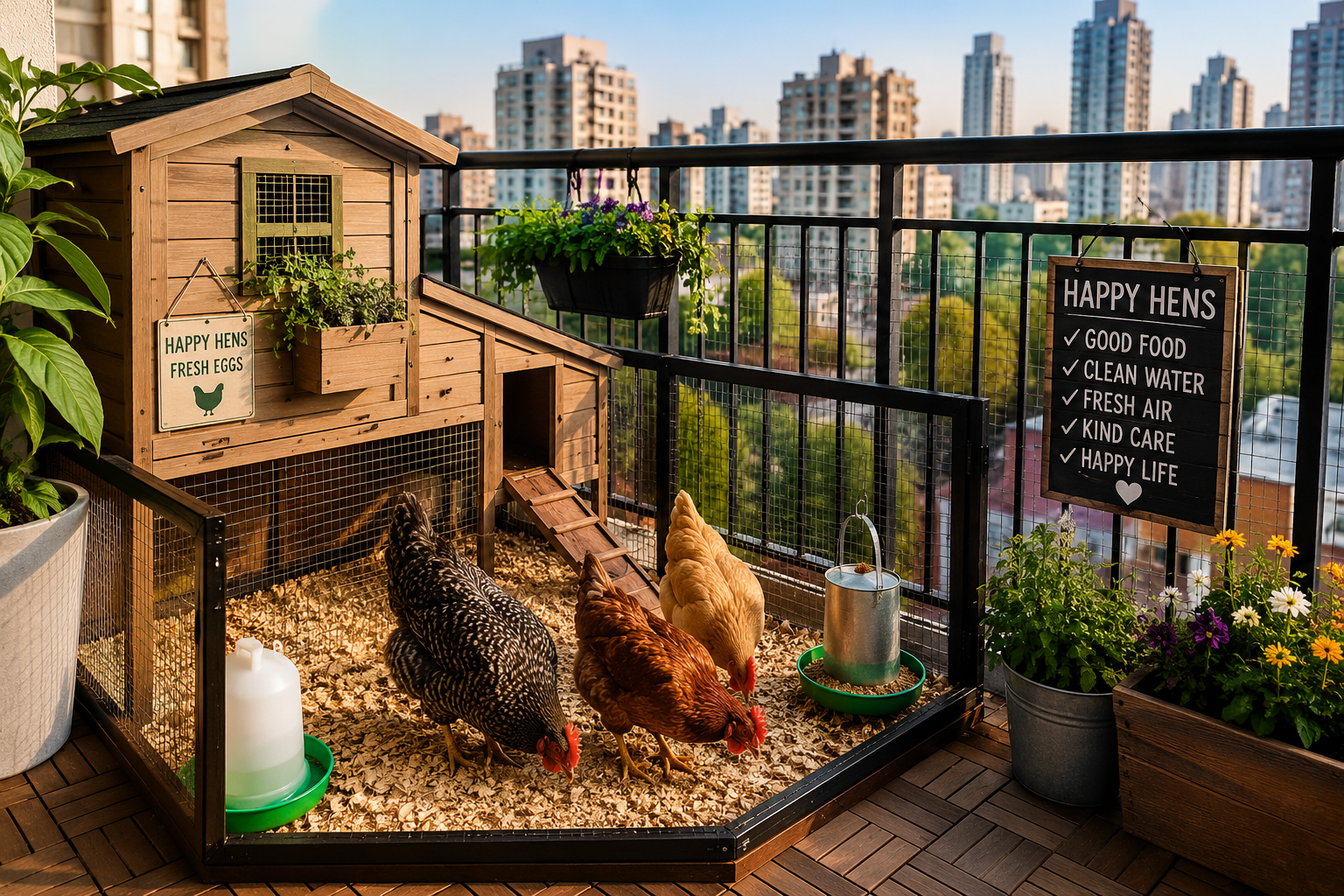
Apartment Balcony Chicken Keeping: A 2026 Guide
Apartment Balcony Chicken Keeping may sound like an unusual idea, but interest in urban poultry is growing. However, keeping chickens on a balcony is very different from keeping them in a backyard. Chickens need room to move, clean air, suitable shelter, enrichment, fresh water, and companionship.
Before bringing hens home, check your building rules, rental agreement, local laws, and animal-welfare requirements. Additionally, make sure your balcony can safely support the equipment and birds.
Why Apartment Balcony Chicken Keeping Matters
Chickens are active and social animals. They need opportunities to walk, perch, forage, scratch, and dustbathe. The RSPCA recommends suitable housing, outdoor space, enrichment, fresh water, and regular health checks for pet chickens.
Therefore, Apartment Balcony Chicken Keeping should never mean placing a chicken inside a small cage all day.
Potential benefits include:
- Fresh eggs when hens are healthy and laying.
- A rewarding way to learn about poultry care.
- Companionship from friendly hens.
- An opportunity to practise responsible urban animal care.
However, these benefits only matter when the birds’ welfare comes first.
Apartment Balcony Chicken Keeping: Key Factors
1. Check Rules Before Buying Chickens
This is the first step in Apartment Balcony Chicken Keeping.
Check:
- Local council or municipal regulations.
- Building or apartment association rules.
- Your rental agreement.
- Noise restrictions.
- Animal welfare requirements.
- Whether poultry registration applies in your country.
For example, in Great Britain, keepers must register poultry with the Great Britain Poultry Register, including small backyard flocks.
Because rules vary by location, use an official government or local-authority website as your final legal reference.
2. Consider Balcony Space
A balcony can quickly become too small for chickens. They need enough room to move naturally rather than spending their entire lives inside a compact coop.
The RSPCA advises providing suitable housing and, where possible, at least 1 m² of housing space per bird, along with outdoor space for exercise and natural behaviours.
Consequently, a tiny balcony may simply not be suitable.
3. Choose the Right Housing
A balcony chicken coop must provide:
- Good ventilation.
- Protection from rain and wind.
- Shade during hot weather.
- Secure doors and mesh.
- Dry bedding.
- Comfortable perches.
- Suitable nesting space.
Never use an airtight plastic container as a permanent chicken house. Good airflow helps maintain a healthier environment.
Apartment Balcony Chicken Keeping: Suitable Options
Small Hens
Smaller or bantam breeds may appear more practical for urban environments. However, smaller birds still need appropriate space, enrichment, and social contact.
Do not choose a breed simply because it is small. Consider temperament, noise, activity level, climate, and care requirements.
A Balcony Coop and Secure Run
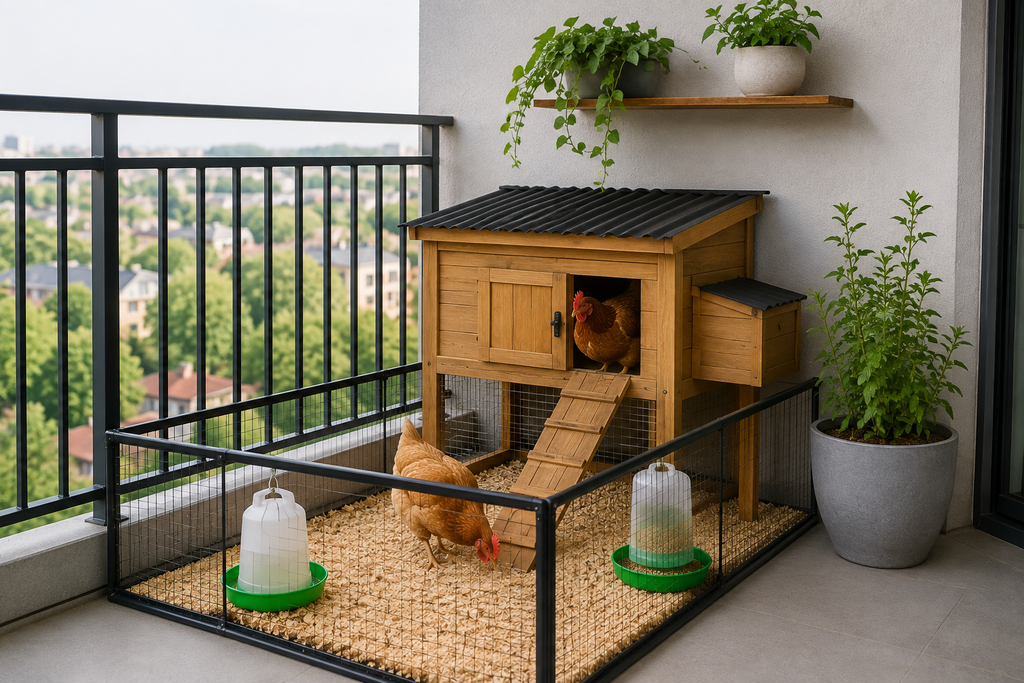
If local rules and welfare requirements allow Apartment Balcony Chicken Keeping, a properly designed coop and run may provide a safer environment.
The enclosure should prevent escapes and protect birds from predators. Additionally, feeders and drinkers should remain clean and sheltered.
When a Balcony Is Not Suitable
Sometimes the best decision is not to keep chickens at all.
A balcony may be unsuitable if it:
- Has very limited floor space.
- Cannot safely support the required equipment.
- Gets extreme heat or cold.
- Has poor ventilation.
- Cannot be securely enclosed.
- Creates serious noise or hygiene concerns.
- Does not provide enough room for normal chicken behaviour.
In these situations, consider a community garden, allotment, or another appropriate poultry setup instead.
Buying Guide for Apartment Chicken Keeping
Before purchasing chickens or equipment, use this checklist:
- Confirm the rules.
- Measure the usable balcony area.
- Check structural and safety limitations.
- Plan the coop and secure run.
- Choose suitable hens.
- Prepare feeders and drinkers.
- Set up dry bedding and enrichment.
- Create a daily cleaning routine.
- Identify a poultry-friendly veterinarian.
Most importantly, do not buy birds first and solve the housing problem later.
Common Mistakes to Avoid
Poor planning can make Apartment Balcony Chicken Keeping stressful for both people and birds.
Avoid these common mistakes:
- Keeping only one chicken when companionship is needed.
- Using an undersized coop.
- Ignoring building regulations.
- Allowing droppings to accumulate.
- Leaving water exposed to contamination.
- Providing poor ventilation.
- Keeping chickens in direct summer heat.
- Choosing a breed based only on appearance.
- Forgetting about noise and neighbours.
- Treating chickens like decorative pets.
Chickens are social animals. The RSPCA recommends keeping at least three compatible hens where possible, rather than keeping a solitary bird.
Daily Care and Maintenance
Successful Apartment Balcony Chicken Keeping requires consistent care.
Every day, provide clean drinking water and appropriate poultry feed. Check the birds for changes in behaviour, appetite, feathers, droppings, and movement.
Clean wet or dirty bedding quickly. Also, clean feeders and drinkers regularly to reduce hygiene problems.
Give hens opportunities to perch, scratch, forage, and dustbathe. These activities support natural behaviour and can reduce boredom.
Finally, monitor the balcony during extreme weather. A balcony can become much hotter than expected because of direct sunlight and surrounding walls.
Conclusion
Apartment Balcony Chicken Keeping can only work when space, welfare, safety, hygiene, and local rules all support it. A balcony should never be used as an excuse to keep chickens in cramped conditions.
Before starting, research your local requirements and honestly assess your available space. If your balcony cannot provide a suitable environment, choose a more appropriate location instead.
With responsible planning, proper housing, regular care, and the right setup, urban poultry owners can make better decisions for their birds in 2026.
Leave a Reply