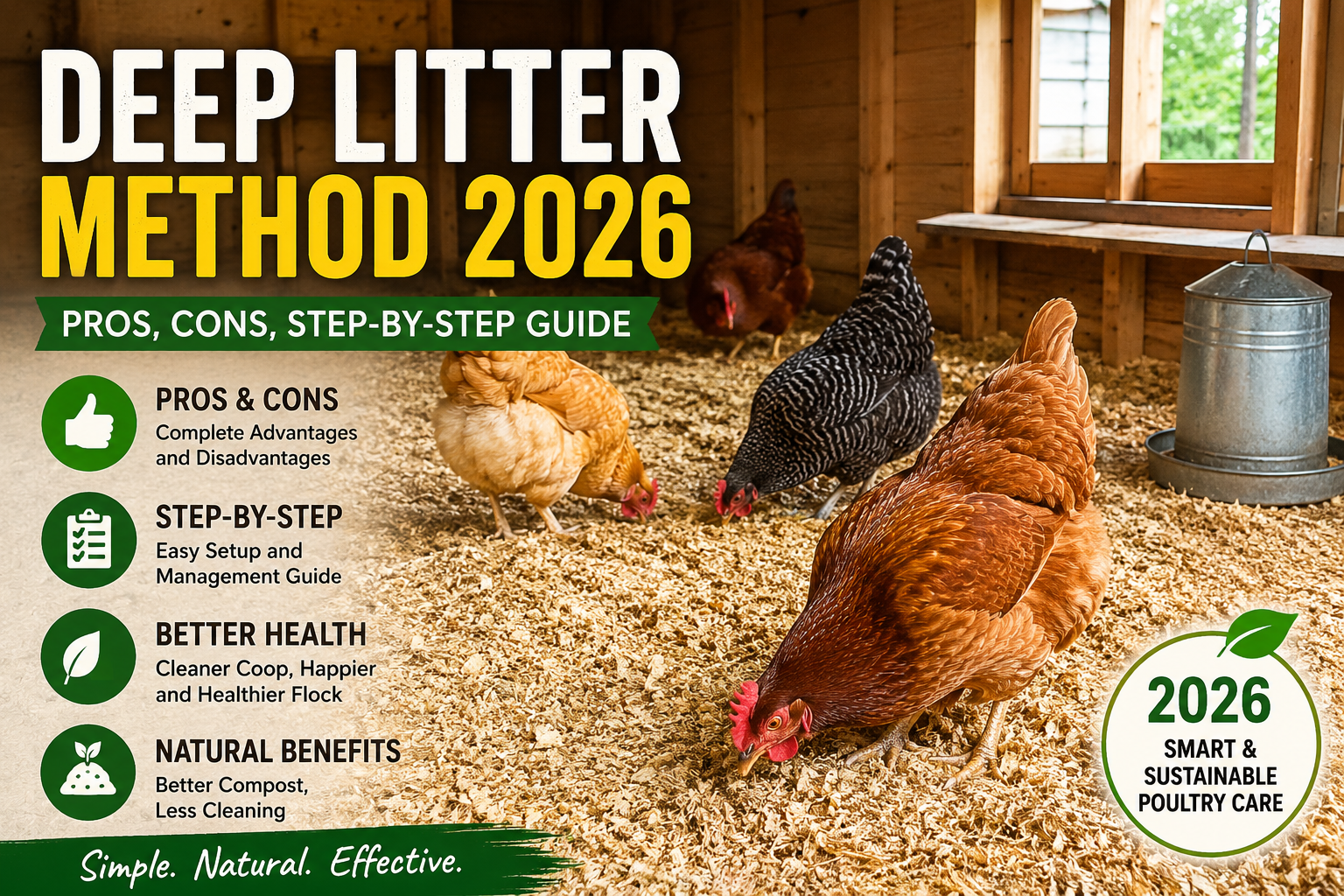
Deep Litter Method 2026: A Practical Guide for Chicken Keepers
The Deep Litter Method 2026 remains a practical way to manage chicken coops while reducing frequent cleaning. Instead of removing all bedding every few days, keepers allow clean bedding and droppings to build gradually on the floor. With proper management, the system can provide insulation, absorb moisture, and create useful compost.
For backyard chicken owners in the US and around the world, however, success depends on moisture control, ventilation, stocking levels, and suitable bedding. A poorly managed system can create ammonia, odors, wet litter, and health problems.
Why the Deep Litter Method 2026 Matters
The Deep Litter Method 2026 can reduce the amount of routine cleaning required. Additionally, chickens naturally scratch and mix the bedding, helping distribute manure through the litter.
Key benefits include:
- Less frequent complete coop cleaning
- Better floor cushioning for birds
- Useful insulation during colder weather
- Potential production of compostable manure
- Efficient use of affordable bedding materials
- Reduced daily labor for small flocks
FAO describes deep-litter housing as a system where birds live on an absorbent bedding layer, such as straw, grain husks, or wood shavings.
Deep Litter Method 2026: Pros and Cons
Major Pros
The Deep Litter Method 2026 offers several advantages when managed correctly. First, bedding absorbs droppings and moisture. Second, the built-up material can later become a useful soil amendment.
Moreover, good litter provides cushioning and allows natural behaviors such as scratching and dust bathing.
Important Cons
However, this method is not maintenance-free. Wet litter can encourage ammonia production and increase microbial problems. USDA research also identifies moisture control as a major factor in reducing ammonia emissions.
Common disadvantages include:
- Wet or caked bedding
- Ammonia buildup
- Increased odor
- Possible parasite and disease concerns
- More difficult cleaning after serious contamination
If a flock develops a significant disease problem, complete cleaning and disinfection may be more appropriate than continuing built-up litter.
How to Start the Deep Litter Method 2026
1. Prepare the Coop
Before starting the Deep Litter Method 2026, clean the coop thoroughly. Ensure the floor is dry and repair leaks around the roof, walls, and drinkers.
Additionally, provide good ventilation without creating harmful drafts directly on the birds.
2. Choose Suitable Bedding
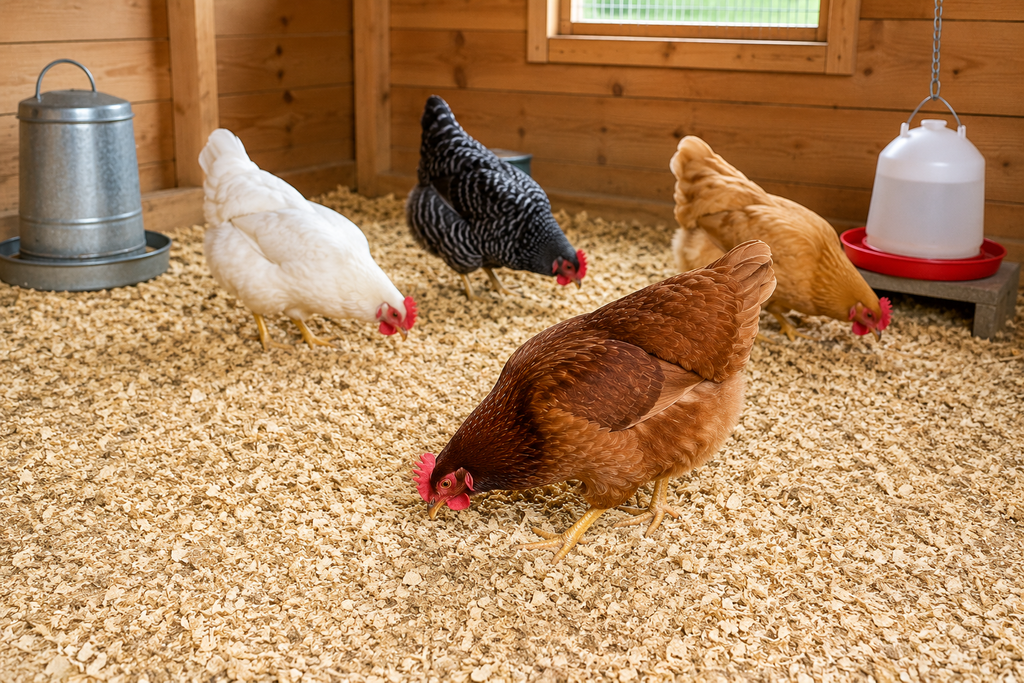
Good chicken coop bedding should be absorbent, non-toxic, reasonably quick-drying, and free from contaminants. Wood shavings, chopped straw, rice hulls, and other suitable agricultural materials can work depending on local availability.
Start with a practical bedding layer rather than trying to create a very deep pile immediately. Then gradually add fresh material as manure accumulates.
3. Add Fresh Bedding Regularly
The Deep Litter Method 2026 works through gradual layering. When the surface becomes dirty or develops damp areas, add a fresh layer of dry bedding.
However, remove heavily wet or compacted sections instead of simply covering them. Pay special attention to areas beneath drinkers and around feeders.
4. Stir and Monitor the Litter
Regularly loosen compacted areas so the litter remains friable. Check the coop for wet spots, strong ammonia smells, excessive dust, and caked material.
Mississippi State University Extension recommends maintaining litter that is loose rather than caked and emphasizes ventilation and moisture management.
Deep Litter Method 2026: Best Bedding Options
Wood Shavings
Wood shavings are widely used because they are absorbent and easy to handle. Choose clean material that contains no harmful chemicals or contaminants.
Chopped Straw
Chopped straw can provide affordable chicken coop bedding, especially where agricultural materials are readily available. However, it must stay dry and should not become heavily compacted.
Rice Hulls and Other Materials
Rice hulls and similar agricultural by-products may also work. The best choice depends on absorbency, availability, cost, safety, and drying performance.
Common Mistakes to Avoid
Even experienced keepers can make mistakes with the Deep Litter Method 2026. Avoid these problems:
- Allowing water leaks to continue
- Ignoring strong ammonia odors
- Keeping too many birds in a small space
- Adding bedding over extremely wet litter
- Blocking ventilation during cold weather
- Using moldy or contaminated bedding
- Assuming deep litter means “never clean the coop”
As a result, regular observation remains essential. Good poultry litter management is about controlling moisture rather than simply allowing material to accumulate.
Maintenance Tips for 2026
Check the litter frequently, especially after rain, spills, or periods of high humidity. Keep drinkers stable and leak-free, and remove wet patches quickly.
Furthermore, maintain adequate ventilation because excess moisture contributes to ammonia problems. USDA and university extension guidance consistently highlights moisture control as a central part of successful litter management.
At the end of the cycle, remove the accumulated material and consider appropriate composting or agricultural use where local regulations permit.
Conclusion
The Deep Litter Method 2026 can be an efficient option for backyard flocks and small poultry operations when managed carefully. It can reduce routine cleaning, provide comfortable bedding, and produce valuable manure for composting. However, it is not a “set and forget” system.
Keep the litter dry, maintain ventilation, choose safe bedding, and inspect the coop regularly. If you follow these principles, the Deep Litter Method 2026 can become a practical part of responsible chicken care.
Leave a Reply