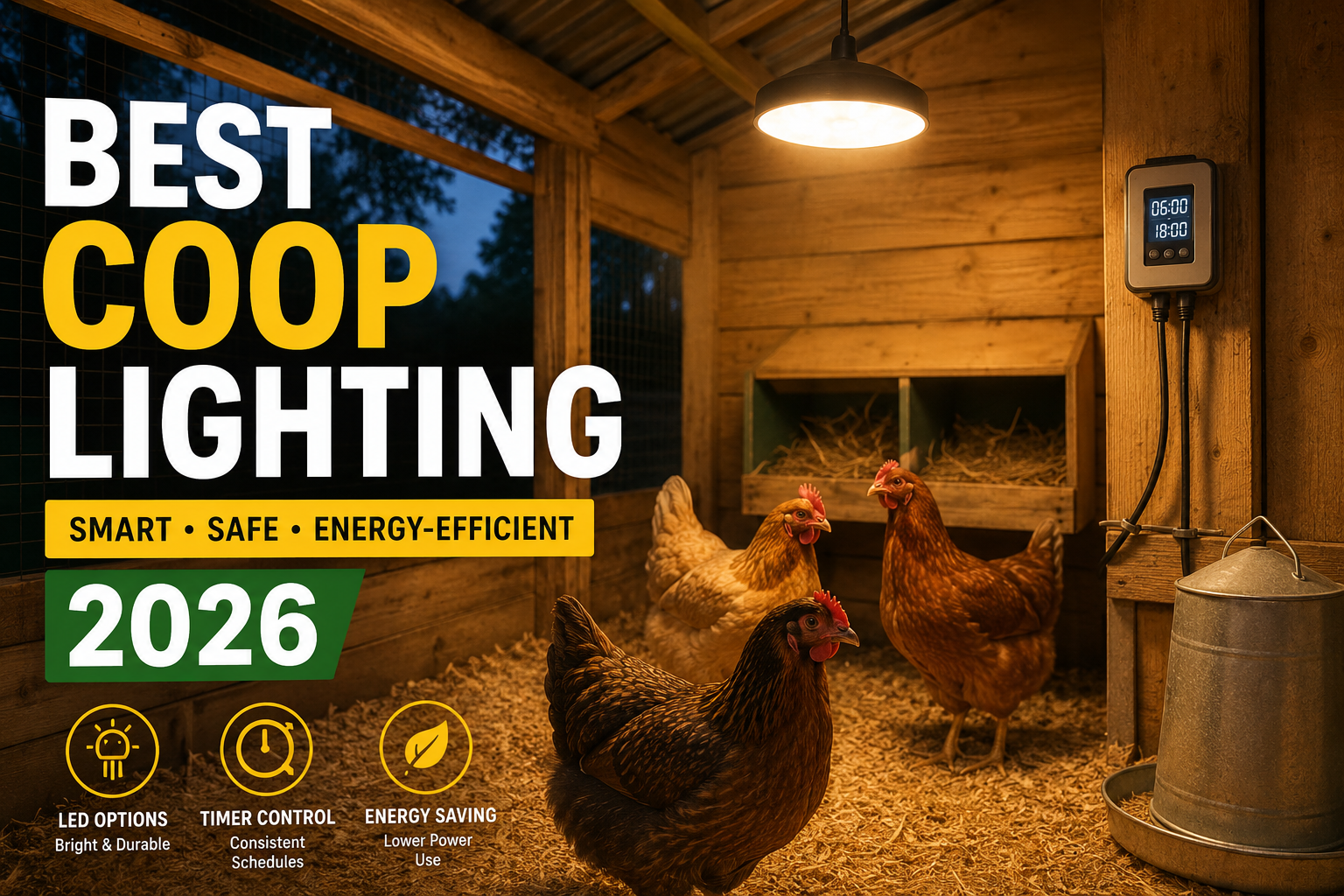
Best Coop Lighting 2026: Safe, Smart & Energy-Efficient
Choosing the Best Coop Lighting can improve visibility, support a steady laying routine, and make daily flock care easier. For backyard chicken keepers in the US and around the world, lighting matters even more during short winter days. However, good lighting is not simply about making a coop bright. It is about using the right light, schedule, placement, and safety measures.
Today’s 2026 update: Recent extension guidance continues to support controlled supplemental lighting for laying hens while stressing the need for a consistent dark period.
Why the Best Coop Lighting Matters
Light affects the natural reproductive cycle of chickens. As daylight becomes shorter, hens may naturally reduce egg production. Therefore, carefully managed supplemental lighting can help maintain production during darker months.
The right setup can also help you:
- Inspect birds after dark.
- Find feeders and waterers more easily.
- Maintain a consistent daily routine.
- Reduce unnecessary electricity use.
- Improve visibility inside the coop.
Additionally, modern chicken coop LED lighting can provide efficient illumination without producing the heat associated with traditional incandescent bulbs.
Key Features of the Best Coop Lighting
1. Choose the Right Light Color
Warm or warm-white lighting is a popular choice for laying hens because orange and red wavelengths support reproductive activity. Penn State Extension recommends warm bulbs below about 3500K for supplemental lighting.
Therefore, avoid choosing a bulb only because it looks bright to humans. Color temperature matters too.
2. Use a Reliable Timer
A chicken coop lighting timer makes your schedule more consistent. It also removes the need to switch lights manually every morning.
For laying hens, current extension guidance commonly targets roughly 14–16 hours of total light per day, depending on the flock and management system. Do not keep lights running continuously. Hens need a proper dark period for rest.
3. Consider Light Intensity
Brighter is not always better. Excessive light can increase stress and undesirable behavior. In small-flock systems, moderate illumination that lets you clearly see birds, feed, water, and the coop floor is usually more useful than intense lighting.
4. Prioritize Safety
Electrical equipment faces dust, moisture, bedding, and curious birds. As a result, select fixtures designed for the environment, secure cables, and keep electrical connections away from water.
Never use a heat lamp simply as a lighting solution. Extension guidance warns that heat lamps can create serious fire risks.
Types of the Best Coop Lighting
LED Coop Lights
LEDs are an excellent choice for many modern coops. They use little electricity, offer long service life, and can provide consistent illumination.
However, choose a fixture suitable for damp or agricultural environments rather than assuming every household LED is appropriate.
Solar Coop Lights
Solar lights can work well where reliable grid electricity is unavailable. They are especially useful for simple nighttime visibility.
However, battery capacity and winter sunlight can affect performance. Therefore, check the expected runtime before relying on solar lighting.
Incandescent Lights
Incandescent bulbs remain simple and inexpensive. However, they waste more energy as heat than LEDs. For most new installations, an efficient LED system is usually the better long-term option.
How to Choose the Best Coop Lighting
Use this simple decision guide:
- For winter egg production: Choose a warm LED with a reliable timer.
- For basic visibility: Use a low-power LED fixture.
- For off-grid coops: Consider a solar system with battery backup.
- For damp areas: Select a moisture-resistant fixture.
- For automated care: Use a programmable timer or smart controller.
Additionally, introduce schedule changes gradually. Sudden changes in lighting can stress birds, while a gradual transition helps them adjust.
Common Coop Lighting Mistakes
Avoid these frequent problems:
- Leaving lights on 24 hours a day.
- Making the coop unnecessarily bright.
- Using heat lamps as ordinary light sources.
- Installing exposed wires near water.
- Creating strong shadows across feeding areas.
- Changing the lighting schedule too quickly.
- Ignoring the manufacturer’s moisture and safety ratings.
A proper dark period remains essential. For example, some welfare standards require substantial uninterrupted darkness for laying birds.
Maintenance Tips for Coop Lighting
Good maintenance keeps your winter chicken coop lighting system reliable.
First, inspect bulbs, fixtures, timers, and cables regularly. Next, remove dust and dirt from light fixtures because buildup can reduce light output. Also, check for damaged insulation, loose connections, or moisture.
Finally, review the timer as seasons change. Natural daylight changes throughout the year, so your supplemental schedule may need adjustment.
Final Thoughts
The Best Coop Lighting in 2026 combines efficiency, safety, suitable brightness, and a dependable schedule. For most backyard flocks, a properly installed warm LED paired with a timer offers a practical balance of energy savings and flock management.
However, lighting should support good husbandry rather than replace it. Provide clean water, balanced feed, ventilation, secure housing, and adequate darkness as well. Ready to upgrade your setup? Choose the Best Coop Lighting based on your flock, climate, coop size, and daily routine.
Leave a Reply