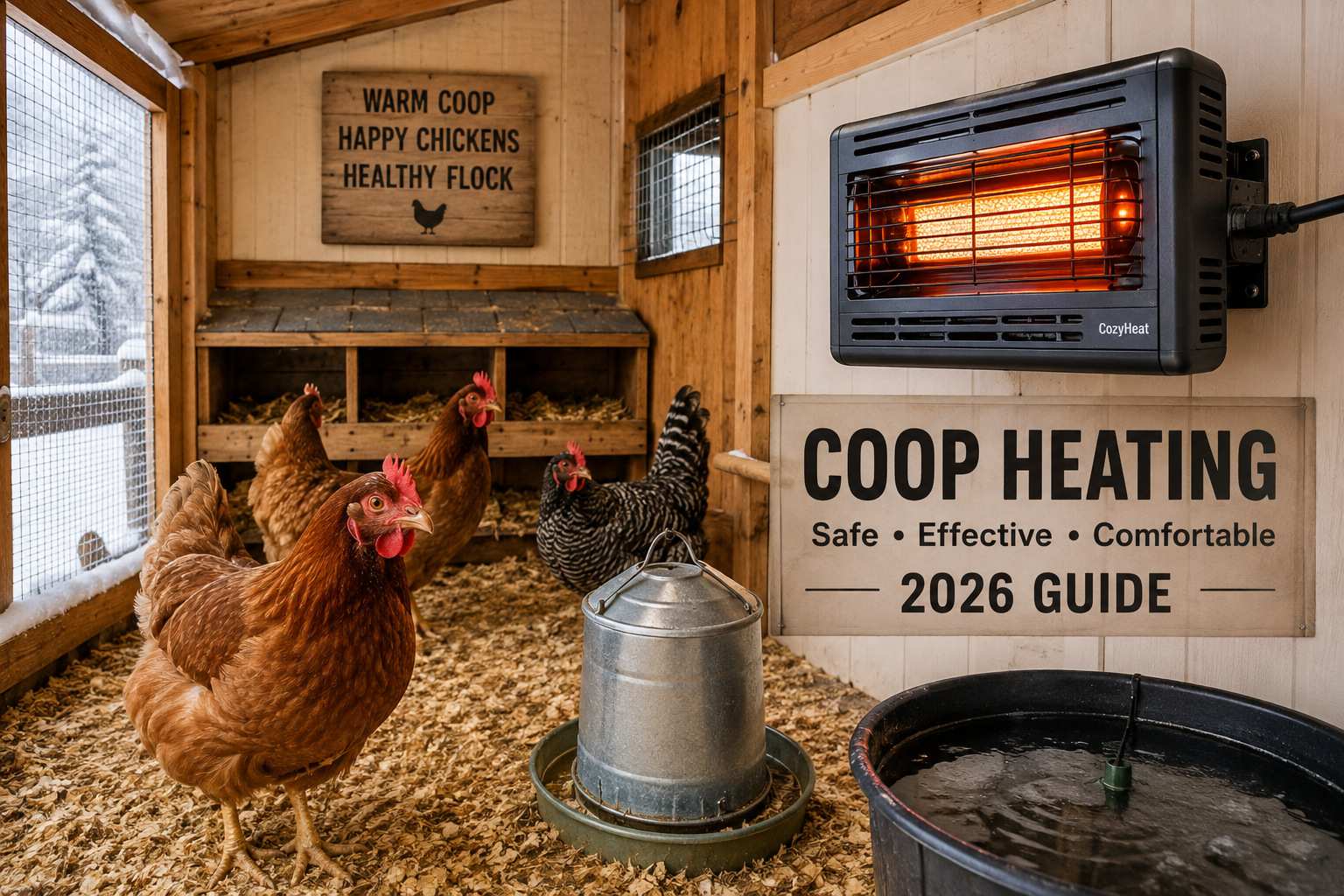
Coop Heating: A Safe 2026 Guide for Chicken Owners
Coop Heating becomes an important topic when temperatures drop. Chickens can handle cold weather better than many people expect, but extreme cold, drafts, moisture, and poor ventilation can create serious problems. Therefore, choosing the right heating method matters for flock safety and comfort.
For backyard chicken owners, the goal is not to make the coop feel like a warm house. Instead, you should provide protection from extreme conditions while keeping the coop dry and well ventilated. In addition, proper winter chicken care can reduce cold-related stress.
Why Coop Heating Matters
Good Coop Heating can help chickens during unusually cold weather, especially when temperatures reach dangerous levels or when vulnerable birds need extra support.
However, healthy adult chickens often tolerate cold conditions when they have proper shelter, dry bedding, and protection from strong drafts. Their feathers provide natural insulation.
Benefits of Proper Heating
A carefully planned heating setup can:
- Reduce cold stress during extreme weather.
- Support vulnerable or older chickens.
- Help protect water from freezing.
- Make winter management easier.
- Provide additional protection during severe cold snaps.
Additionally, always consider the breed, age, health, and local climate before adding heat.
Key Factors to Consider for Coop Heating
Chicken Coop Temperature
There is no single temperature that works for every flock. Healthy, fully feathered adult chickens usually adapt to gradual temperature changes. Therefore, focus on their behavior rather than trying to maintain a specific indoor temperature.
Watch for signs such as:
- Chickens constantly huddling together.
- Raised feathers for long periods.
- Reduced activity.
- Difficulty accessing unfrozen water.
- Signs of frostbite on combs or wattles.
Ventilation and Draft Control
Good ventilation remains essential during winter. Moisture from chicken droppings and breathing can build up inside a closed coop. As a result, poor airflow can increase humidity and contribute to frostbite and respiratory problems.
Keep ventilation openings above the birds while blocking direct drafts at roost level.
Types of Coop Heating
Radiant Chicken Coop Heater
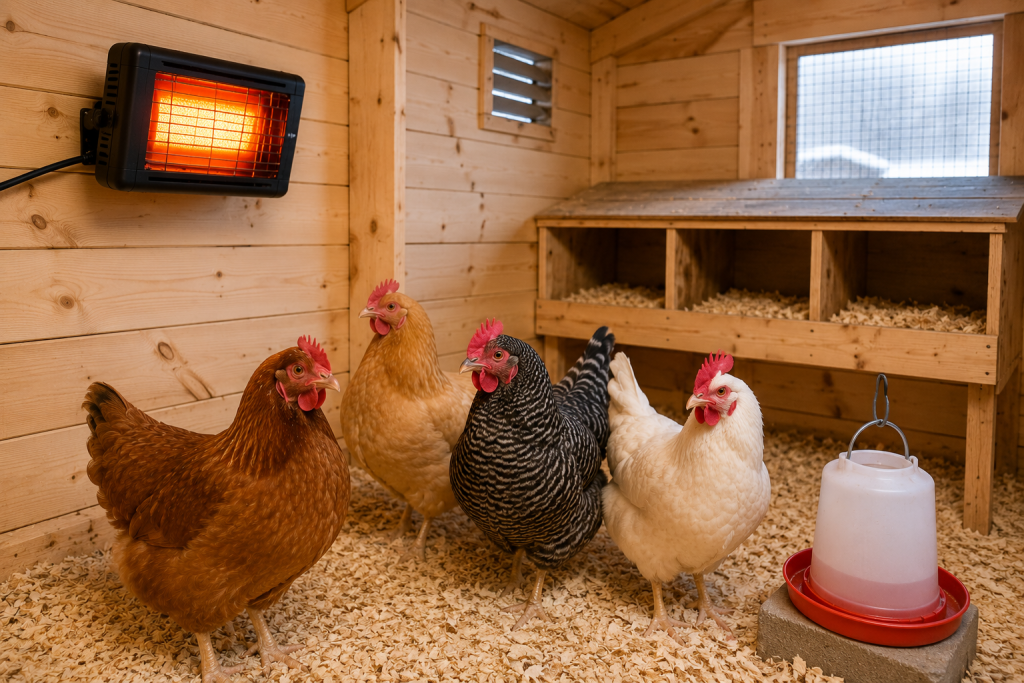
A radiant heater provides targeted warmth rather than heating the entire building. This option can work well when you want a safer, localized heat source.
Heated Pads
Heated panels or pads can provide a warm area for chickens without creating excessive heat throughout the coop. However, always use products specifically designed for poultry or agricultural environments.
Heat Lamps
Heat lamps can produce substantial heat, but they require extra caution. A damaged cord, loose fixture, or contact with bedding can create a fire hazard.
For that reason, never rely on improvised mounting systems.
How to Choose a Safe Coop Heater
Before purchasing a heater, consider these points:
- Safety: Choose equipment designed for animal housing where possible.
- Construction: Look for durable materials and protected electrical components.
- Placement: Keep heating equipment away from bedding and flammable materials.
- Power: Check that your electrical system can safely handle the device.
- Controls: A thermostat or temperature control can improve consistency.
- Monitoring: Check the coop regularly, particularly during severe weather.
Furthermore, avoid using indoor household heating devices unless the manufacturer specifically approves them for the intended environment.
Common Coop Heating Mistakes to Avoid
Many problems happen because owners try to make the coop too warm. Chickens can become less prepared for outdoor conditions when temperatures change suddenly.
Avoid these common mistakes:
- Overheating the entire coop.
- Blocking all ventilation.
- Using damaged extension cords.
- Placing heaters beside dry bedding.
- Leaving unsafe equipment unattended.
- Ignoring frozen water.
- Making sudden temperature changes.
As a result, a simple and carefully monitored setup is usually better than excessive heating.
Maintenance and Winter Care Tips
Regular checks are essential for safe Coop Heating. Inspect cords, plugs, mounting points, and heater surfaces frequently. Also, remove wet bedding and maintain good airflow.
Keep fresh water available at all times. If freezing becomes a problem, consider a safe poultry water-heating solution rather than placing unsafe electrical equipment near water.
Additionally, check your chickens each day. Their behavior can tell you whether conditions are comfortable.
Final Thoughts
Safe Coop Heating is about protection, not turning a chicken coop into a heated room. Healthy chickens can naturally cope with cold weather when they have dry bedding, proper ventilation, nutritious feed, and shelter from harsh wind.
However, extreme weather may require additional support. Choose equipment carefully, reduce fire risks, monitor your flock, and maintain the coop throughout winter. With the right approach, Coop Heating can become a useful part of responsible chicken care in 2026.
Leave a Reply