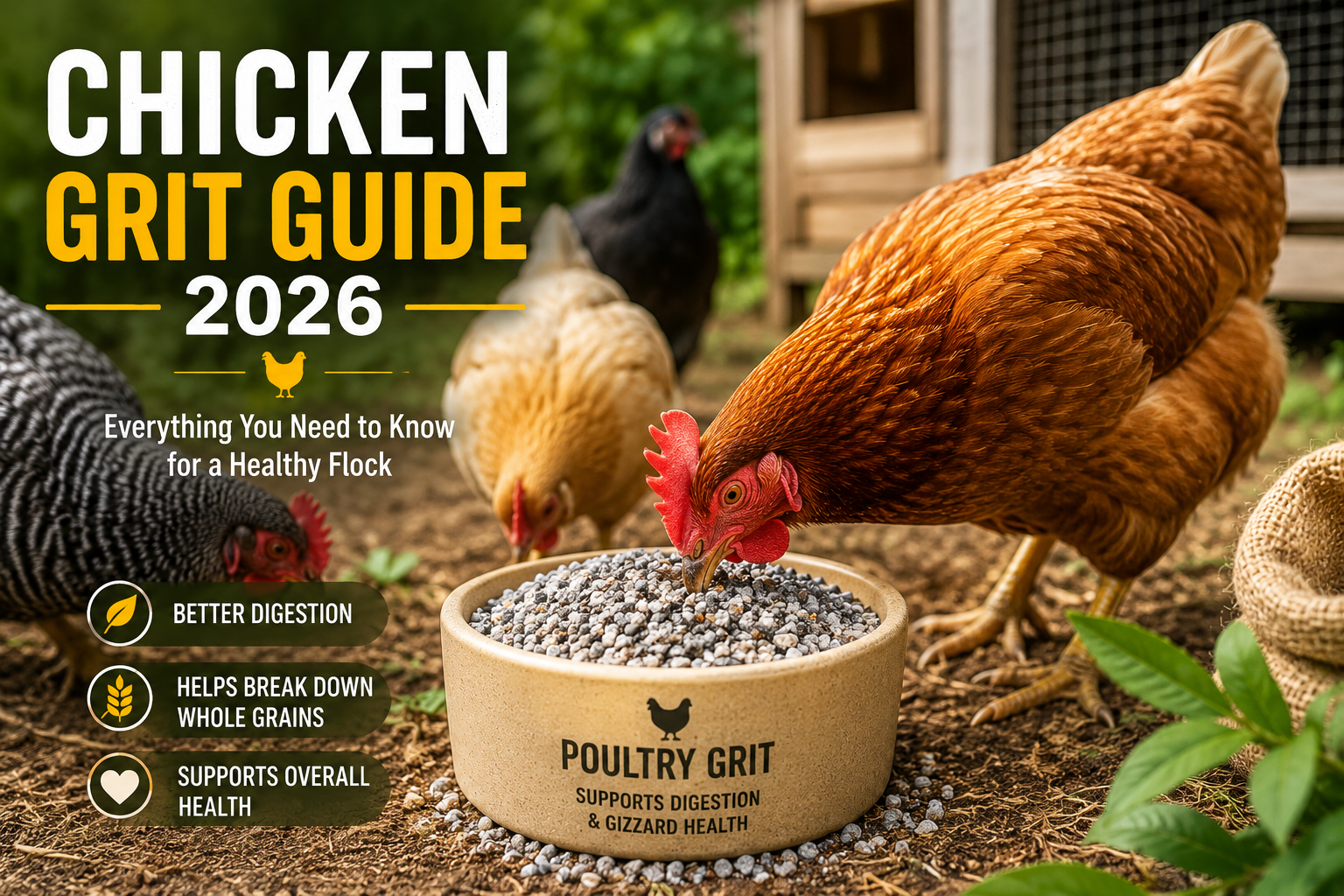
Chicken Grit Guide 2026: What Every Chicken Keeper Should Know
If you keep backyard chickens, understanding grit can help support a healthy flock. This Chicken Grit Guide explains what grit does, which type your birds need, and how to provide it safely. Whether you have a small backyard flock or a larger homestead setup, the right grit routine can make feeding easier and more effective.
Chickens do not have teeth. Instead, they use a muscular organ called the gizzard to grind food. Therefore, grit can play an important role in chicken grit for digestion, especially when birds eat whole grains, seeds, grass, insects, or other foods.
Why Chickens Need Grit
The most important reason to provide grit is digestion. Chickens swallow food without chewing it. As a result, small, hard pieces of grit can help the gizzard grind tougher foods.
However, not every chicken needs supplemental grit all the time. Birds that eat only commercial feed may get enough finely processed food without extra grit. Free-ranging chickens, on the other hand, often benefit from access to suitable grit.
According to the Merck Veterinary Manual, proper nutrition plays an important role in maintaining healthy poultry.
Benefits of Chicken Grit
A good Chicken Grit Guide should focus on practical benefits, including:
- Supports normal gizzard function
- Helps birds process tougher foods
- Useful for chickens eating whole grains and seeds
- Gives free-ranging birds access to a natural digestive aid
- Helps support a balanced feeding routine
Additionally, grit does not replace a complete poultry diet. Chickens still need appropriate feed, clean water, minerals, and other nutrients.
Chicken Grit Guide: Choosing the Right Type
Not all grit serves the same purpose. Therefore, choosing the correct product matters.
Insoluble Grit for Chickens
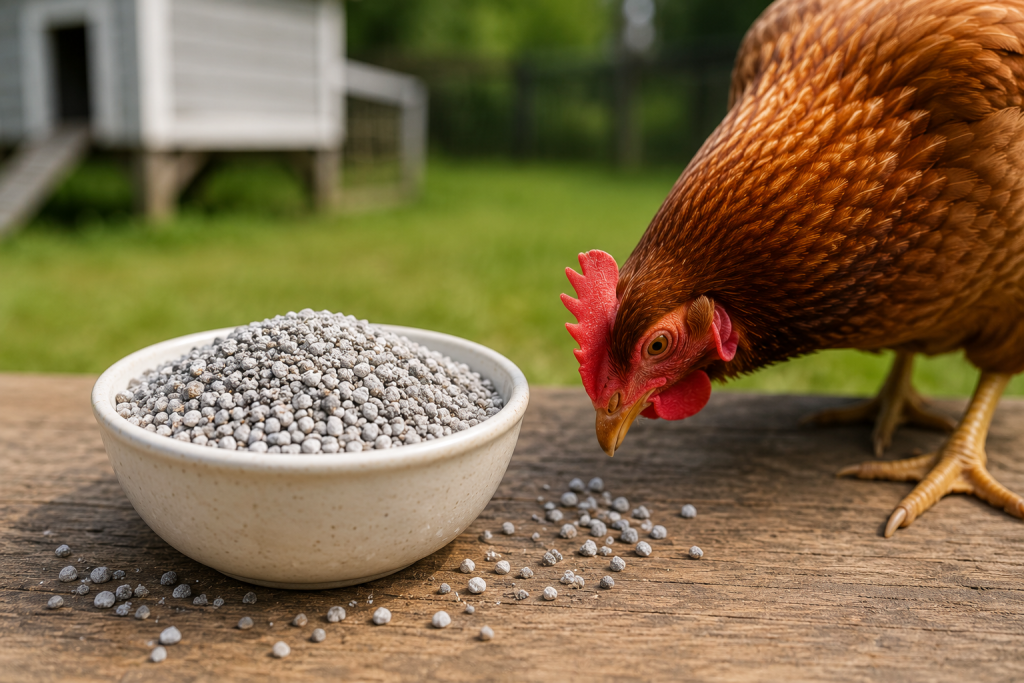
Insoluble grit for chickens usually contains hard materials such as granite or flint. Chickens swallow these particles, and the grit remains in the gizzard long enough to help grind food.
This type is generally the main grit used for digestion. However, always select a product specifically made for poultry and follow the manufacturer’s instructions.
Chick Starter and Fine Grit
Young chicks have different needs from adult birds. Very young chicks eating starter feed may not need additional grit if they consume only the recommended feed.
However, once chicks begin eating treats, grass, grains, or other foods, their grit needs can change. Therefore, ask a poultry professional about appropriate grit size for your birds’ age.
Oyster Shell Is Not the Same as Grit
A common mistake involves confusing oyster shell with digestive grit. Oyster shell mainly provides calcium for laying hens. It does not perform the same function as hard insoluble grit.
Therefore, oyster shell vs chicken grit should not be viewed as an either-or choice. They serve different purposes and may both have a place in a layer’s feeding system.
Chicken Grit Guide: How to Provide It
Providing grit does not need to be complicated. In many backyard setups, the easiest method involves offering suitable grit separately.
Simple Feeding Method
- Choose poultry-specific grit.
- Use a clean, dry container.
- Keep it separate from regular feed.
- Allow chickens access when appropriate.
- Replace dirty or wet grit.
- Monitor your flock’s overall diet.
Additionally, avoid mixing large amounts of grit directly into feed unless the product instructions specifically recommend it.
Factors to Consider Before Buying
Before buying grit, consider these factors:
- Chicken age: Chicks and adults may need different particle sizes.
- Diet: Birds eating whole foods may have greater grit needs.
- Foraging: Free-range chickens encounter natural soil particles, but the quality and suitability can vary.
- Grit size: Select a size appropriate for the bird.
- Product quality: Choose clean poultry-grade grit from a reputable supplier.
You can also check poultry nutrition information from Penn State Extension for additional flock-management guidance.
Common Chicken Grit Mistakes to Avoid
A strong Chicken Grit Guide should also explain what not to do.
Mistake 1: Confusing Grit With Calcium
Do not assume oyster shell replaces digestive grit. They provide different nutritional functions.
Mistake 2: Using Random Materials
Avoid giving chickens unknown rocks, construction materials, or contaminated substances. Instead, choose a clean poultry-specific product.
Mistake 3: Ignoring the Chicken’s Diet
A chicken eating only commercial pellets has different needs from a bird that regularly eats grains and fibrous foods. Therefore, consider the complete diet before adding supplements.
Mistake 4: Giving Too Many Treats
Grit cannot fix an unbalanced diet. Keep treats limited and make complete poultry feed the foundation of your flock’s nutrition.
Chicken Grit Guide: Care and Storage Tips
Proper storage helps keep grit clean and usable. Store the product in a dry, sealed container away from moisture and contamination.
Furthermore, keep the grit feeder protected from rain and droppings. Check it regularly and clean the container when needed.
If your chickens show unusual digestive symptoms, reduced appetite, weight loss, or other signs of illness, contact a qualified poultry veterinarian instead of relying on grit alone.
Final Thoughts
This Chicken Grit Guide shows why understanding grit can improve your backyard chicken feeding routine. Choose poultry-specific grit, match the particle size to your birds, and remember that digestive grit and calcium sources have different jobs. Finally, provide a balanced diet, fresh water, and good flock care. Use this Chicken Grit Guide as a starting point, and consult a poultry professional when your flock has special nutritional needs.
Leave a Reply