Introduction
Chicken Treats are more than a fun snack for backyard flocks. In 2026, chicken keepers are paying closer attention to balanced feeding, safe ingredients, and enrichment. The right treats can add variety and encourage natural foraging, but they should never replace complete poultry feed.
For US chicken owners, simple foods such as leafy greens, berries, watermelon, cooked grains, and mealworms can be useful options. However, portion control matters because treats can dilute the nutrients chickens need every day. Current 2026 guidance commonly recommends keeping treats to about 10% of the overall diet.
Why Chicken Treats Matter in 2026
Healthy treats can make feeding time more engaging. Additionally, scattering small portions around the run encourages scratching and foraging, which adds enrichment. Protein-rich options may also be useful during periods such as molting, when birds have increased nutritional needs.
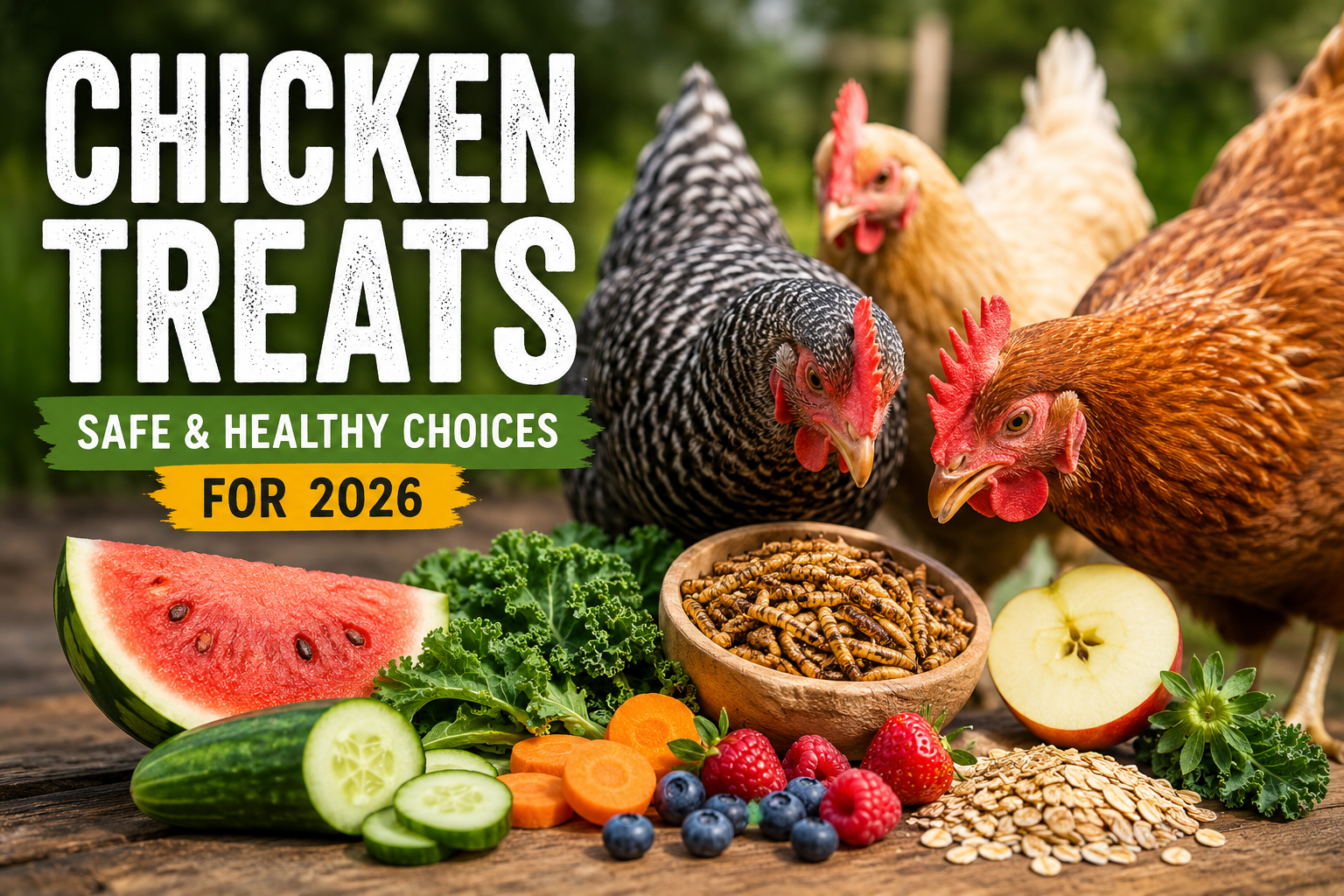
Good Chicken Treats choices can include:
- Mealworms or black soldier fly larvae
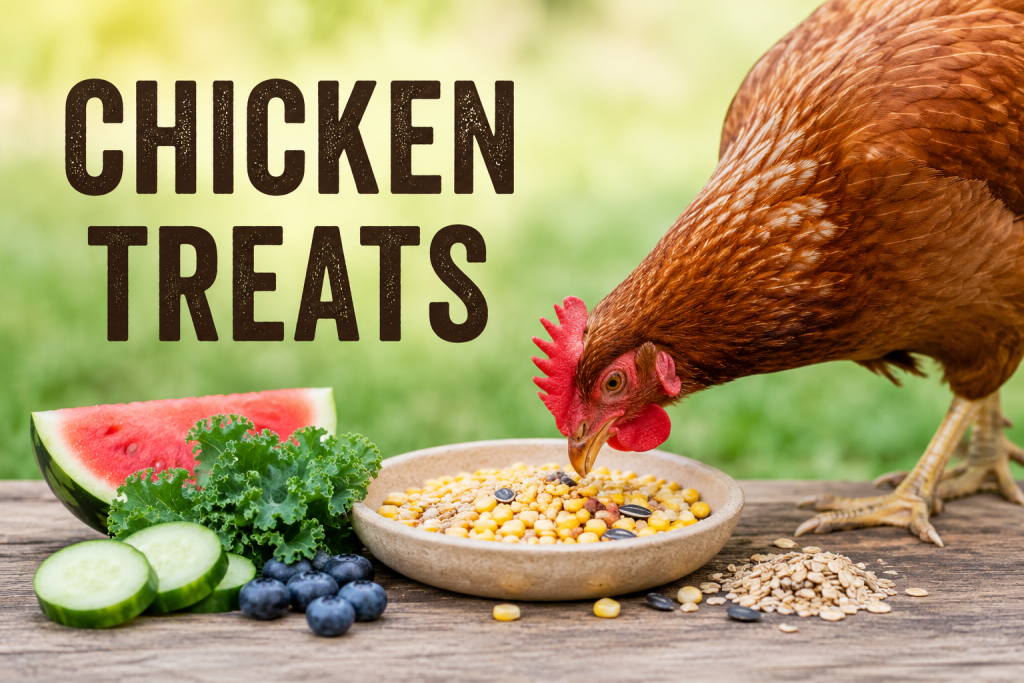
- Watermelon, berries, and seedless apple pieces
- Kale, lettuce, cucumber, peas, and carrots
- Plain cooked oats, rice, or other simple grains
- Cooked egg without added salt or seasoning
These foods should complement, not replace, a nutritionally complete chicken feed.
Key Factors When Choosing Chicken Treats
Nutrition First
When choosing Chicken Treats, choose foods that add useful nutrients without becoming a major part of the diet. Protein sources, vegetables, and lower-sugar fruits can provide variety. Additionally, avoid heavily salted, sugary, fried, or highly processed foods.
Safety and Preparation
Wash fresh produce and remove hazards such as apple seeds and fruit pits. Never offer moldy or rotten food. Raw or dry beans, chocolate, avocado skin and pit, alcohol, and caffeinated products should also be avoided because they can be dangerous to chickens.
Types of Chicken Treats
Fruits and Vegetables
Fruits and vegetables are popular because they add moisture and variety. Watermelon can be especially useful during hot weather, while leafy greens can encourage pecking and foraging. Still, fruit contains sugar, so smaller portions are best.
Protein-Rich Snacks
Mealworms and black soldier fly larvae are convenient protein-rich snacks. Cooked eggs can also work as an occasional option when prepared plainly. For growing chicks, however, treats should be limited because complete chick feed is designed to meet their nutritional needs.
Grains and Garden Extras
Plain oats, cooked rice, peas, corn, pumpkin, and some garden greens can provide variety. Furthermore, scattering small amounts across clean ground can turn feeding into an enrichment activity.
Rotate Chicken Treats instead of giving the same extra food every day. This keeps feeding interesting while helping you control portions.
How to Choose Chicken Treats
Before giving a new food, use this quick checklist:
- Is it safe for chickens?
- Is it fresh and free from mold?
- Does it add nutrition or enrichment?
- Can you serve it without salt, sugar, or strong seasoning?
- Will the portion stay small enough to protect the main diet?
A simple rule is to let complete feed do most of the nutritional work. Treats should remain a small part of the daily diet.
Common Mistakes to Avoid
The biggest mistake is giving too many treats. Chickens may fill up on tasty extras and eat less balanced feed. As a result, excessive treats can contribute to nutritional imbalance and unwanted weight gain.
Avoid these common errors:
- Feeding treats instead of complete feed
- Giving moldy or spoiled scraps
- Offering salty or sugary leftovers
- Serving unsafe foods because chickens seem interested
- Leaving uneaten food in the coop or run
UF/IFAS Extension specifically warns against foods such as alcohol, caffeine, raw or dry beans, and certain fruit pits.
Care Tips for Chicken Treats in 2026
Serve small portions and watch how your flock responds. Additionally, remove leftovers before they spoil or attract pests. Clean feeding areas regularly, especially during warm weather.
Keep fresh drinking water available at all times. If a bird shows unusual symptoms after eating a new food, stop the treat and contact a poultry veterinarian for advice.
Frequently Asked Questions
1. What are the best Chicken Treats for backyard chickens?
Good options include leafy greens, watermelon, berries, cucumber, cooked grains, mealworms, and small amounts of cooked egg. Always serve fresh foods in moderation alongside a complete poultry feed.
2. How often can I give Chicken Treats to my flock?
Treats should remain a small part of the daily diet. A useful guideline is to keep extras around 10% of the overall diet. The remaining food should come from nutritionally complete chicken feed.
3. Can chicks eat Chicken Treats?
Young chicks need a properly balanced chick starter feed for healthy growth. Therefore, treats should be avoided or kept extremely limited until they are older and have a suitable diet. Always introduce new foods gradually.
Conclusion
The best Chicken Treats are safe, fresh, simple, and given in moderation. In 2026, smart flock care means using treats for variety and enrichment while keeping complete feed at the center of the diet. Start with small portions, introduce new foods carefully, and choose options your chickens can enjoy safely.
Leave a Reply