Toxic Foods for Chickens: What Owners Should Know in 2026
Knowing about Toxic Foods for Chickens is essential for anyone raising backyard hens or a larger flock. Chickens naturally peck and explore almost anything they find. Therefore, a food that looks harmless to humans may create serious problems for birds.
In 2026, chicken keepers should focus on more than treats. Moldy feed, poisonous plants, contaminated food, and unsafe household scraps can also put a flock at risk. Good chicken food safety starts with knowing what to avoid and keeping questionable foods away from the coop.
Why Toxic Foods for Chickens Matter
A balanced commercial poultry ration should remain the main part of a chicken’s diet. Treats can provide variety, but they should not replace complete feed.
Additionally, chickens may eat spoiled scraps if they have access to household waste. Moldy feed is especially concerning because certain fungi produce mycotoxins that can harm poultry. Merck Veterinary Manual notes that poultry mycotoxins can affect growth, immunity, digestion, egg production, and other important functions.
As a result, preventing exposure is usually much easier than dealing with suspected poisoning.
Key Toxic Foods for Chickens to Avoid
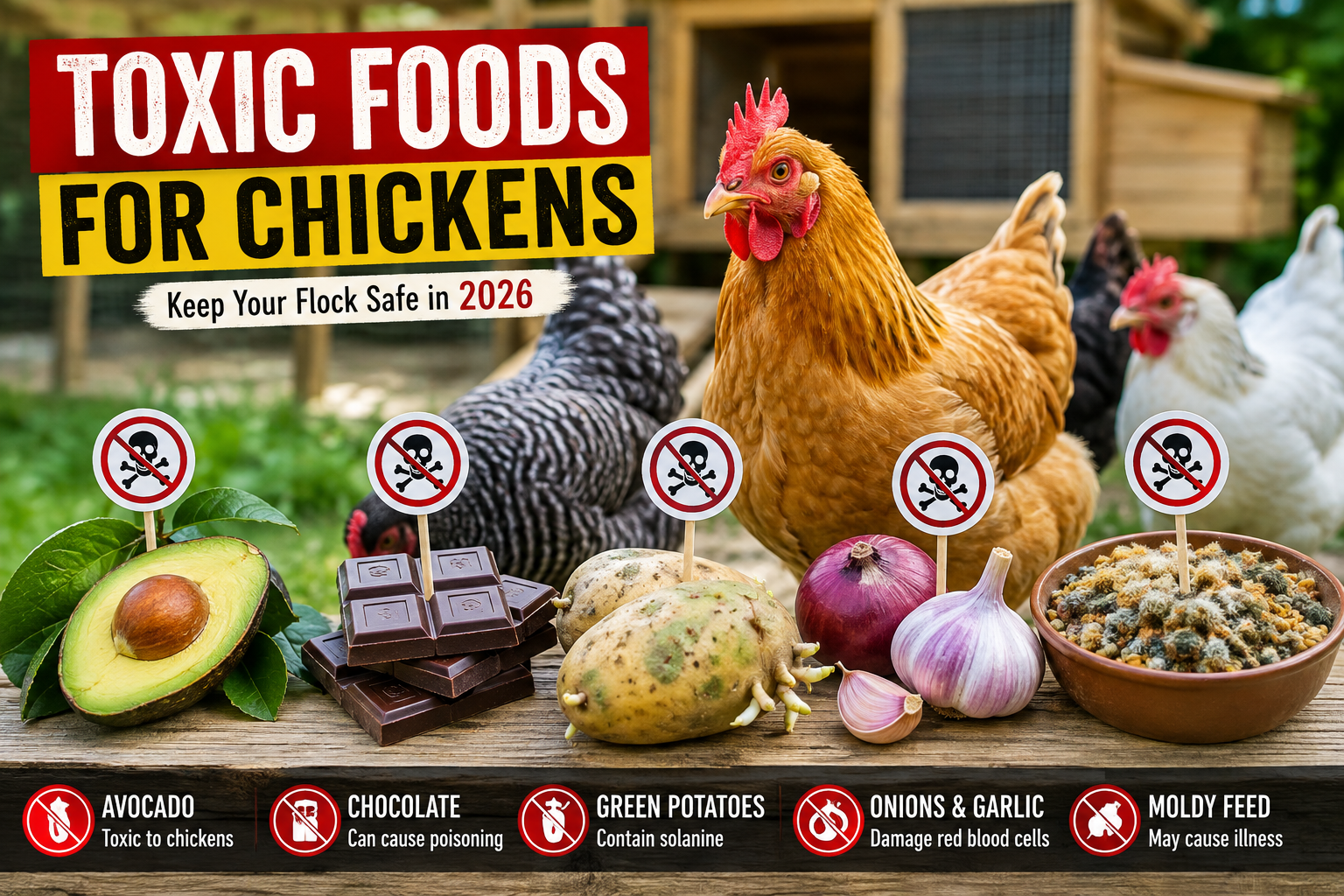
1. Avocado
Avocado is one of the foods that deserves caution. The fruit, leaves, stems, and seed contain persin, and the leaves are considered particularly toxic. Birds can experience serious effects after exposure.
Therefore, avoid giving chickens avocado scraps or allowing them access to avocado plants.
2. Chocolate
Chocolate contains methylxanthines, including compounds that can cause serious toxicity in animals. Signs can include digestive upset, restlessness, abnormal heart activity, tremors, and seizures.
Although toxicity risk varies between species, chocolate is an unnecessary treat. Consequently, it is safer to keep chocolate and cocoa products away from chickens.
3. Green or Sprouted Potatoes
Raw potatoes, particularly green or heavily sprouted potatoes, should not become chicken treats. Green potatoes can contain higher levels of solanine and chaconine. Penn State Extension advises avoiding potatoes with extensive green areas, while University of Minnesota Extension warns that green potatoes can be poisonous.
Therefore, never use spoiled or heavily green potatoes as feed.
4. Onions and Garlic
Large amounts of onions, garlic, chives, or leeks can cause toxicity in animals. These plants contain sulfur compounds that can damage red blood cells in susceptible species.
Because the nutritional benefit is unnecessary, it is better to avoid concentrated Allium scraps and powders.
5. Moldy or Spoiled Food
Moldy grain, old feed, and visibly spoiled scraps deserve special attention. Certain molds produce mycotoxins that can affect poultry health. Aflatoxins, for example, can damage the liver and reduce growth, feed efficiency, egg production, and eggshell quality.
As a result, Toxic Foods for Chickens are not limited to obvious poisonous foods. Spoiled feed can also become dangerous.
Toxic Foods for Chickens: Other Risks to Watch
Poisonous Garden Plants
Free-ranging chickens may investigate garden plants, weeds, berries, and seeds. Some plants contain natural toxins, and nightshade plants can contain glycoalkaloids. Poisonous plants can cause weakness, digestive problems, breathing difficulties, neurological signs, or death in animals.
Therefore, identify unfamiliar plants before allowing chickens to forage freely.
Contaminated Food and Chemicals
Chicken owners should also protect birds from pesticides, herbicides, rodenticides, cleaning products, and other chemicals. Merck Veterinary Manual lists pesticides, rodenticides, disinfectants, and several household chemicals among potential poisoning hazards for poultry.
Consequently, keep feed and treats far away from chemical storage areas.
How to Choose Safe Chicken Treats
Use these simple rules when offering treats:
- Give fresh, clean foods in small quantities.
- Remove leftovers before they spoil.
- Never feed visibly moldy food.
- Keep unknown plants away from the flock.
- Make complete poultry feed the foundation of the diet.
- Provide fresh, clean water every day.
For example, many keepers use appropriate vegetables, fruits, grains, and other poultry-safe treats. However, always research an unfamiliar food before offering it.
Common Feeding Mistakes to Avoid
One common mistake is assuming that chickens can safely eat anything humans eat. However, chickens have different nutritional and toxicological risks.
Another mistake is feeding large amounts of treats. Treats should complement a balanced diet rather than replace it. Additionally, leaving scraps in a run can attract pests and allow food to spoil.
Finally, never ignore sudden illness after a flock gains access to an unusual food or plant.
What to Do If You Suspect Poisoning
If a chicken suddenly becomes weak, stops eating, develops diarrhea, has difficulty breathing, trembles, or shows unusual neurological signs, take the situation seriously.
First, remove access to the suspected food or substance. Next, preserve the food packaging, plant material, or remaining feed if it can be done safely. Then contact an avian or poultry veterinarian promptly.
Do not attempt home treatments without professional guidance. A veterinarian may need the exposure history and feed samples to determine the possible toxin. Merck notes that poultry poisoning investigations can involve testing feed or affected birds.
Simple Prevention Checklist for 2026
A safer flock starts with daily habits:
- Store feed in clean, dry containers.
- Check feed regularly for mold or unusual odors.
- Remove spoiled scraps immediately.
- Inspect the chicken run for poisonous plants.
- Keep chemicals and pesticides securely stored.
- Research new treats before feeding them.
- Keep fresh water available at all times.
- Monitor birds for sudden changes in behavior.
These steps make chicken food safety much easier to manage.
Frequently Asked Questions
What are Toxic Foods for Chickens that owners should avoid?
Chickens should not eat chocolate, avocado, heavily green or sprouted potatoes, moldy food, or large amounts of onion and garlic. Also, avoid unknown plants and spoiled kitchen scraps.
Can leftover human food become Toxic Foods for Chickens?
Some fresh human foods can work as occasional treats. However, salty, sugary, moldy, heavily seasoned, or spoiled leftovers can create food safety risks. A balanced poultry feed should remain the main diet.
Can moldy food become Toxic Foods for Chickens?
Yes. Moldy feed can contain harmful mycotoxins. As a result, chickens may develop poor growth, digestive problems, reduced egg production, or other health issues.
What are the signs after eating Toxic Foods for Chickens?
Possible signs include weakness, loss of appetite, diarrhea, unusual behavior, breathing problems, tremors, or difficulty walking. If several birds become sick suddenly, contact a poultry veterinarian promptly.
What are safe treats for backyard chickens?
Fresh vegetables, suitable fruits, grains, and other poultry-safe treats can be offered in moderation. Always provide clean water and make complete chicken feed the foundation of the diet.
Conclusion:
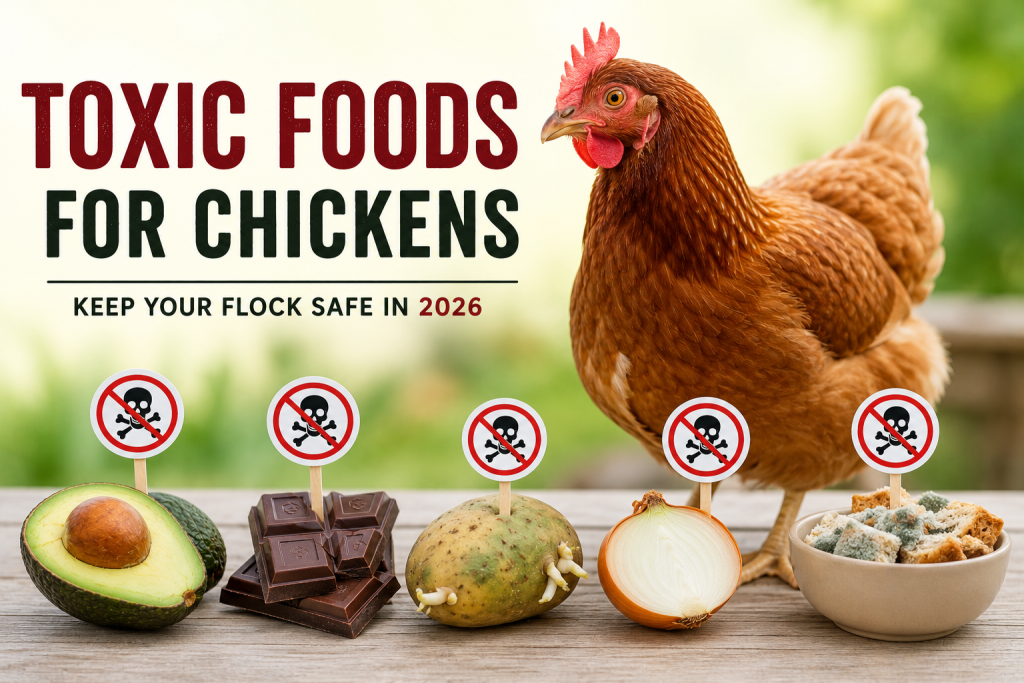
Understanding Toxic Foods for Chickens can help protect your flock from preventable feeding mistakes. Avocado, chocolate, green or heavily sprouted potatoes, excessive Allium foods, moldy feed, poisonous plants, and contaminated materials all deserve caution.
Most importantly, provide a balanced poultry diet and control what your chickens can access. If poisoning is suspected, remove the source and contact a poultry veterinarian quickly.
Leave a Reply