Organic Chicken Feed: Complete 2026 Guide
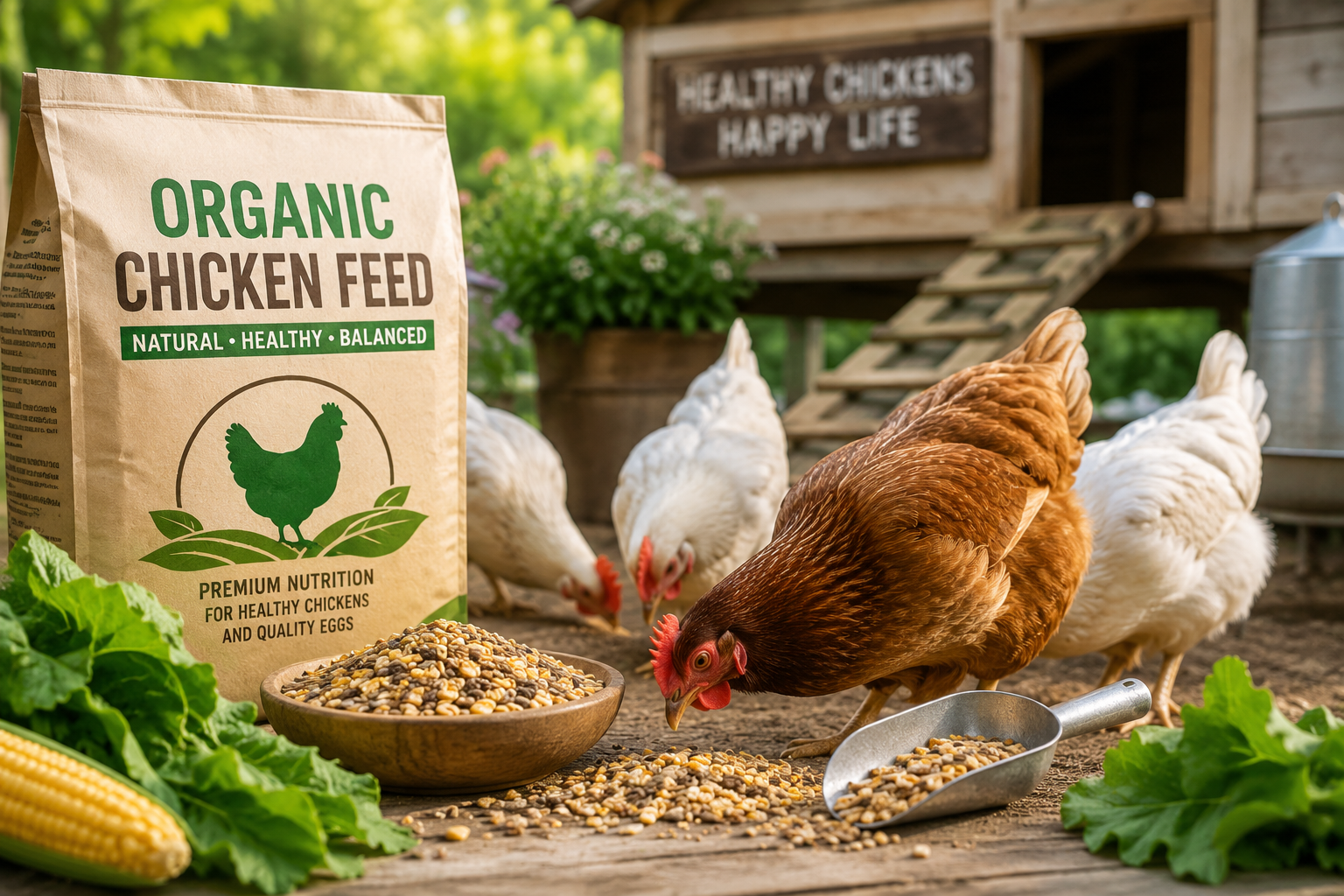
Choosing Organic Chicken Feed can be a smart step for backyard flock owners who want to provide a clean and balanced diet. In 2026, more chicken keepers are paying attention to feed ingredients, sourcing, and production methods.
However, organic does not automatically mean complete. Chickens still need the right balance of protein, energy, vitamins, minerals, and calcium. Therefore, understanding what goes into your flock’s feed can help you make better choices.
Why Organic Chicken Feed Matters
Good nutrition affects chicken growth, feather condition, energy, immunity, and egg production. Additionally, a balanced diet can help laying hens maintain strong bones and healthy eggshells.
Organic Chicken Feed may appeal to keepers who want feed produced under organic standards. Depending on the product and country, organic feed may use certified organic ingredients and avoid certain synthetic inputs.
However, always check the certification and ingredient label before buying.
Benefits of Organic Chicken Food
A quality diet can provide several benefits:
- Supports normal growth and development
- Provides essential protein and energy
- Helps laying hens maintain egg production
- Supports healthy feathers and body condition
- Gives chickens important vitamins and minerals
- Can complement a healthy chicken diet
Additionally, clean feed storage helps protect nutrition and reduce contamination.
Key Features to Consider
Not every bag of Organic Chicken Feed has the same nutritional profile. Therefore, compare products carefully before choosing one.
Protein and Nutritional Balance
Protein helps chickens build and repair body tissues. Growing birds generally need different nutrition from mature laying hens.
As a result, select feed designed for your flock’s age and purpose. Chicks, growers, layers, and breeding birds can have different nutritional needs.
Ingredients and Certification
Read the ingredient list carefully. Look for clear information about grains, protein sources, minerals, and other ingredients.
If organic certification matters to you, check the certification details on the package. Additionally, look for information about whether the product is also non-GMO chicken feed.
Types of Organic Chicken Feed
Different life stages require different feed formulas. Choosing the right category can help prevent nutritional gaps.
Organic Chick Starter
Chick starter is formulated for young birds. It usually contains higher protein than adult maintenance feed to support rapid growth.
However, never assume adult layer feed is suitable for chicks. Always follow the manufacturer’s feeding guidance.
Organic Grower Feed
Grower feed bridges the gap between chick starter and adult diets. It supports continued development while birds mature.
Therefore, check the product’s recommended age range before switching feeds.
Organic Layer Feed
Organic Chicken Feed made for laying hens typically provides nutrients needed during egg production. Calcium is particularly important because hens use it to form eggshells.
For additional information, see our [Internal Link Placeholder: Best Chicken Feed for Laying Hens] guide.
How to Choose Organic Chicken Feed
Before buying Organic Chicken Feed, consider these factors:
- Age: Choose feed designed for your birds’ life stage.
- Purpose: Select starter, grower, layer, or maintenance feed as needed.
- Ingredients: Read the complete label carefully.
- Certification: Verify organic claims where applicable.
- Nutrition: Compare protein, calcium, and other key nutrients.
- Freshness: Check the manufacturing or expiration information.
- Storage: Make sure you have a cool, dry place to store it.
Additionally, buy an amount your flock can use while the feed remains fresh.
Common Feeding Mistakes to Avoid
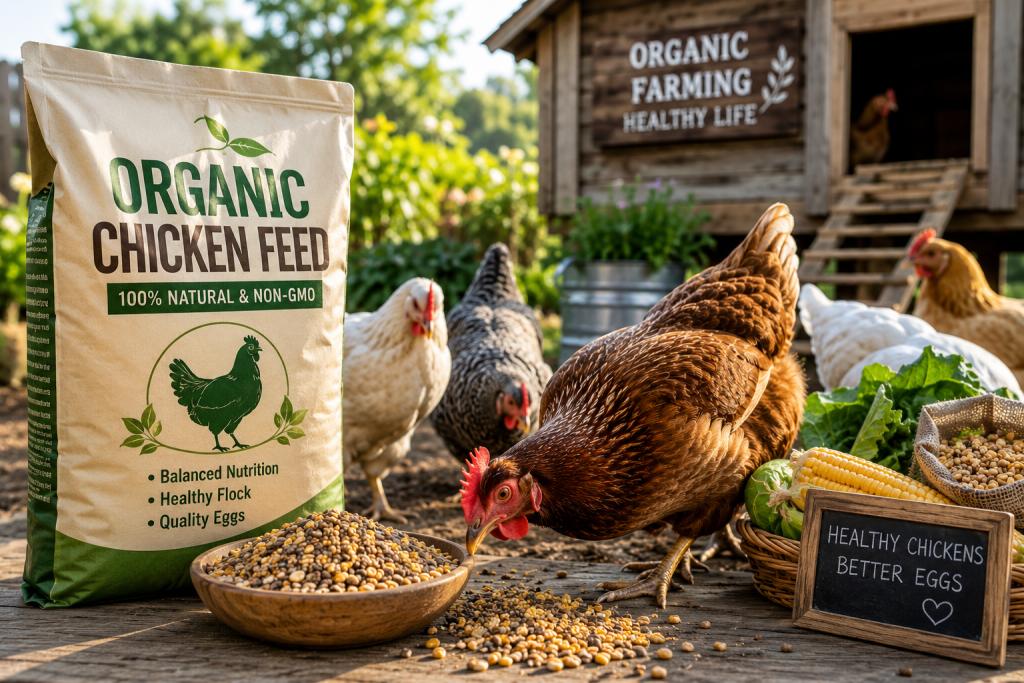
Even high-quality Organic Chicken Feed can cause problems when managed poorly.
Avoid these common mistakes:
- Feeding the wrong formula for the bird’s age
- Giving too many treats
- Ignoring fresh drinking water
- Storing feed in damp areas
- Allowing rodents to access feed
- Making sudden diet changes
- Assuming scraps provide complete nutrition
Treats should remain a small part of the overall diet. Furthermore, chickens need constant access to clean drinking water.
Organic Chicken Feed Storage and Care Tips
Proper storage protects both feed quality and flock health. Keep Organic Chicken Feed in a sealed, food-safe container away from moisture, heat, pests, and direct sunlight.
Additionally, clean storage containers regularly. Do not mix new feed with old feed if the older batch shows signs of mold, unusual odor, insects, or moisture.
A simple routine can help:
- Check feed freshness regularly.
- Keep storage containers tightly closed.
- Clean spills quickly.
- Keep rodents and wild birds away.
- Provide clean water every day.
As a result, good storage can reduce waste and help maintain consistent feed quality.
Final Thoughts
Choosing Organic Chicken Feed can be a useful option for chicken keepers who care about certified ingredients and production standards. However, the most important factor remains a nutritionally complete diet suited to your flock.
Before purchasing, compare the label, certification, nutritional information, freshness, and storage requirements. Additionally, avoid excessive treats and provide clean water every day.
Leave a Reply