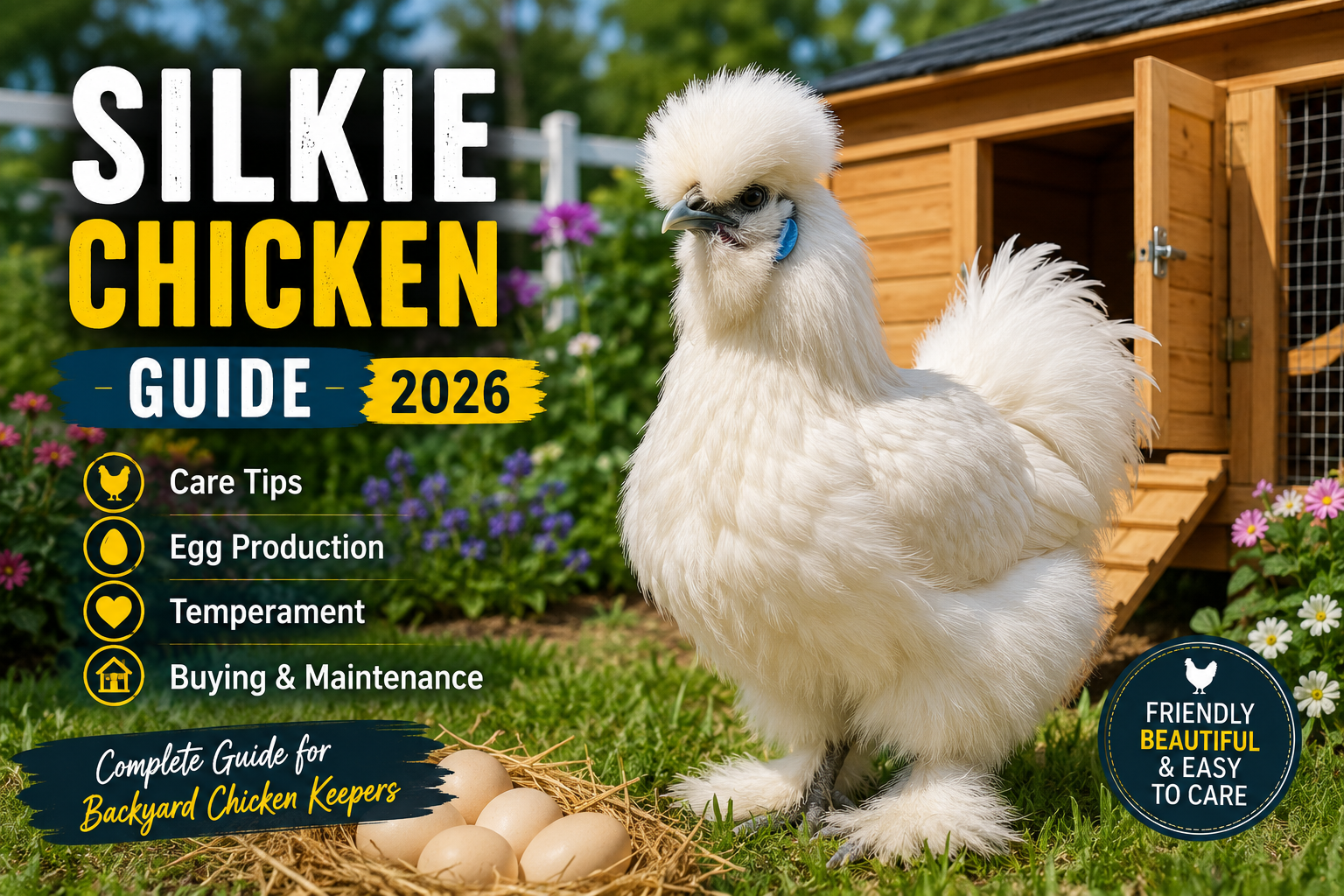
Silkie Chicken Guide (2026)
If you are looking for one of the friendliest and most unique chicken breeds, this Silkie Chicken Guide will help you make the right decision. Silkies are famous for their fluffy feathers, gentle personality, and excellent mothering skills. As a result, they remain one of the most popular backyard chickens in the United States and around the world in 2026.
Whether you are a beginner or an experienced poultry keeper, Silkies are easy to love. Additionally, they fit well in family flocks and small backyard farms because of their calm nature and beautiful appearance.
Why Choose a Silkie Chicken?
Silkies are much more than ornamental birds. They offer several benefits that make them an excellent addition to almost any flock.
Main Benefits
- Friendly and gentle temperament
- Excellent pets for families with children
- Outstanding broody hens and natural mothers
- Unique fluffy feathers unlike other breeds
- Adapt well to backyard environments
- Easy to handle and train
Additionally, their quiet personality makes them ideal for suburban homes where noisy chickens may become a problem.
Silkie Chicken Guide: Key Features
Appearance
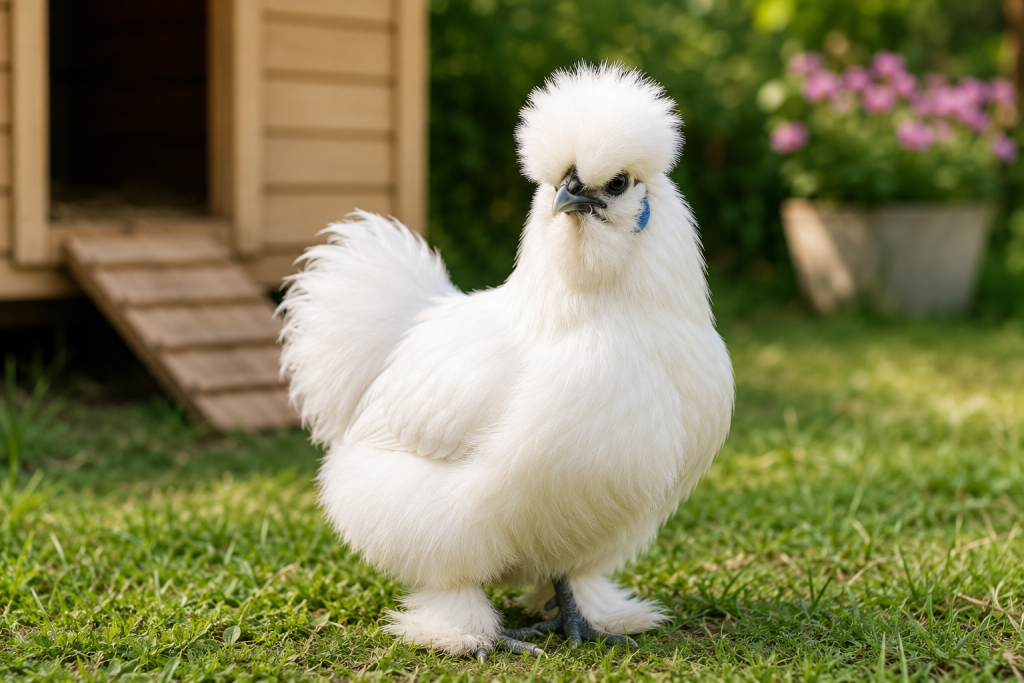
Silkies have soft, fur-like feathers because their feathers lack the tiny hooks found on regular chickens. As a result, they appear fluffy and round.
Common colors include:
- White
- Black
- Buff
- Blue
- Splash
- Gray
- Partridge
One of their most unusual traits is black skin, dark meat, blue earlobes, and five toes instead of four.
Temperament
One reason this Silkie Chicken Guide recommends the breed is its amazing personality.
Silkies are:
- Calm
- Friendly
- Curious
- Easy to tame
- Great with children
Additionally, they mix well with peaceful breeds. However, aggressive chickens may bully them because Silkies cannot fly well.
Egg Production
Although Silkies are not heavy egg layers, they still provide a steady supply for small households.
Average production:
- 100–120 cream-colored eggs yearly
- 2–3 eggs each week
- Small to medium-sized eggs
Many owners value Silkie chicken eggs more for breeding than for high production.
Types of Silkie Chickens
Bearded Silkie
Bearded Silkies have extra fluffy feathers around the face and under the beak, giving them an adorable appearance.
Best For
- Pet owners
- Poultry exhibitions
- Backyard flocks
Non-Bearded Silkie
Non-bearded Silkies have a cleaner face while keeping the same gentle personality.
Best For
- Beginners
- Easy grooming
- Small farms
Silkie Chicken Guide: Buying Tips
Before purchasing Silkies, consider several important factors.
1. Buy From Reputable Breeders
Healthy chicks grow into healthier adults. Additionally, trusted breeders provide vaccination records and proper breed standards.
2. Check Overall Health
Choose birds that have:
- Bright eyes
- Clean feathers
- Active behavior
- Healthy feet
- No breathing problems
3. Purpose
Decide whether you want Silkies for:
- Pets
- Breeding
- Poultry shows
- Backyard enjoyment
Knowing your goal helps you select the right birds.
Common Mistakes to Avoid
Many first-time owners make simple mistakes that affect their flock.
Avoid these problems:
- Keeping Silkies with aggressive breeds
- Allowing feathers to stay wet for long periods
- Ignoring predator protection
- Overcrowding the coop
- Buying unhealthy birds from unknown sellers
Additionally, remember that Silkies do not fly well. Therefore, secure fencing is more important than high fencing.
Silkie Chicken Care Tips
Proper Silkie chicken care keeps birds healthy and happy throughout the year.
Housing
Provide:
- Dry bedding
- Good ventilation
- Predator-proof coop
- Comfortable nesting boxes
Because fluffy feathers hold moisture, always keep the coop clean and dry.
Feeding
Offer a balanced layer feed along with:
- Fresh vegetables
- Clean water
- Calcium supplements for laying hens
- Occasional healthy treats
Additionally, avoid overfeeding treats since balanced nutrition supports better health.
Grooming
Unlike many breeds, Silkies benefit from occasional grooming.
Regularly:
- Check feather cleanliness
- Trim feathers around the eyes if necessary
- Inspect feet for mud buildup
- Watch for mites and lice
Routine care keeps your backyard Silkie chickens comfortable and healthy.
Is the Silkie Chicken Right for You?
If you want a friendly companion instead of maximum egg production, Silkies are an outstanding choice. Their beautiful appearance, gentle temperament, and natural parenting abilities make them one of the most rewarding ornamental breeds available today.
Families, hobby farmers, and first-time chicken owners especially enjoy raising Silkies because they require simple care and develop strong bonds with people.
Frequently Asked Questions
Are Silkies good for beginners?
Yes. Silkies are gentle, easy to handle, and require simple daily care, making them a great choice for first-time chicken owners.
How many eggs do Silkies lay each year?
Most hens produce around 100–120 small cream-colored eggs annually, depending on nutrition, age, and seasonal conditions.
Can Silkies live with other chicken breeds?
Yes, but they do best with calm and friendly breeds. Aggressive chickens may bully them because Silkies cannot fly well.
Do Silkies need special grooming?
Yes. Their fluffy feathers collect dirt more easily than regular chickens, so regular cleaning and dry housing are important.
How long do Silkies live?
With proper nutrition, clean housing, and routine healthcare, they commonly live between 7 and 10 years, and some live even longer.
Conclusion
This Silkie Chicken Guide shows why Silkies remain one of the world’s favorite backyard chicken breeds in 2026. They offer unmatched beauty, gentle personalities, and excellent brooding instincts. Additionally, with proper housing, balanced nutrition, and regular grooming, they can thrive for many years. If you’re planning to expand your flock, consider adding Silkies and enjoy one of the friendliest chickens available today.
Leave a Reply