
Brahma Chicken Guide 2026: Everything You Need to Know
If you are searching for the perfect giant chicken breed, this Brahma Chicken Guide will help you make the right decision. Known as the “Gentle Giant” of the poultry world, Brahma chickens remain one of the most popular backyard breeds in 2026. They combine impressive size, calm personalities, and reliable egg production, making them a favorite among families and hobby farmers across the United States and around the world.
Additionally, Brahmas adapt well to different climates and require relatively simple care. Whether you are a beginner or an experienced poultry keeper, this guide explains everything you need to know.
Why the Brahma Chicken Guide Matters
Choosing the right chicken breed affects your flock’s success. This Brahma Chicken Guide helps you understand why Brahmas continue to rank among the best backyard chicken breeds.
Main Benefits
- Friendly and gentle personality
- Excellent for beginners
- Cold-hardy due to feathered legs
- Good winter egg production
- Beautiful appearance
- Long lifespan with proper care
Moreover, Brahmas rarely show aggressive behavior. As a result, they fit well into mixed flocks and family farms.
Brahma Chicken Guide: Key Features
Massive Body Size
The first thing you’ll notice in this Brahma Chicken Guide is their incredible size.
Average weight:
- Hens: 8–10 pounds
- Roosters: 10–12 pounds
- Some exceptional birds exceed 14 pounds.
Despite their size, Brahmas remain calm and easy to handle.
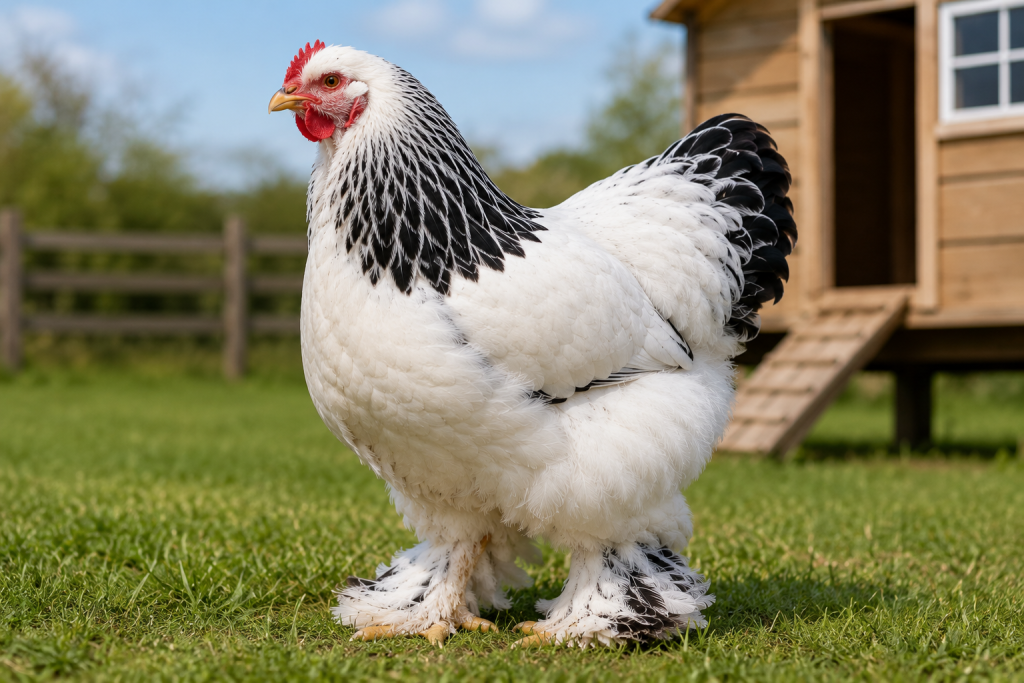
Feathered Legs
Unlike many breeds, Brahmas have fully feathered legs and feet. Additionally, these feathers help protect them during cold winters.
However, owners should regularly check for mud, ice, and mites.
Temperament
One reason many families love Brahmas is their gentle nature.
They are:
- Friendly
- Quiet
- Curious
- Easy to tame
- Good around children
Because of their calm behavior, they rarely bully smaller chickens.
Types of Brahma Chickens
Every Brahma Chicken Guide should explain the recognized color varieties.
Light Brahma
The Light Brahma is the most popular variety.
Features include:
- White body
- Black neck feathers
- Black tail
- Bright yellow legs
Dark Brahma
Dark Brahmas feature striking silver and black feather patterns.
Additionally, hens display beautiful penciled feather markings that make them stand out.
Buff Brahma
Buff Brahmas have golden feathers with black accents.
Their warm coloring makes them one of the most attractive backyard chicken breeds.
Brahma Chicken Guide: Buying Decision Tips
Buying healthy birds saves money and prevents future problems.
Before purchasing, check the following:
- Bright eyes
- Clean feathered legs
- Active movement
- Healthy comb
- Good body weight
- Clean nostrils
Additionally, purchase from trusted breeders or certified hatcheries.
Egg Production and Growth
Many beginners ask whether giant breeds lay enough eggs.
The answer is yes.
Average production:
- 180–220 brown eggs annually
- Medium to large eggs
- Better winter laying than many breeds
Although they mature more slowly, their steady production makes them worthwhile.
Furthermore, Brahma chicken egg production remains reliable for several years.
Common Mistakes to Avoid
Even experienced owners make mistakes.
Avoid these common problems:
- Buying from unknown sellers
- Ignoring feathered foot care
- Overcrowding the coop
- Feeding low-quality feed
- Skipping parasite checks
- Forgetting clean drinking water
As a result, your flock stays healthier and more productive.
Brahma Chicken Care Tips
Proper Brahma chicken care keeps birds healthy throughout the year.
Provide Spacious Housing
Because Brahmas are large, allow at least:
- 5 square feet inside the coop
- 10 square feet in the run
More space reduces stress.
Feed a Balanced Diet
Choose quality poultry feed rich in protein.
Additionally, offer:
- Fresh vegetables
- Oyster shell for calcium
- Clean water
- Occasional healthy treats
Keep Feet Clean
Feathered feet collect mud easily.
Therefore:
- Inspect feet weekly.
- Remove debris.
- Keep bedding dry.
- Prevent frostbite during winter.
Health Checks
Watch for:
- Mites
- Lice
- Bumblefoot
- Respiratory illness
Early treatment prevents larger health issues.
Is the Brahma Chicken Right for You?
If you want a calm, beautiful, and productive breed, Brahmas deserve serious consideration.
They are ideal for:
- Backyard flocks
- Families
- Hobby farms
- Cold climates
- Beginners
- Mixed flocks
Their impressive appearance and friendly personality explain why they remain one of today’s most popular giant chicken breeds.
Frequently Asked Questions (FAQs)
1. Are Brahma chickens good for beginners?
Yes. Brahma chickens are calm, friendly, and easy to manage, making them one of the best breeds for first-time chicken keepers.
2. How many eggs do Brahma chickens lay each year?
A healthy Brahma hen typically lays 180–220 medium to large brown eggs per year, with better winter production than many other breeds.
3. How big do Brahma chickens get?
Brahma roosters usually weigh 10–12 pounds, while hens average 8–10 pounds. Some birds can grow even larger with proper care.
4. Can Brahma chickens live in cold climates?
Yes. Their thick feathers and feathered legs help them tolerate cold weather extremely well. However, keep their feet clean and dry during winter.
5. What do Brahma chickens eat?
They thrive on a balanced poultry feed, fresh water, vegetables, grains, and calcium supplements such as oyster shell for strong eggshells.
6. How long do Brahma chickens live?
With proper nutrition and good care, Brahma chickens typically live 5–8 years, although many can live longer.
7. Are Brahma chickens friendly with other breeds?
Yes. Their gentle temperament makes them excellent companions for mixed backyard flocks and family farms.
8. Do Brahma chickens require special care?
Their feathered legs need regular cleaning and inspection to prevent mud buildup, mites, and other foot-related problems.
9. Are Brahma chickens noisy?
No. Brahma chickens are generally quiet compared to many other breeds. Hens make normal laying sounds, while roosters crow like other chickens.
10. What colors do Brahma chickens come in?
The three recognized varieties are Light Brahma, Dark Brahma, and Buff Brahma. Each has unique feather patterns and beautiful coloring.
11. Do Brahma chickens fly?
Not very well. Because of their large size and heavy bodies, Brahma chickens rarely fly high and usually stay within low fencing.
12. At what age do Brahma chickens start laying eggs?
Most Brahma hens begin laying eggs between 6 and 8 months of age. They mature more slowly than lighter chicken breeds.
13. How much space do Brahma chickens need?
Each Brahma should have at least 5 square feet of indoor coop space and 10 square feet of outdoor run space for comfort and good health.
14. Are Brahma chickens broody?
Yes. Some Brahma hens become broody and can successfully hatch and raise chicks, although not every hen shows this behavior.
15. Can Brahma chickens free-range?
Yes. They enjoy free-ranging and foraging for insects, seeds, and plants. However, secure fencing helps protect them from predators.
Conclusion
This Brahma Chicken Guide shows why these gentle giants continue to dominate backyard poultry keeping in 2026. They offer excellent temperament, dependable egg production, impressive size, and outstanding cold-weather performance. Additionally, with proper housing, nutrition, and routine health checks, Brahmas can thrive for many years.
If you’re planning to expand your flock, the Brahma Chicken Guide recommends choosing healthy birds from trusted breeders and providing them with plenty of space and quality care. Ready to start your poultry journey? Explore more of our chicken breed guides and discover the perfect addition to your backyard flock.
Leave a Reply