Wyandotte Chicken Guide 2026: Everything You Need to Know
If you’re looking for a beautiful, friendly, and productive backyard chicken, this Wyandotte Chicken Guide is the perfect place to start. In 2026, Wyandotte chickens remain one of the most popular breeds among poultry keepers in the United States and around the world. They combine stunning feather patterns, reliable egg production, and excellent cold-weather hardiness.
Whether you’re a beginner or an experienced chicken owner, this Wyandotte Chicken Guide explains everything you need to know before adding these birds to your flock.
Why the Wyandotte Chicken Guide Matters
Choosing the right breed makes chicken keeping easier and more rewarding. Wyandottes are known for balancing beauty with productivity.
Benefits include:
- Excellent egg production
- Calm and friendly personality
- Beautiful feather colors
- Strong winter hardiness
- Great dual-purpose breed for eggs and meat
- Suitable for families and beginners
Additionally, their rose comb helps protect them from frostbite during harsh winters. As a result, they perform better than many single-comb breeds in cold climates.
Key Features of the Wyandotte Chicken Guide
Beautiful Feather Patterns
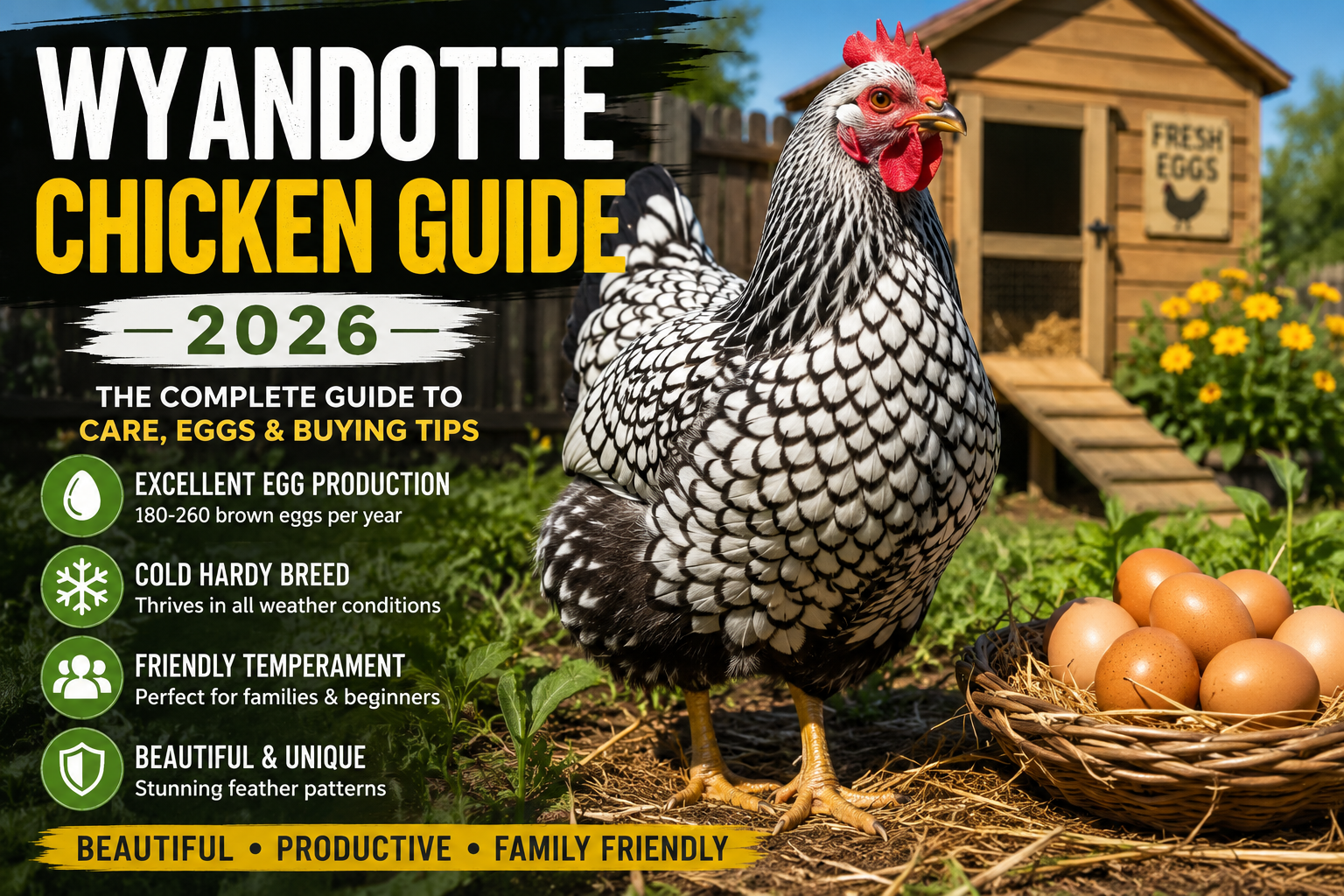
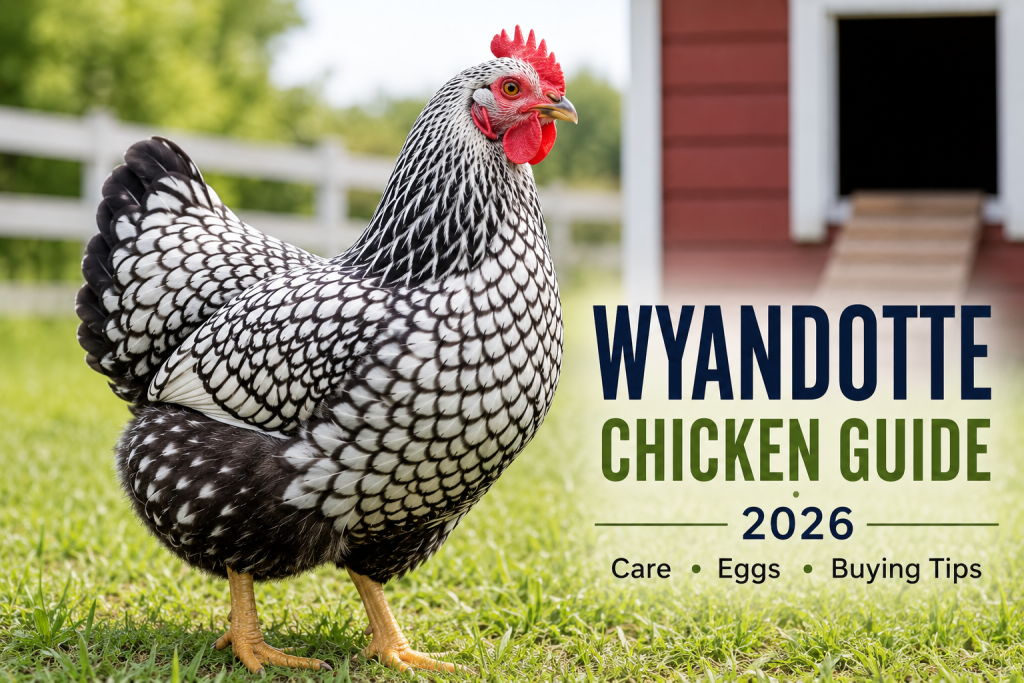
One reason people love Wyandottes is their appearance. The famous Silver Laced Wyandotte features striking black-and-white feathers that stand out in any flock.
Other popular varieties include:
- Golden Laced
- Blue Laced Red
- White
- Black
- Buff
- Columbian
- Partridge
Excellent Egg Production
According to every reliable Wyandotte Chicken Guide, hens typically lay:
- 180–260 brown eggs each year
- Medium to large eggs
- Consistent production throughout much of the year
Additionally, they continue laying well during winter when many breeds slow down.
Friendly Temperament
Wyandottes are calm without being overly dependent on people. They usually get along with other chickens and enjoy free-ranging.
Their temperament makes them ideal for:
- Families with children
- First-time chicken keepers
- Small backyard flocks
- Hobby farms
Types of Wyandotte Chickens
Silver Laced Wyandotte
The most recognizable variety features brilliant white feathers edged in black. It remains one of the world’s most photographed chicken breeds.
Golden Laced Wyandotte
This variety replaces white feathers with rich golden coloring while keeping the attractive black edging.
Blue Laced Red Wyandotte
Many poultry enthusiasts choose this premium variety because of its unique blue lacing over deep red feathers.
White and Buff Wyandottes
These birds offer a cleaner appearance while maintaining the breed’s excellent egg production and friendly personality.
Buying Guide for Wyandotte Chickens
Before purchasing birds, compare breeders carefully.
Consider these factors:
Buy From Reputable Hatcheries
Healthy chicks grow into productive hens. Therefore, purchase birds from breeders with strong customer reviews and disease-tested flocks.
Check Breed Standards
Healthy Wyandottes should have:
- Rose comb
- Yellow legs
- Broad body
- Bright eyes
- Clean feathers
Decide Between Chicks or Pullets
Chicks cost less but require more care.
Pullets cost more; however, they begin laying eggs much sooner.
Common Mistakes to Avoid
Many beginners make simple mistakes that reduce flock performance.
Avoid these problems:
- Buying from unknown sellers
- Overcrowding the coop
- Feeding poor-quality feed
- Ignoring parasite prevention
- Skipping health inspections
- Mixing aggressive breeds without supervision
Additionally, avoid selecting birds based only on appearance. Good health is always more important than feather color.
Wyandotte Chicken Care Tips
A complete Wyandotte Chicken Guide should also explain daily care.
Housing
Provide:
- 4 square feet per bird inside the coop
- 8–10 square feet outdoors
- Good ventilation
- Dry bedding
- Predator protection
Feeding
Offer:
- High-quality layer feed
- Fresh vegetables
- Calcium supplements
- Constant clean water
Additionally, occasional mealworms make an excellent protein-rich treat.
Health Care
Monitor birds regularly for:
- Mites
- Lice
- Worms
- Respiratory illness
- Foot injuries
Routine cleaning helps prevent many common diseases.
Winter Care
Wyandottes tolerate cold weather extremely well.
Even so, you should:
- Keep bedding dry
- Prevent drafts
- Supply fresh unfrozen water
- Increase calories during severe cold
Proper winter care helps maintain steady Wyandotte chicken eggs production.
Is the Wyandotte Right for You?
If you want a breed that combines beauty, dependable egg laying, and easy management, Wyandottes deserve serious consideration. Their calm personality and adaptability make them one of the best backyard chicken breeds available today.
Whether you raise chickens for fresh eggs, family enjoyment, or exhibition, this Wyandotte Chicken Guide shows why these birds continue to rank among America’s favorite poultry breeds.
Frequently Asked Questions (FAQs)
1. Are Wyandotte chickens good for beginners?
Yes. Wyandotte chickens are an excellent choice for beginners because they are calm, hardy, easy to care for, and reliable egg layers.
2. How many eggs do Wyandotte chickens lay each year?
A healthy Wyandotte hen typically lays 180–260 medium to large brown eggs per year, depending on diet, age, and living conditions.
3. At what age do Wyandotte hens start laying eggs?
Most Wyandotte hens begin laying eggs between 20 and 24 weeks of age.
4. Are Wyandotte chickens friendly?
Yes. Wyandotte chickens are known for their calm and friendly temperament. They generally get along well with other chickens and are suitable for family backyard flocks.
5. Can Wyandotte chickens survive cold weather?
Absolutely. Their rose comb and dense feathers make them one of the best cold-hardy chicken breeds, allowing them to thrive in winter climates.
6. Do Wyandotte chickens go broody?
Some Wyandotte hens become broody, but they are not considered one of the most consistently broody breeds.
7. How much space do Wyandotte chickens need?
Provide at least 4 square feet per bird inside the coop and 8–10 square feet per bird in the outdoor run for healthy growth and comfort.
8. What do Wyandotte chickens eat?
They thrive on a balanced layer feed, fresh vegetables, grains, clean water, calcium supplements, and occasional protein-rich treats like mealworms.
9. What is the lifespan of a Wyandotte chicken?
With proper care, Wyandotte chickens typically live 6–12 years, although many backyard birds can live even longer.
10. Are Wyandotte chickens good for meat and eggs?
Yes. Wyandottes are considered a dual-purpose breed, valued for both dependable brown egg production and quality meat.
11. Which Wyandotte variety is the most popular?
The Silver Laced Wyandotte is the most popular variety because of its striking black-and-white feather pattern and excellent productivity.
12. Are Wyandotte chickens noisy?
No. Wyandotte chickens are generally quieter than many other breeds, making them a good choice for suburban and backyard flocks.
Conclusion
This Wyandotte Chicken Guide highlights why the breed remains a top choice in 2026. From attractive feather patterns to reliable egg production and excellent cold tolerance, Wyandottes deliver outstanding value for backyard flocks. If you’re planning to expand your coop, consider adding this remarkable breed and enjoy years of fresh eggs and friendly companionship. Start with healthy birds, follow proper care practices, and you’ll quickly see why Wyandottes continue to win the hearts of chicken keepers worldwide.
Leave a Reply