Leghorn Chicken Guide 2026: Everything You Need to Know
If you’re looking for one of the world’s best egg-laying breeds, this Leghorn Chicken Guide is the perfect place to start. In 2026, backyard chicken keeping continues to grow across the United States and many other countries. As a result, more families and small farmers are choosing Leghorn chickens because they produce plenty of eggs while requiring relatively low maintenance.
Whether you’re a beginner or an experienced poultry keeper, this guide explains everything you need to know before bringing Leghorns home.
Why This Leghorn Chicken Guide Matters
Leghorn chickens have earned a strong reputation for efficiency. They convert feed into eggs better than many other breeds. Additionally, they mature quickly and stay active throughout the year.
Main benefits include:
- Excellent egg production
- Lower feed costs
- Hardy and adaptable
- Great for backyard flocks
- Friendly for experienced poultry keepers
Because of these advantages, White Leghorn chickens remain one of the most popular commercial egg-laying breeds worldwide.
Leghorn Chicken Guide: Key Features
Outstanding Egg Production
The biggest reason people choose Leghorns is egg production.
Healthy hens can lay:
- 280–320 white eggs annually
- Large white eggs
- Eggs starting around 18–20 weeks of age
As a result, they rank among the best egg laying chickens available today.
Active Personality
Leghorns love exploring.
They:
- Enjoy free-ranging
- Stay alert around predators
- Fly better than many heavy breeds
- Need plenty of exercise
However, they usually dislike excessive handling compared to calmer breeds.
Appearance
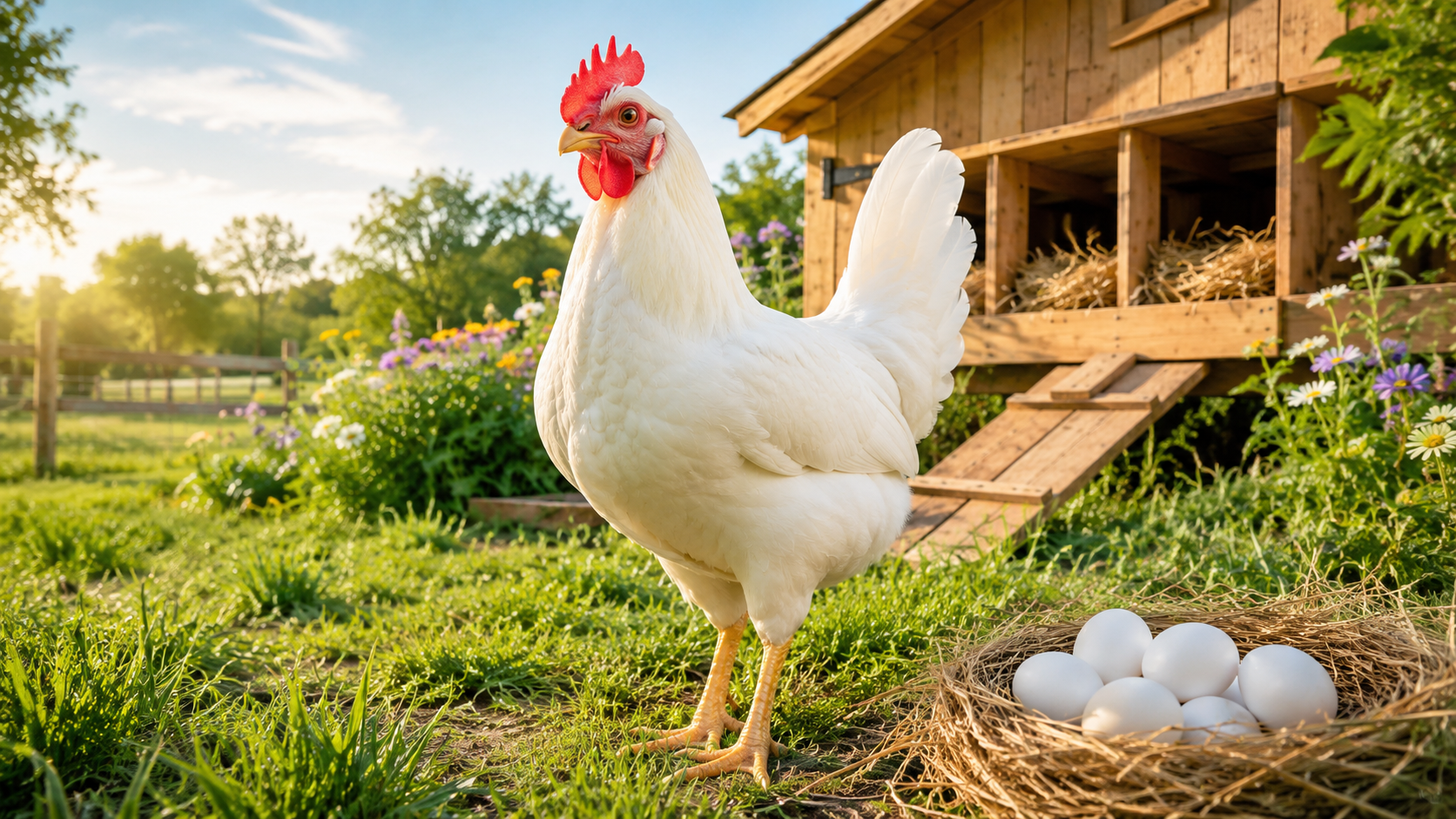
Most people recognize the White Leghorn, but several color varieties also exist.
Common features include:
- Bright red comb
- White earlobes
- Yellow legs
- Lightweight body
- Large single comb
Roosters typically weigh around 6 pounds, while hens average about 4–5 pounds.

Types of Leghorn Chickens
White Leghorn
The White Leghorn remains the most common variety.
It offers:
- Highest egg production
- Excellent feed efficiency
- Strong commercial use
Brown Leghorn
Brown Leghorns feature beautiful feather patterns.
They are:
- Excellent layers
- Very active
- Popular among hobby farmers
Other Color Varieties
Depending on your country, you may also find:
- Black
- Buff
- Silver
- Golden Duckwing
These varieties share many of the same productive traits.
Buying Guide
Choosing healthy birds makes a huge difference.
Before purchasing Leghorns, consider these factors.
1. Buy From Reputable Hatcheries
Choose breeders with strong health records.
Ask about:
- Vaccination history
- Hatch dates
- Breed purity
2. Check Bird Health
Healthy Leghorns should have:
- Bright eyes
- Smooth feathers
- Clean vents
- Strong legs
- Active behavior
Avoid birds that appear weak or unusually quiet.
3. Consider Your Climate
Leghorns tolerate heat well.
However, their large combs may suffer frostbite during extremely cold winters. Therefore, extra winter protection helps in colder regions.
Common Mistakes to Avoid
Many first-time owners make avoidable mistakes.
Don’t:
- Overcrowd the coop
- Ignore predator protection
- Feed poor-quality feed
- Skip regular health checks
- Expect cuddly behavior
Leghorns are naturally energetic. Therefore, don’t mistake their independence for aggression.
Leghorn Chicken Care Tips
Proper Leghorn chicken care keeps your flock healthy and productive.
Provide Balanced Nutrition
Feed quality layer pellets with:
- Calcium
- Protein
- Fresh vegetables
- Clean water
Additionally, offer oyster shells to strengthen eggshells.
Keep the Coop Clean
Clean coops reduce disease risk.
Remember to:
- Replace bedding regularly
- Improve ventilation
- Remove wet litter
- Disinfect feeders
Allow Daily Exercise
Free-ranging improves physical health.
If free-ranging isn’t possible, provide a spacious run with enrichment activities.
Monitor Health
Watch for:
- Weight loss
- Parasites
- Limping
- Reduced egg production
Early treatment usually prevents serious problems.
Is the Leghorn Right for You?
The Leghorn Chicken Guide wouldn’t be complete without helping you decide.
Choose Leghorns if you want:
- Maximum egg production
- Lower feeding costs
- Active birds
- Efficient backyard layers
Consider another breed if you prefer chickens that enjoy frequent handling or make ideal family pets.
FAQ – Leghorn Chicken Guide
1. What makes the Leghorn Chicken Guide useful for beginners?
This Leghorn Chicken Guide helps beginners understand the breed’s personality, egg production, care needs, feeding, and housing requirements. It provides practical tips to start raising healthy Leghorn chickens with confidence.
2. How many eggs do Leghorn chickens lay each year?
Healthy Leghorn hens typically lay 280–320 large white eggs annually. They are widely considered one of the world’s best egg-laying chicken breeds.
3. Are Leghorn chickens good for backyard flocks?
Yes. According to this Leghorn Chicken Guide, Leghorns are excellent backyard chickens if you want high egg production and active birds. However, they prefer exploring over being handled frequently.
4. What should I feed Leghorn chickens?
A balanced diet should include quality layer feed, fresh water, calcium supplements, and occasional vegetables. Proper nutrition keeps your flock healthy and supports consistent egg production.
5. Do Leghorn chickens need special care during winter?
Yes. Although Leghorns are hardy, their large combs can be vulnerable to frostbite in freezing temperatures. Providing a dry, draft-free coop helps protect them during winter.
6. Is this Leghorn Chicken Guide suitable for commercial and backyard farmers?
Absolutely. This Leghorn Chicken Guide is designed for both backyard poultry keepers and commercial egg producers looking to maximize egg production and maintain healthy birds.
Conclusion
This Leghorn Chicken Guide shows why Leghorns continue to dominate backyard farms and commercial egg operations in 2026. Their incredible egg production, efficient feed conversion, and hardy nature make them an excellent investment for poultry keepers around the world. Additionally, with proper nutrition, housing, and regular care, your flock can remain productive for years.
Leave a Reply